

 News
News  Coin Information
  About us
  Customer Service


 Add as a preferred source on Google
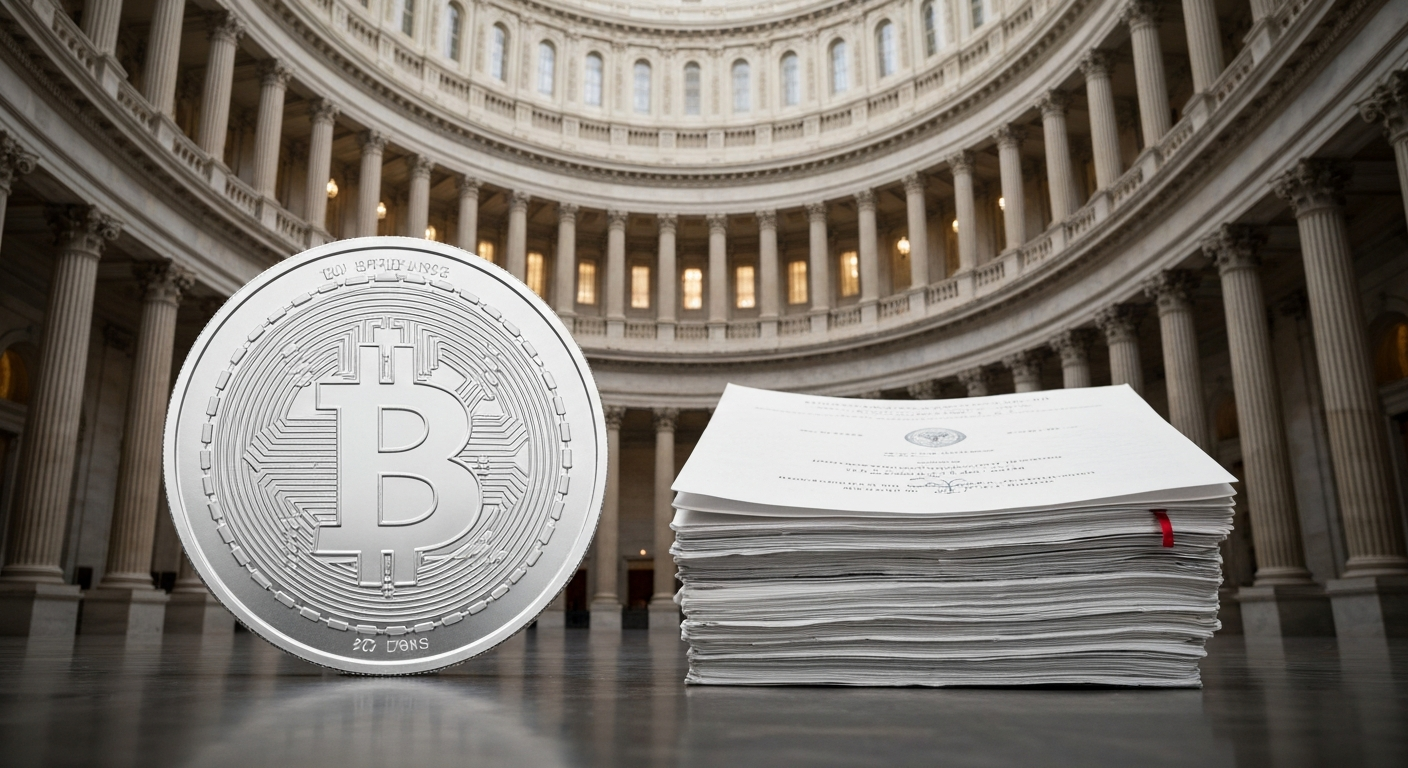
The U.S. crypto industry is pushing the ‘CLARITY Act’ with unusual urgency not because it trusts the current White House, but because it is trying to lock in rules that could survive the next administration.
That calculation was captured in a recent remark by Peter Van Valkenburgh, executive director of Coin Center, a Washington-based crypto policy think tank. “The purpose of passing the ‘CLARITY Act’ is not to trust this administration,” he said. “It’s to bind the next one.” In other words, political goodwill can evaporate after an election—but legislation, once enacted, is far harder for any future government to unwind.
The ‘CLARITY Act’ would be the first comprehensive federal framework for regulating digital assets in the U.S., clarifying long-disputed jurisdictional boundaries between the Securities and Exchange Commission (SEC) and the Commodity Futures Trading Commission (CFTC). By codifying which types of tokens and activities fall under which regulator, the bill aims to replace years of enforcement-driven ambiguity with defined compliance lanes—something exchanges, issuers, and institutional investors have long demanded as a prerequisite for scaling ‘institutional adoption’.
The bill passed the House of Representatives in July 2025 with bipartisan support, but it has remained stalled for roughly eight months at the Senate Banking Committee. The sticking point is a politically charged provision: whether stablecoin issuers or platforms should be allowed to pay interest or rewards when customers hold dollar-pegged stablecoins on-platform. Banks argue that permitting yield on stablecoins would amount to a parallel deposit product without the same prudential safeguards, accelerating deposit flight away from the traditional banking system.
The potential scale of that disruption is central to the banking lobby’s resistance. Standard Chartered has estimated that if interest payments are permitted, as much as $500 billion in deposits could move from banks to crypto platforms by 2028. From the perspective of incumbent lenders, stablecoin yield is not simply a feature—it is a competitive threat to core funding.
Crypto companies, however, view the ability to offer stablecoin rewards as a key revenue lever and a major driver of customer retention. Coinbase ($COIN) provides a telling example: stablecoin-linked revenue reportedly reached $1.35 billion in 2025, about 20% of total revenue. CEO Brian Armstrong has publicly warned that he cannot support the legislation in its current form if it restricts stablecoin interest—signaling how central the issue has become to the industry’s business models rather than just a marginal policy dispute.
President Trump has also weighed in, urging lawmakers and bank stakeholders not to “hold the ‘CLARITY Act’ hostage,” according to local reports. The comments were said to have come shortly after a private meeting with Armstrong, underscoring how the stablecoin provision has become the bill’s main pressure point—and how the political stakes have risen as the legislative window narrows.
Negotiations appear to be nearing a compromise. Coinbase Chief Legal Officer Paul Grewal said this week that talks are “very close,” while Senate Banking leaders are reportedly targeting late April 2026 for renewed markup discussions. Still, the path to a presidential signature remains procedurally long: committee action, a full Senate vote, reconciliation of differing House and Senate language, and final passage steps. With midterm campaigns expected to dominate the calendar later in the year, industry advocates believe the bill effectively needs to clear major hurdles by May to have a realistic chance before November.
For markets, the debate is about more than one clause. Persistent regulatory uncertainty has repeatedly triggered volatility, chilled domestic investment, and pushed activity offshore. Without a statute, the next administration could rapidly shift priorities—tightening or loosening enforcement with little constraint. By contrast, a law would create a durable baseline for how crypto is treated, shaping everything from token listings and custody standards to derivatives oversight and compliance costs.
The ‘CLARITY Act’ fight, then, reflects a broader truth: in a sector that has learned how quickly policy winds can change in Washington, the industry is seeking to turn a rare moment of political openness into a long-lasting legal structure. The outcome will not only set the regulatory trajectory for U.S. digital assets—it will also serve as a case study for other jurisdictions weighing framework legislation as something more consequential than mere rulemaking.
🔎 Market Interpretation
- Why the rush: The U.S. crypto industry is pushing the CLARITY Act to lock in durable rules that constrain future administrations, reducing policy whiplash after elections.
- What markets are pricing: The main market variable is whether a federal statute replaces enforcement-led uncertainty—affecting token listings, custody, derivatives oversight, capital allocation, and compliance costs.
- Senate bottleneck: Although the bill passed the House (July 2025, bipartisan), it has sat ~8 months in the Senate Banking Committee due to the stablecoin yield dispute.
- Banking-system impact: Banks frame stablecoin interest/rewards as “shadow deposits.” A Standard Chartered estimate suggests up to $500B deposit migration by 2028 if yield is allowed—raising political resistance.
- Industry revenue sensitivity: Exchanges see stablecoin rewards as a retention and monetization engine. Coinbase cites ~$1.35B stablecoin-linked revenue in 2025 (~20% of total), making restrictions a material earnings issue.
- Political signaling: Trump’s reported call not to “hold the Act hostage,” following a meeting with Coinbase’s CEO, highlights that the stablecoin clause is the bill’s key pressure point and a growing campaign-season issue.
- Timing risk: Even if a compromise is near, the path (committee → Senate vote → House/Senate reconciliation → final passage) is long, and midterm campaigning compresses the window; advocates see May as a practical deadline for meaningful progress before November.
💡 Strategic Points
- Base case vs. tail risk framing: A passed CLARITY Act could shift the U.S. from headline-driven enforcement risk to rule-based compliance, potentially lowering risk premia for U.S.-exposed crypto businesses; failure keeps tail risk of abrupt policy reversals.
- Stablecoin yield as the swing factor: Monitor Senate Banking language on interest/rewards (allowed, capped, bank-only, or prohibited). This single clause can materially reprice: exchange revenue outlooks, stablecoin growth expectations, and bank lobby intensity.
- Winners/losers map:
- If yield permitted: Crypto platforms and stablecoin issuers benefit (growth + retention); banks face higher deposit competition; money-market-like products may expand onchain.
- If yield restricted: Banks benefit (reduced deposit flight); crypto firms may pivot to alternative incentives (fee rebates, loyalty programs), and stablecoin adoption may tilt toward non-yield utility.
- Regulatory clarity trade-off: Clear jurisdiction lines (SEC vs. CFTC) may accelerate institutional participation, but could also formalize higher compliance burdens—favoring larger, well-capitalized operators over smaller entrants.
- Process watchlist: Key catalysts include Senate Banking markup scheduling (targeted late April 2026), draft text revisions on stablecoin rewards, and signs of bipartisan alignment sufficient to survive reconciliation.
- Global signaling effect: U.S. framework legislation could become a template (or cautionary example) for other jurisdictions, influencing cross-border listings, custody hubs, and where new token projects choose to domicile.
📘 Glossary
- CLARITY Act: Proposed U.S. federal bill aimed at creating a comprehensive digital-asset regulatory framework and clarifying agency jurisdiction.
- SEC (Securities and Exchange Commission): U.S. regulator overseeing securities markets; often asserts certain tokens/activities are securities-related.
- CFTC (Commodity Futures Trading Commission): U.S. regulator overseeing commodities and derivatives; often linked to supervision of crypto commodities and related derivatives.
- Stablecoin: A crypto token designed to maintain a stable value, commonly pegged to the U.S. dollar.
- Stablecoin yield / rewards: Interest or incentives paid to users for holding stablecoins on a platform—economically similar to an interest-bearing cash product.
- Deposit flight: Movement of customer funds out of bank deposits into alternative products (e.g., stablecoins), potentially raising banks’ funding costs.
- Institutional adoption: Increased participation by regulated financial institutions (asset managers, banks, broker-dealers) requiring clearer rules, custody standards, and risk controls.
- Enforcement-driven ambiguity: A regulatory environment where rules are inferred through investigations and lawsuits rather than clear, pre-defined statutes.
- Markup: A congressional committee session where lawmakers debate, amend, and vote on whether to advance a bill.
- Reconciliation (House/Senate language): The process of resolving differences between House- and Senate-passed versions of a bill before final approval.























Comment 0