
AI Crypto Schemes Target Korean Retail Investors With Pyramid-Style Models
TokenPost reports a surge in AI-branded crypto schemes in South Korea using DAO and node narratives while operating on recruitment-driven, pyramid-style structures targeting retail investors.

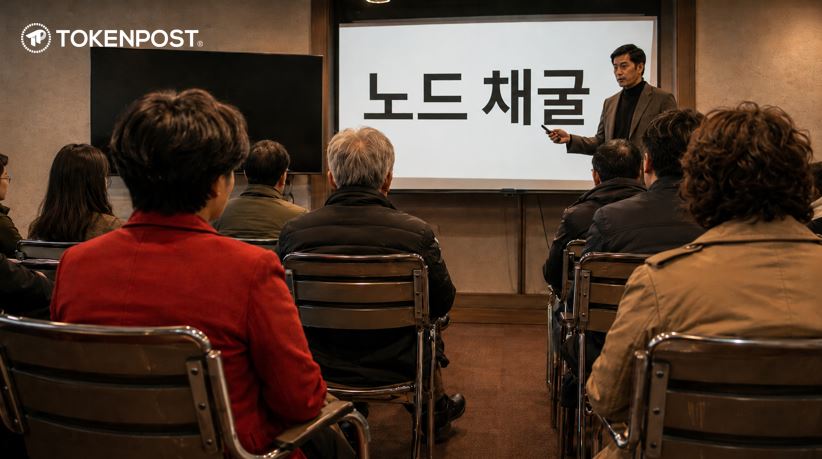
A new wave of crypto marketing schemes targeting South Korean retail investors is adopting the language of ‘AI’, ‘nodes’, and ‘DAOs’—but investigators warn the underlying mechanics look increasingly like a classic pyramid-style distribution model dressed up as Web3.
According to materials reviewed by TokenPost, promoters are replacing older buzzwords such as “pre-listing coins,” “principal guarantees,” and “high-yield dividends” with promises tied to ‘AI auto-trading’, ‘node mining’, ‘DAO participation’, offshore exchange referrals, and lifestyle-style memberships. While the packaging has changed, TokenPost argues the recurring pattern is familiar: participants deposit funds, recruit new members, climb ranks, and receive rewards funded—directly or indirectly—by the capital or trading activity of later entrants.
The outlet said it identified five recurring formats in promotional documents and pitch decks circulating in South Korea: ‘AI signal/auto-trading groups’, ‘node allocation sales’, ‘DAO tiered communities’, ‘exchange referral networks’, and ‘membership-based packages’. TokenPost did not disclose project names in its first installment, citing the risk of misinformation, impersonation, mislabeled materials, and the need to distinguish official projects from domestic sales intermediaries. The focus, it said, is not on any single token but on a repeatable domestic sales “grammar” that can be applied to many brands.
From “tech explanation” to “returns table”
TokenPost describes a consistent funnel. New participants are recruited via KakaoTalk open chats, Telegram channels, blogs, YouTube, and in-person seminars. Rather than leading with a white paper or product documentation, domestic recruiters allegedly foreground ‘profit tables’, ‘compensation charts’, scheduled price increases, and referral codes. Payments are often steered toward stablecoins such as Tether (USDT), or handled through won-denominated proxy deposits and proxy purchases that can obscure counterparties and fund flows.
Participants then receive a right described as a token, point balance, node slot, mining entitlement, or membership—terms that vary by pitch, but serve a similar function. Additional compensation is offered for bringing in more participants or expanding “downline” volume. In simplified form, TokenPost characterized the flow as: new investor → USDT or won deposit → domestic recruiter/referral code → overseas platform or wallet → distribution of token/points/nodes → recruitment-based rewards.
In this structure, the crucial question is not branding, TokenPost argues, but the source of returns. If rewards are primarily funded by new deposits or downstream trading activity rather than verifiable service revenue or genuine network contribution, the model resembles a multi-level sales scheme more than a sustainable blockchain service.
Why ‘AI’ has become the most effective wrapper
Among the most common hooks in recent pitches is ‘AI’. TokenPost notes that claims such as “AI finds buy/sell timing,” paired with terms like “auto-trading,” “signals,” “copy trading,” or “institutional-grade algorithms,” can reduce investor skepticism that might otherwise apply to human-run “signal rooms.” But the presence of AI branding does not shift downside risk: if signals fail, losses remain with the investor.
The publication highlighted a deeper conflict when AI-themed services are tied to exchange sign-up links, fee rebates, referral commissions, or subscription models. In those cases, the operator may be economically incentivized by ‘trading volume growth’ and user acquisition rather than client profitability—turning what appears to be a trading tool into a distribution channel for fees and recruitment rewards. TokenPost said the more relevant question becomes not whether an AI is accurate, but who captures fees and commissions as money flows in.
When “nodes” become a sales product
TokenPost emphasized that node operations are not inherently problematic. In legitimate networks, nodes can validate transactions, synchronize data, and provide infrastructure—typically requiring transparent server specifications, uptime commitments, slashing or penalty rules, security guidance, and clearly defined reward formulas.
However, it said some domestically circulated “node” promotions prioritize return narratives over technical requirements, emphasizing lines such as “deposit X USDT and receive Y,” “tokens are paid daily,” “multiple returns based on listing price,” “buy before the next price increase,” and “extra rewards for referrals.” The central ambiguity, TokenPost argues, is whether buyers actually operate nodes—or whether “node” is being used as a label for a token allocation right or quasi-investment contract.
In earlier investigative reporting, TokenPost said it had observed materials combining node “rank tables,” investment-based yield ceilings, referral payouts, and compensation linked to subordinate organizational performance—features that resemble pyramid compensation structures more than network participation incentives.
‘DAO’ as a rebrand for tiered sales communities
TokenPost also flagged the frequent use of ‘DAO’ terminology in domestic pitches. In principle, decentralized autonomous organizations are governance systems in which members coordinate through transparent voting, treasury management, proposal processes, and contribution-based incentives. But in some sales materials, TokenPost said “DAO” is repurposed to mean an investor club, a tiered community, or a referral-driven organization.
The red flag, it argued, is straightforward: if a pitch emphasizes compensation charts, ranks, and team-building metrics over governance rights and measurable contributions, it may be a sales organization using DAO branding rather than a functioning on-chain governance structure.
Offshore exchange referrals and the regulatory gray zone
Another pillar of the trend involves offshore exchange referral programs. Referral marketing itself is common in the exchange industry. But TokenPost said the nature of the activity can change when domestic recruiters market referrals as guaranteed income—“profit for signing up,” “fee payback for trading,” “fixed returns for deposits,” or commissions tied to downline trading volume—especially when combined with organized guidance on deposits, proxy purchases of USDT, account setup, KYC procedures, and systematic distribution of referral codes.
TokenPost pointed to prior South Korean regulatory interpretations indicating that, depending on conduct, brokering or facilitating the sale, purchase, exchange, transfer, custody, or management of virtual assets as a business can trigger virtual asset service provider (VASP) considerations under the country’s financial information reporting framework. The distinction hinges on whether activity goes beyond advertising and effectively intermediates transactions or arrangements.
The Financial Intelligence Unit (FIU) has separately warned about an increase in illegal virtual asset handling businesses operating via Telegram, open chat rooms, YouTube, and social media. In guidance cited by TokenPost, the FIU has highlighted factors used to assess whether a service is effectively soliciting Korean users, including Korean-language marketing, support for won-based payments, and user-acquisition campaigns targeting Korean customers. The FIU has also pointed to “referral sales” that promote or broker unreported businesses as a notable illegal pattern, along with cases where hard-to-trade tokens are sold on the promise of price appreciation or where money is collected without delivering assets.
Why the schemes spread through personal networks
TokenPost argued that these sales networks often expand less through public ads and more through trust-based communities—insurance sales circles, retiree groups, alumni associations, religious communities, local networks, and group chat rooms. Promoters sell familiarity as much as technology, using lines such as “I tested it,” “I already got paid,” “last chance before listing,” or “daily income like a pension.” Early participants may indeed receive payouts, which can be showcased as proof inside group chats or at seminars, strengthening social pressure on later entrants.
But in models dependent on continuous inflows, TokenPost warned, stress tends to surface when recruitment slows. At that stage, participants often encounter delayed withdrawals, denied refunds, listing delays, wallet “maintenance,” system upgrades, or alleged regulatory issues. In the crypto market, TokenPost noted, “maintenance” can become a euphemism for an operation winding down.
A repeating playbook, not one identifiable coin
The publication’s central claim is that the risk is structural rather than tied to a single named token or platform. It outlined a set of recurring indicators: profit tables appearing before technical explanations; tiering based on purchase size; referral and downline rewards; heavy emphasis on listing-driven upside or quick principal recovery; opaque payment routes via USDT, overseas wallets, or proxy purchases; and recruitment through KakaoTalk, Telegram, and offline briefings that exploit personal networks.
If several of these elements appear together, TokenPost argued, the promotion is unlikely to be ordinary Web3 marketing and may represent a high-risk solicitation model with elevated potential for consumer harm.
TokenPost said its ongoing series will examine each format in turn—beginning with AI-led signal and auto-trading networks—by comparing official project structures with on-the-ground sales practices, assessing whether domestic recruiters are authorized, tracing how USDT payments and referral rewards function, and checking for evidence of emerging 피해 (consumer losses).
The branding may shift from AI to nodes, from DAOs to memberships, TokenPost concluded, but if a system relies on deposits and recruitment to sustain payouts up the chain, the outcome is consistent: the final layer bearing the weight is the investor.