

 News
News  Coin Information
  About us
  Customer Service


 Add as a preferred source on Google
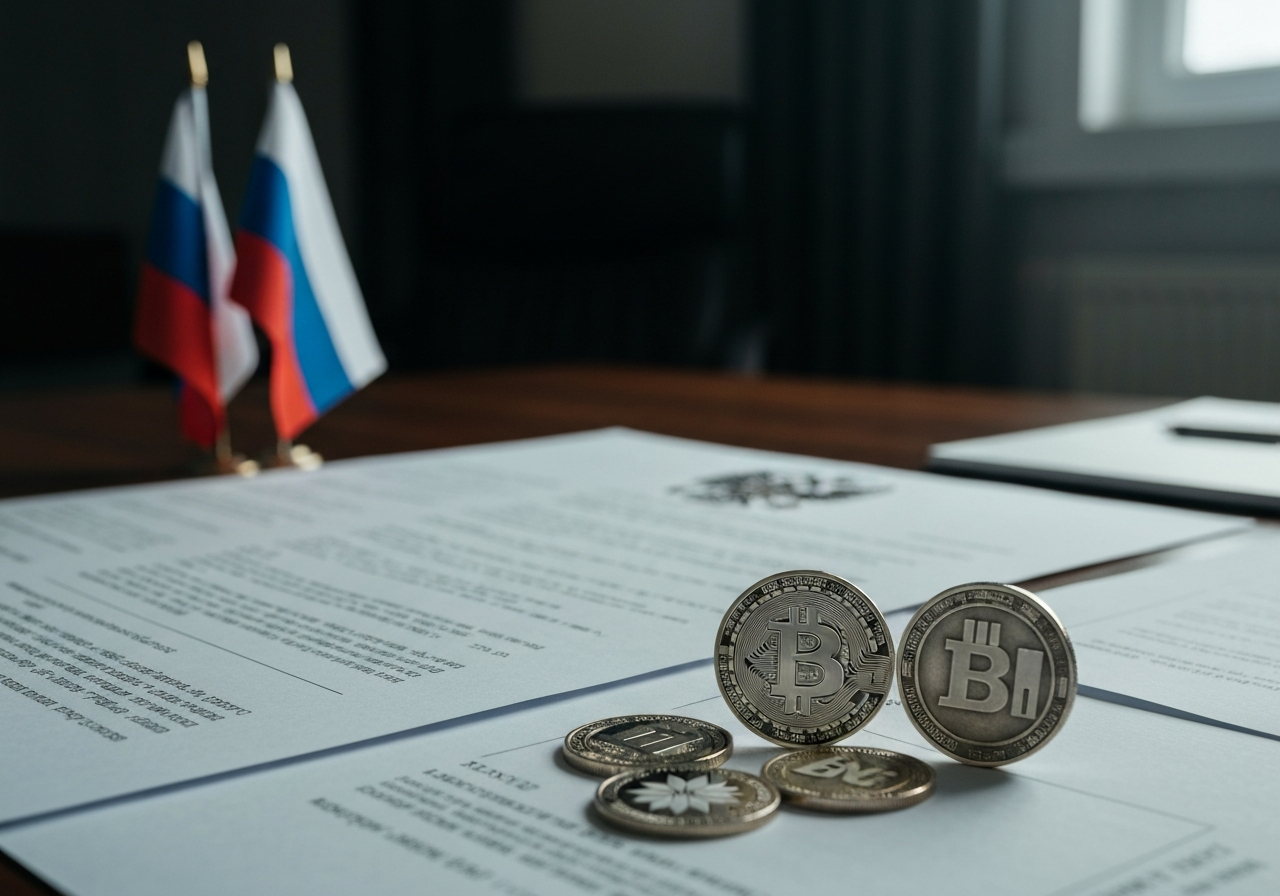
Russia has approved its first comprehensive cryptocurrency regulatory framework, a landmark move aimed at pulling the fast-growing digital asset market into the legal mainstream while tightening oversight of exchanges, custodians, and related service providers.
According to CoinDesk, Russia’s State Duma passed the sweeping bill, with most provisions set to take effect on Sept. 1. The state-run news agency TASS reported Tuesday ET that the law establishes formal rules for cryptocurrency exchanges, depositaries, and other digital asset service providers, while also defining who may buy crypto—and under what conditions.
Under the new regime, entities seeking to operate as a crypto exchange must be included in a special state register. However, incumbent firms are granted a lengthy transition period and may continue operating without registration until July 1, 2027. The law also assigns banks a frontline enforcement role: if a bank suspects an entity is running an exchange without approval, it must refuse related transfers, effectively using the traditional payments system as a compliance choke point.
In a notable legal safeguard, the legislation extends judicial protection to digital currency holders regardless of whether those assets were previously declared—an attempt to reduce legal uncertainty for owners amid Russia’s historically fragmented crypto rules.
The bill introduces a tiered access model for investors. Retail participants will be allowed to purchase only the most liquid cryptocurrencies through authorized intermediaries, with an annual cap of roughly $3,800 per intermediary. ‘Qualified investors’ will be able to buy any cryptocurrency without limits, reflecting a regulatory approach that channels higher-risk exposure toward investors deemed capable of bearing it.
The law’s timing underscores the geopolitical context surrounding Moscow’s crypto policy. Russia’s central bank had already floated a proposal in December to legalize and regulate crypto trading for both individuals and institutions. But the Duma’s action also follows an April European Union sanctions package that explicitly targeted crypto activity connected to Russia, including a full ban on service providers and platforms established in the country. The EU said Russia is becoming increasingly reliant on cryptocurrencies for international transactions.
Beyond exchange oversight, Russia’s updated digital asset framework places cryptocurrency mining, issuance and circulation, and services offered by brokers, asset managers, trading platforms, and clearing institutions under supervisory control. Yet it preserves a key long-standing restriction: using cryptocurrency as payment for goods and services inside Russia remains prohibited, and banks and other institutions are barred from advertising or promoting crypto payments.
Exceptions remain narrowly defined. Digital currency may still be used for certain cross-border trade settlements between residents and non-residents, transactions involving mined cryptocurrency, payments required by digital asset platforms, and settlements related to securities or other digital assets.
The new law signals a pragmatic push to formalize crypto activity domestically while ring-fencing its use as an everyday payment method. For global markets, Russia’s approach illustrates a broader trend: major jurisdictions are increasingly treating digital assets as a regulated financial sector—especially where capital flows, sanctions compliance, and cross-border settlement risks are in play.























Comment 0