
 Add as a preferred source on Google
Japan Presses Asia to Expand Oil Reserves as Hormuz Risks Persist
Tokyo is developing an ASEAN-wide stockpiling roadmap and has proposed approximately $10 billion in regional energy-resilience cooperation.

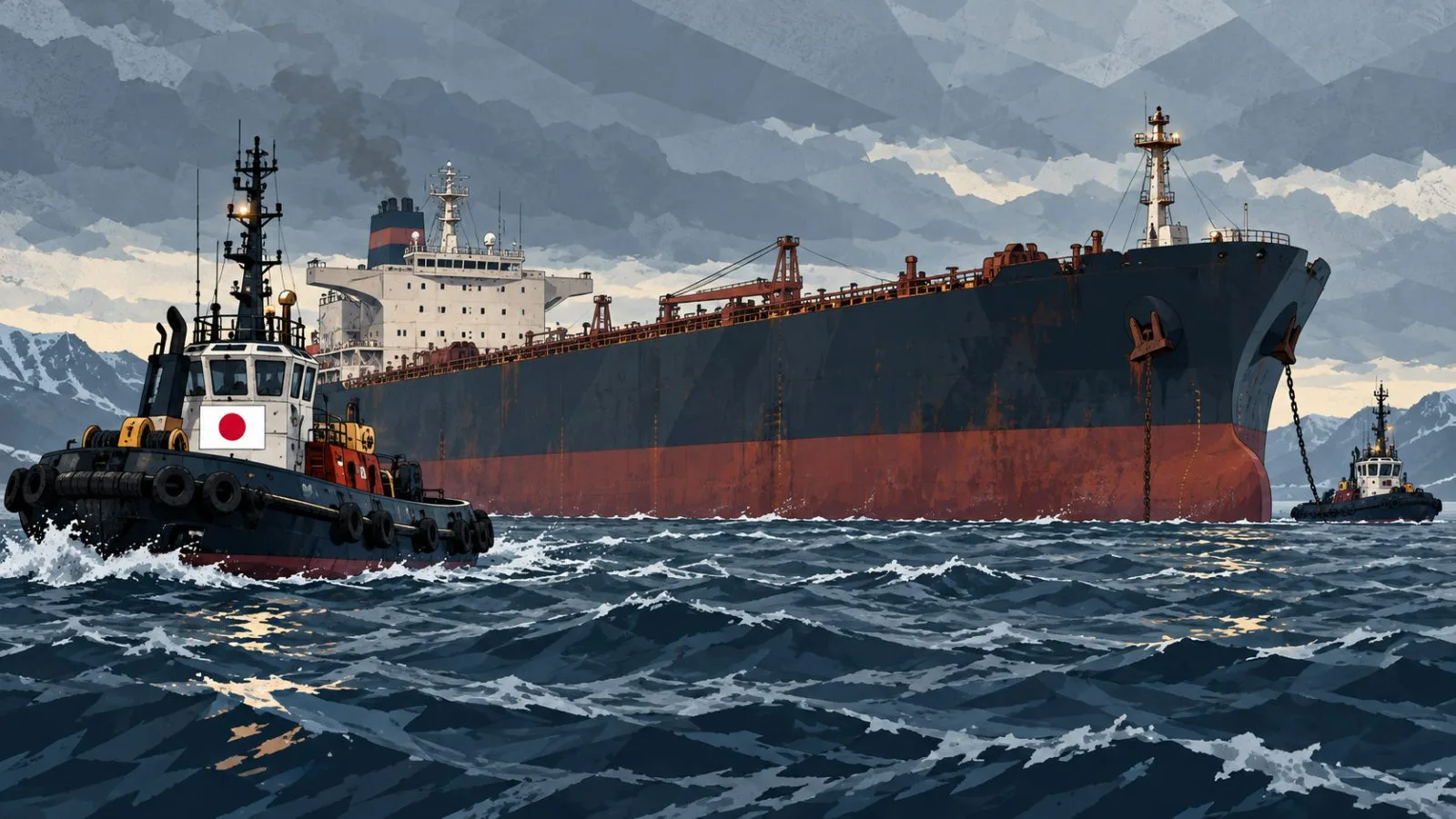
Japan is pushing Asian governments to build shared oil reserves and coordinate emergency releases as Middle East tensions threaten regional energy security and disrupt crude flows.
Japan and the Philippines agreed in May to explore joint oil stockpiling across the Association of Southeast Asian Nations. Japan plans to develop a roadmap through the Economic Research Institute for ASEAN and East Asia and present it at autumn meetings involving ASEAN and the Asia Zero Emission Community.
“We plan to develop a roadmap for establishing a joint stockpiling system,” Japan’s Minister of Economy, Trade and Industry Ryosei Akazawa said.
The proposal follows an energy-resilience framework announced in April. The plan covers coordinated reserves, storage-tank construction and other supply-chain measures across Asia, with approximately $10 billion in financial cooperation.
The Asia Zero Emission Community includes Australia, Brunei, Cambodia, Indonesia, Japan, Laos, Malaysia, the Philippines, Singapore, Thailand and Vietnam. The group was created around decarbonization efforts and is also being used to advance cooperation on energy security.
Japan began releasing crude equivalent to about one month of supply on March 26, 2026. The planned release totaled approximately 8.5 million kiloliters. A second release equivalent to about 20 days of supply began in early May, while the government temporarily reduced the private-sector stockpiling requirement from 70 days to 55 days.
Japan’s government-held strategic oil stocks were estimated at 263 million barrels in December 2025. Private-sector stocks are required to cover about 70 days of demand, estimated at roughly 220 million barrels.
A separate estimate placed Japan’s strategic inventory at 187 million barrels in the second quarter of 2026, compared with 321 million barrels for the United States and 1.492 billion barrels for China. The 263 million-barrel figure covers government-held stocks in December 2025, while the 187 million-barrel figure is a later estimate of strategic inventories using a different reference period and methodology.
Imports of Middle Eastern crude into Japan declined significantly from late March as tankers struggled to pass through the Strait of Hormuz. Japan has maintained its stockpiling system for more than 50 years, since the oil crises of the 1970s, Akazawa said.
Japan also signed an oil-security cooperation statement with the Philippines through the Japan International Cooperation Agency. The broader regional proposal does not establish an immediate reserve release or a binding procurement target. Japan plans to present its joint-stockpiling roadmap at autumn ASEAN and Asia Zero Emission Community meetings.
Riza Dagoc
Riza Dagoc reports on regulation, investing and the digital-asset business for TokenPost. Send corrections or tips to info@tokenpost.com.