
 Add as a preferred source on Google
Big Tech Opposes Full Cost Sharing for AI Data Center Grid Upgrades
Amazon, Google and other operators support dedicated facilities but resist automatically paying for shared upgrades tied to new demand. A proposed Duke Energy settlement would require deposits for some costs.

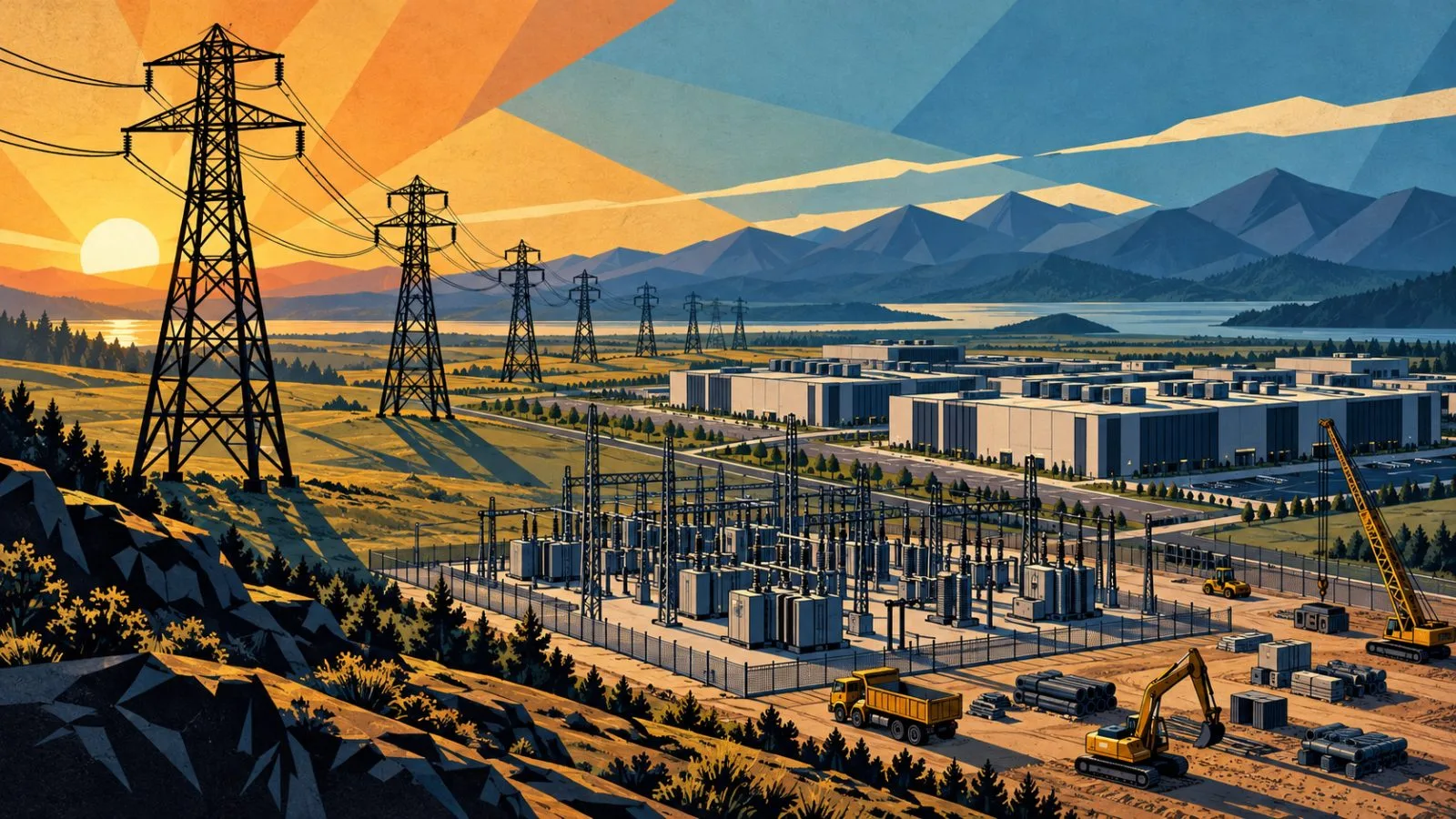
Amazon, Google, Meta, Microsoft, CoreWeave, Digital Realty and Equinix generally support paying for power facilities built exclusively for their data centers but oppose automatically covering all shared grid upgrades tied to their electricity demand.
The dispute centers on “but-for” cost allocation, under which data-center operators would pay for upgrades that would not have been needed without their new loads. The companies’ position conflicts with the White House’s Ratepayer Protection Pledge, issued March 4, which requires new data-center infrastructure costs to be covered by the companies creating the demand.
The pledge calls for hyperscalers and artificial intelligence companies to build, bring or buy the energy needed for their facilities. It also requires payment for new power-delivery upgrades and related infrastructure, including capacity that is brought online but not fully used.
The grid-cost debate comes as approximately one-third of U.S. transmission infrastructure and about half of distribution infrastructure operate near or beyond their useful life. It remains unclear how much of that replacement need predates data-center growth. New data-center demand could add $6.3 billion in charges for ratepayers across the 13 states served by PJM Interconnection in 2028 and 2029.
Minimum-billing requirements are another point of disagreement. Consumer advocates generally support requiring data centers to pay for 80% to 90% of contracted capacity even when usage is lower. Companies have described thresholds in that range as excessive.
Utilities and grid operators are proposing approaches that would shift more responsibility to large electricity users. Duke Energy announced an Oct. 7 proposed settlement in North Carolina that would require new customers using at least 50 megawatts, with an 80% load factor, to pay upfront for dedicated facilities and provide deposits or guarantees for shared upgrades. The terms would apply to electric-service agreements signed after June 1, 2026, if approved by the North Carolina Utilities Commission. A decision was expected by mid-November.
PJM supports voluntary “Bring Your Own New Generation” arrangements that allow large loads to bring new power generation to offset demand. Large loads could also face limited curtailment during emergencies to protect broader grid reliability.
Google and Constellation Energy separately announced Oct. 6 a 20-year agreement supporting 890 megawatts of additional nuclear capacity at 11 reactors in Illinois, Pennsylvania and New Jersey. The companies said the arrangement represents more than $4.3 billion in new investment, with the first reactor uprate expected in 2028.
Riza Dagoc
Riza Dagoc reports on regulation, investing and the digital-asset business for TokenPost. Send corrections or tips to info@tokenpost.com.