
 Add as a preferred source on Google
China and Russia Call for More Arctic Freight and Scheduled Sailings
Their Oct. 21 communiqué also backs polar-vessel construction but sets no targets. The Northern Sea Route logged 104 confirmed transits through Sept. 30, carrying an estimated 3.7 million metric tons.

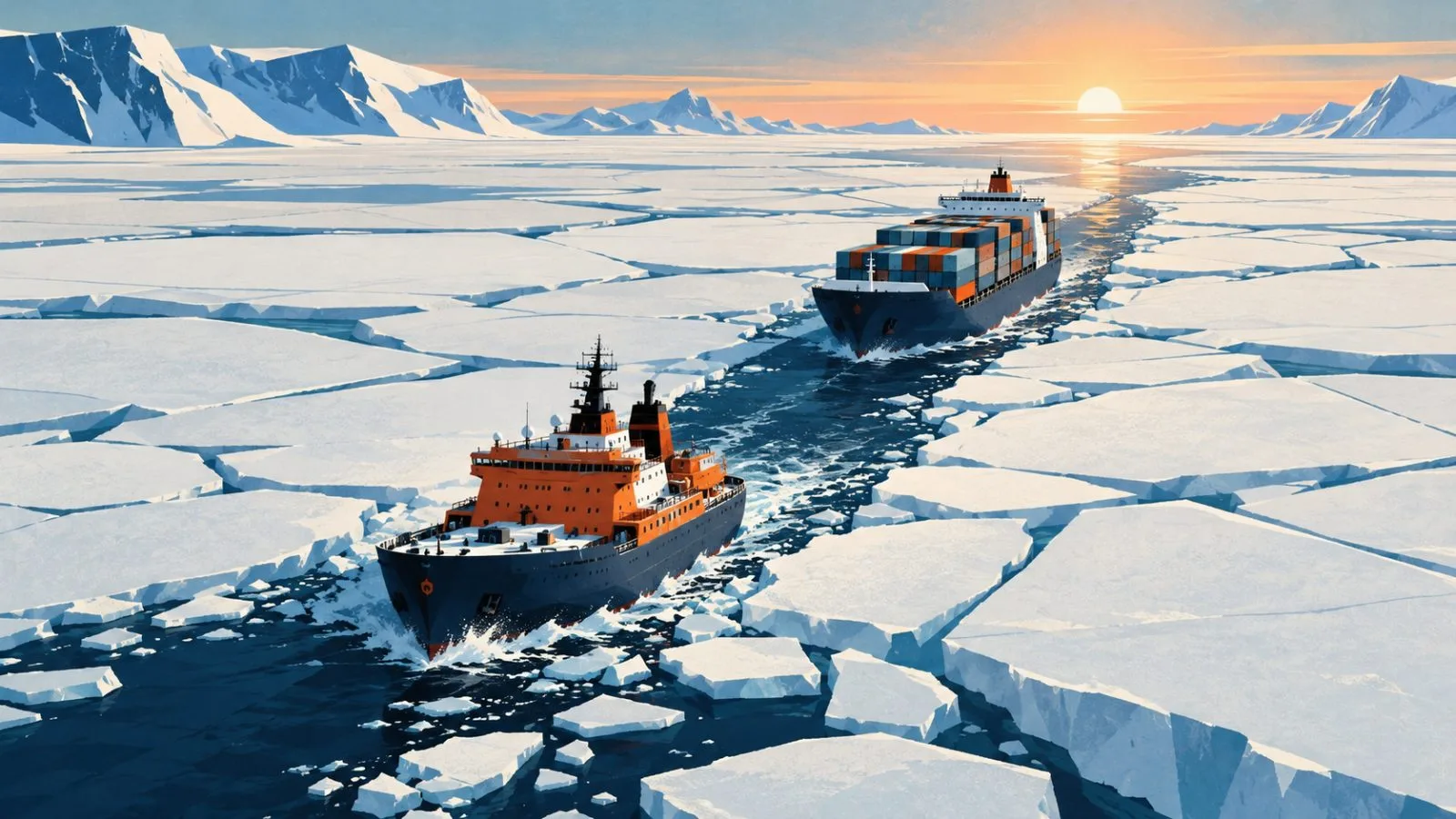
China and Russia called for more Arctic freight and scheduled sailings between their ports in an Oct. 21 communiqué, adding a commercial aim as Europe outlines plans to expand regional capacity.
The communiqué calls for increased freight volumes and regular services, cooperation on polar-vessel construction and support for companies engaged in Arctic cooperation. It sets no cargo target, ship count, budget or deadline.
The European Union's Oct. 20 Arctic strategy proposes expanding icebreaker capacity and exploring joint procurement and sharing. It also calls for a maritime-security hub, an Arctic Cable Hub and links between European ports, rail, energy and digital infrastructure and Arctic trade networks. The strategy gives no quantified icebreaker target.
The Northern Sea Route recorded 104 confirmed transit voyages through Sept. 30, carrying an estimated 3.7 million metric tons. For all of 2025, the route logged 103 transits with an estimated 3.2 million metric tons of transit cargo. The 2026 cargo estimate is preliminary; it is separate from total route traffic, which reached 37.02 million metric tons in 2025, including 3.2 million metric tons in transit cargo.
A scenario that included pending voyages put the 2026 transit total above 4.5 million metric tons. On Oct. 27, Rosatom Arctic Directorate head Vladimir Panov forecast more than 7 million metric tons of transit cargo and more than 40 million metric tons of total route cargo for the year. The estimates use different cutoffs and bases and are not directly comparable.
Direct Asia-Europe sailings remain limited. Four voyages that neither began nor ended in Russia were completed by Sept. 30, compared with one in all of 2025. South Korean container ship Panstar Acro made a pilot round trip; its Busan-to-Felixstowe leg took about 20 days and seven hours, but the trip did not establish a regular service.
Tracked eastbound tanker voyages carried an estimated 2.1 million metric tons, primarily crude oil, to Asian destinations, including Chinese ports. The route is also part of Russia's Arctic crude export trade. Russia's Northern Sea Route General Administration, under Rosatom, handles navigation permits, and Rosatom lists icebreaker escort services and tariffs.
“Arctic security is European security,” said Kaja Kallas, the European Union's High Representative for Foreign Affairs and Security Policy and European Commission vice-president. Alicia Garcia-Herrero, APAC and MEA chief economist at Natixis CIB, said, “Europe cannot realistically challenge Chinese and Russian dominance of Arctic shipping in any meaningful timeframe.”
The communiqué sets out China's and Russia's goals without a firm shipping schedule or polar-vessel delivery timeline. The EU strategy proposes regional capacity and infrastructure measures but does not set a new icebreaker target.
Riza Dagoc
Riza Dagoc reports on regulation, investing and the digital-asset business for TokenPost. Send corrections or tips to info@tokenpost.com.