
 Add as a preferred source on Google
Trump-Putin-Xi summit focused on optics, but could open door to cautious cooperation
The first U.S.-Russia-China summit produced few concrete agreements and largely served symbolic aims, Hudson Institute fellow John Lee said. He said it could still create a basis for cautious cooperation.

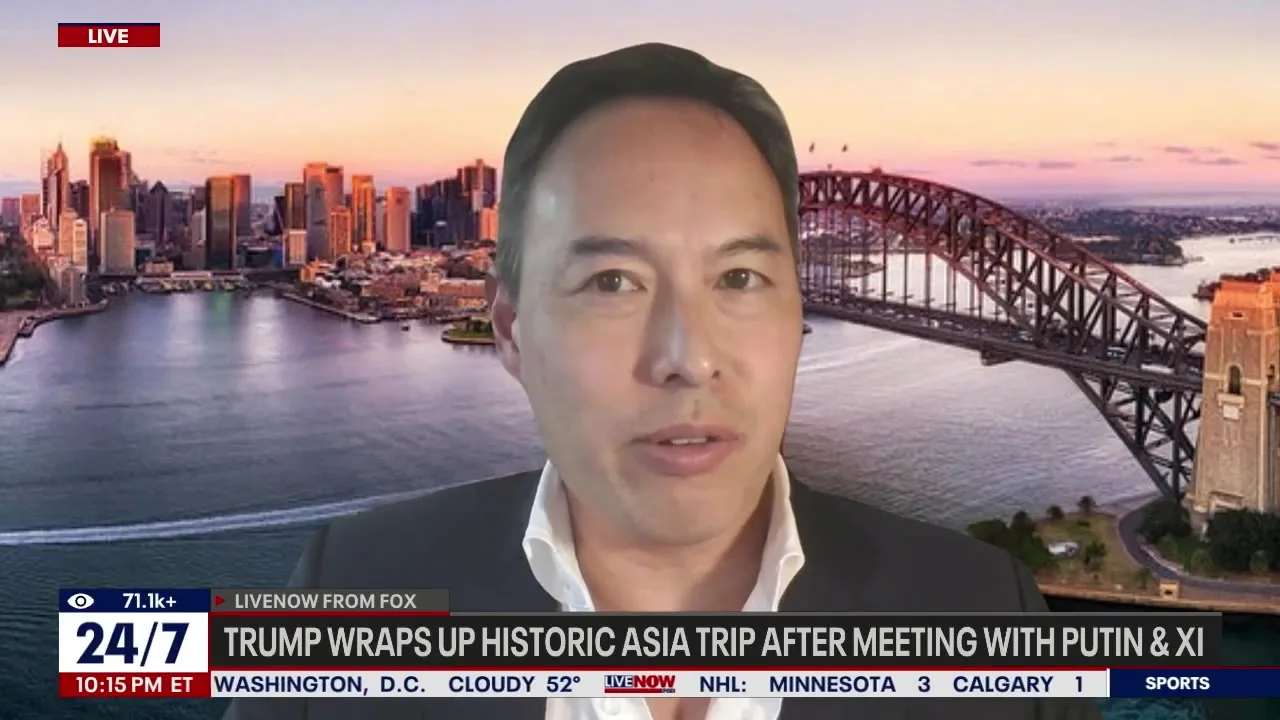
The first trilateral summit between the United States, Russia and China emphasized symbolism and image over concrete agreements, but could provide a starting point for future cooperation.
John Lee, a senior fellow at the Hudson Institute, said in an interview with Fox Live Now that the leaders agreed on little, but that the meeting could put issues on the agenda for future discussions.
Lee said China and Russia sought to project that they could stand as equals with the American president, while President Donald Trump wanted to show he could engage any world leader, including those with whom he has serious disagreements. He said much of the meeting was about optics, but that was natural for a first encounter.
Lee was skeptical that the United States could pull Russia away from China, citing an ideological and strategic bond between Chinese President Xi Jinping and Russian President Vladimir Putin. He said Trump's effort to bring Russia closer to the United States was unlikely to succeed, although the meeting caused no damage on that front.
Raising the nuclear issue publicly could later help pressure China to explain the size, deployment and strategic purpose of its arsenal. Lee said China could reach levels similar to the United States in about 10 years, while remaining highly opaque about its nuclear forces.
The interests of the three countries diverge most sharply over the war involving Iran and Russia's war in Ukraine. China may prefer the Ukraine war to continue because it keeps Russia dependent on Beijing and distracts the United States in Europe; Russia needs Chinese assistance and wants to limit U.S. military aid to Ukraine; and the United States wants to end the violence and loss of life. Lee said those differing aims made firm outcomes unlikely.
Lee said Asian countries remain uncertain about the Trump administration's tariff policy and want predictability about its trade agenda for the next two years. European and Asian allies were nervous because they were not extensively included before the meeting, but he said the summit did not damage allied interests or significantly alter the geopolitical order.
Riza Dagoc
Riza Dagoc reports on regulation, investing and the digital-asset business for TokenPost. Send corrections or tips to info@tokenpost.com.