

 News
News  Coin Information
  About us
  Customer Service


 Add as a preferred source on Google

Security concerns around 'seed generation' in hardware wallets have resurfaced after reports linked a key-generation weakness in COLDCARD to more than $100 million in losses for Bitcoin (BTC) holders, underscoring how small design trade-offs in randomness can cascade into catastrophic breaches.
According to Decrypt, the incident was traced to insufficient 'entropy'—the amount of randomness used during seed creation—in a subset of COLDCARD devices. Seeds are the master secret from which all wallet private keys are derived; if an attacker can reconstruct the seed, they can regenerate the corresponding private keys and access funds. In practical terms, lower entropy shrinks the number of combinations an attacker must test, turning what should be computationally infeasible into an attack that can be executed through brute-force trials.
The episode has reignited a long-running debate in self-custody circles about whether users should rely on a device’s internal random number generator or manually add randomness—often by rolling dice—to harden the seed creation process. COLDCARD supports adding dice-roll inputs to supplement seed generation, and also offers an option to fully replace device-generated randomness with user-provided entropy. Security researchers and wallet veterans have long argued that giving users an auditable, human-verifiable source of randomness can reduce reliance on opaque hardware components, though critics note it can introduce user error if implemented incorrectly.
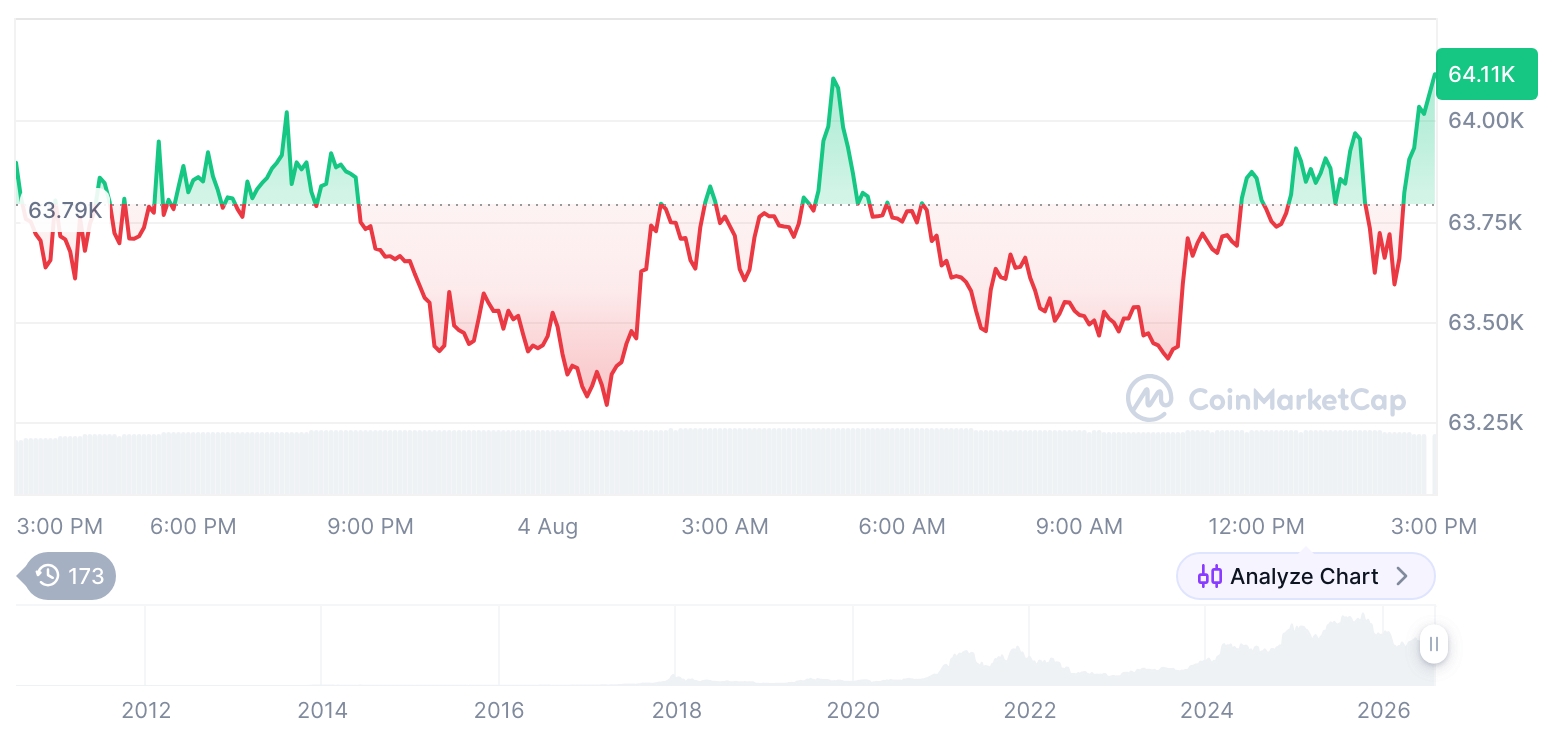
In separate U.S. market disclosures, Strategy said it raised a combined $395.3 million through Bitcoin sales and common stock issuance, while also allocating capital to repurchase preferred shares. Filings with the U.S. Securities and Exchange Commission (SEC) showed the company sold 1,638 BTC at an average price of $63,957, generating $104.7 million in proceeds. Strategy also issued 3,011,361 shares of its common stock (MSTR) for $290.6 million.
The company used $81.2 million to repurchase 912,143 shares of its STRC preferred stock and reported cash holdings rising to $4.0 billion. The transactions highlight Strategy’s continued use of capital markets and balance-sheet management to maintain flexibility around its Bitcoin exposure, even as investors scrutinize the firm’s funding mix amid shifting crypto market liquidity conditions.
Across the payments and consumer-tech landscape, Samsung Electronics is reportedly exploring a plan to bring 'native stablecoin' functionality to up to 800 million Galaxy smartphones, with the feature expected to be integrated into Galaxy Wallet, according to The Daily. A native implementation would allow users to use stablecoins within the device’s default environment rather than relying on standalone third-party apps. Supported stablecoins, launch regions, and timing were not disclosed, but the report signals continued convergence between mainstream device ecosystems and onchain payments rails.
On the policy front, U.S. Senator Jon Husted called for a Senate vote on the Clarity bill, arguing lawmakers should stop delaying the process. Bitcoin Magazine posted video of his remarks on Aug. 4 ET, quoting Husted as saying the Senate should move forward rather than continue to “hesitate” and stall. The push comes as the industry presses for clearer guardrails on market structure, oversight responsibilities, and compliance expectations—issues that have shaped exchange listings, token classifications, and institutional participation.
Legal fallout from the 2022 exchange collapse also remained in focus after ABC News reported that a federal appeals court in New York rejected an appeal by FTX founder Sam Bankman-Fried, leaving his 25-year prison sentence intact. The decision maintains one of the most prominent convictions in the sector’s history and continues to influence regulatory narratives around consumer protection and centralized exchange governance.
In the U.S. ETF market, Brazil-based crypto asset manager Hashdex plans to liquidate its U.S. spot Bitcoin (BTC) ETF later this month, Decrypt reported. The fund launched in 2024 but struggled to attract assets, highlighting how even within the fast-growing spot Bitcoin ETF category, survivor dynamics can emerge as investor attention concentrates in the deepest, most liquid products.
Elsewhere, CryptoSlate reported that Poolin’s restructuring remains uncertain as a proposed $52 million sale of Texas-based assets could collapse around next week’s court hearing. The report cited the buyer, Thor, whose due diligence rights are set to expire before the court reviews the sale, leaving room for the transaction to be withdrawn. With Poolin’s wallet-related liabilities estimated at $163.7 million and key questions unresolved—such as which assets count as estate property and how creditor priority will be determined—recoveries for wallet users could remain fluid even after the hearing.
Regulatory developments also extended to emerging markets. Bloomberg reported on Aug. 5 UTC that Nigeria’s Securities and Exchange Commission approved the issuance and trading of tokenized versions of traditional corporate shares. The service is expected to begin in early September 2026 via the NASD OTC Securities Exchange, Nigeria’s over-the-counter platform. If implemented as planned, the move could broaden local access to capital markets and expand experimentation with onchain representations of regulated securities.
In Texas, Crypto Briefing reported that the state has mandated audits before data centers can connect to the power grid—a requirement that will also apply to cryptocurrency mining facilities. The measure reflects intensifying scrutiny of grid reliability and large-load interconnections, a policy area increasingly shaped by the rapid growth of AI infrastructure and industrial-scale mining operations.
Finally, speculative trading activity flared in the memecoin corner of the market. BSC-based token RTX surged roughly sevenfold within one hour between 1:00 a.m. and 2:00 a.m. UTC on Aug. 5, according to GMGN data, after claims circulated that Nvidia ($NVDA) CEO Jensen Huang’s X account followed @TradeSager, a member of the RTX community. The rapid spike illustrates how thin liquidity and social-media narratives can still drive abrupt price dislocations in high-risk tokens.
Taken together, the day’s developments highlighted the crypto market’s ongoing split-screen reality: security fundamentals like 'entropy' and seed protection remain existential for self-custody users, while institutions and regulators continue to shape capital flows and market structure—and retail-driven narratives can still ignite sudden volatility at the edges.
🔎 Market Interpretation
- Self-custody risk remains a primary systemic vulnerability: The reported COLDCARD seed-generation weakness reinforces that security design choices (entropy quality, RNG assumptions) can outweigh market factors and lead to outsized losses.
- Capital markets and balance-sheet engineering continue to drive BTC exposure: Strategy’s BTC sales, equity issuance, and preferred repurchases show how large holders actively manage liquidity and leverage rather than simply “HODLing.”
- Mainstream platforms are moving stablecoins closer to default consumer rails: Samsung’s reported stablecoin plans suggest stablecoins are increasingly treated as a wallet-native feature, not a niche app-level add-on.
- Regulatory/legal headlines keep shaping sentiment and access: U.S. legislative pressure (Clarity bill), court outcomes (SBF appeal denial), and new market-rule expansions (Nigeria tokenized shares) underscore that policy paths are diverging by jurisdiction.
- ETF competition is entering a “survival-of-liquidity” phase: Hashdex’s planned liquidation highlights that even in growing categories, products without scale and trading depth may exit.
- Mining and infrastructure face tightened oversight tied to grid reliability: Texas audit requirements reflect a broader policy trend where AI and mining loads are treated as strategic grid risks.
- Retail micro-markets still exhibit reflexive volatility: The RTX memecoin spike shows how thin liquidity plus social narratives can produce rapid dislocations, largely detached from fundamentals.
💡 Strategic Points
- For hardware-wallet users: Prefer seed-generation workflows that are auditable and resilient—e.g., combining device RNG with user-supplied entropy (dice) and verifying you are using recommended settings for your specific device/firmware.
- Threat-model “entropy failure” explicitly: A seed is only as strong as its randomness; low entropy reduces the brute-force search space from “impossible” to “practical,” particularly for targeted attackers.
- Balance usability vs. security: User-provided entropy can reduce reliance on opaque hardware, but it can also introduce mistakes (miscounted rolls, biased methods, poor record-keeping). Document a repeatable process.
- Watch Strategy-like treasury activity as a liquidity signal: Equity issuance, BTC sales, and preferred buybacks can indicate shifting funding costs and risk appetite that may correlate with broader market liquidity conditions.
- Expect stablecoin adoption to compete at the OS ecosystem level: If “native” stablecoins arrive in major smartphone wallets, distribution and UX may become more important than marginal yield or niche chain features.
- Prepare for policy-driven regime splits: U.S. market-structure clarity efforts, Nigeria’s tokenized equity approvals, and ongoing enforcement narratives can reshape where products launch and which tokens get listed.
- ETF selection may increasingly hinge on depth and fees: Consolidation risk rises for smaller spot BTC ETFs; liquidity, tracking, and bid/ask spreads can matter as much as headline AUM.
- Mining operations should treat interconnection compliance as a core cost: Grid-audit mandates can affect timelines, capex, and site viability—especially where regulators prioritize reliability during peak demand.
- Avoid narrative-driven penny liquidity traps: Memecoin spikes tied to social signals (follows/mentions) are prone to reversals and slippage; risk controls (position sizing, limit orders) are essential.
📘 Glossary
- Seed (seed phrase): The master secret used to derive all wallet private keys; compromise of the seed typically means total loss of funds.
- Entropy: Measured randomness used to generate cryptographic secrets. Lower entropy means fewer possible seeds and easier brute forcing.
- Random Number Generator (RNG): Hardware/software component that produces random values; if flawed or biased, generated seeds may become predictable.
- Brute-force attack: Attempting many candidate seeds/keys until the correct one is found; feasibility depends on the size of the search space.
- User-supplied entropy (dice rolls): Manual randomness added by a user to strengthen seed creation and provide a human-verifiable randomness source.
- Self-custody: Holding crypto via keys you control (not an exchange); shifts responsibility for security to the user.
- Preferred stock (e.g., STRC): Equity class often with priority claims (dividends/liquidation) versus common stock; repurchases can alter funding costs and capital structure.
- Spot Bitcoin ETF: Exchange-traded fund designed to track BTC using spot holdings; liquidity and scale vary across issuers.
- Tokenized shares: Onchain representations of regulated equity, typically requiring clear rules on custody, transfer, and investor protections.
- Interconnection audit: Compliance review required before large loads (data centers/miners) connect to the power grid, aimed at reliability and planning.





















Comment 0