Chinese Suppliers Pursue Role in U.S. AI Data-Center Buildout
Alphabet and Microsoft plan up to $375 billion in 2026 capital spending, while security concerns, tariffs and supply-chain risks could limit Chinese participation.

Chinese suppliers and manufacturers are pursuing commercial opportunities in the U.S. artificial-intelligence data-center buildout, where Alphabet and Microsoft plan up to $375 billion in combined 2026 capital expenditures.
Alphabet expects to spend $175 billion to $185 billion during the year, including investment in AI computing capacity and data centers. Microsoft expects roughly $190 billion in capital expenditures and plans to remain capacity-constrained through 2026.
The United States had 5,427 data centers in 2025, compared with 449 in China. The figures count data centers generally and do not establish how many facilities are focused on AI workloads.
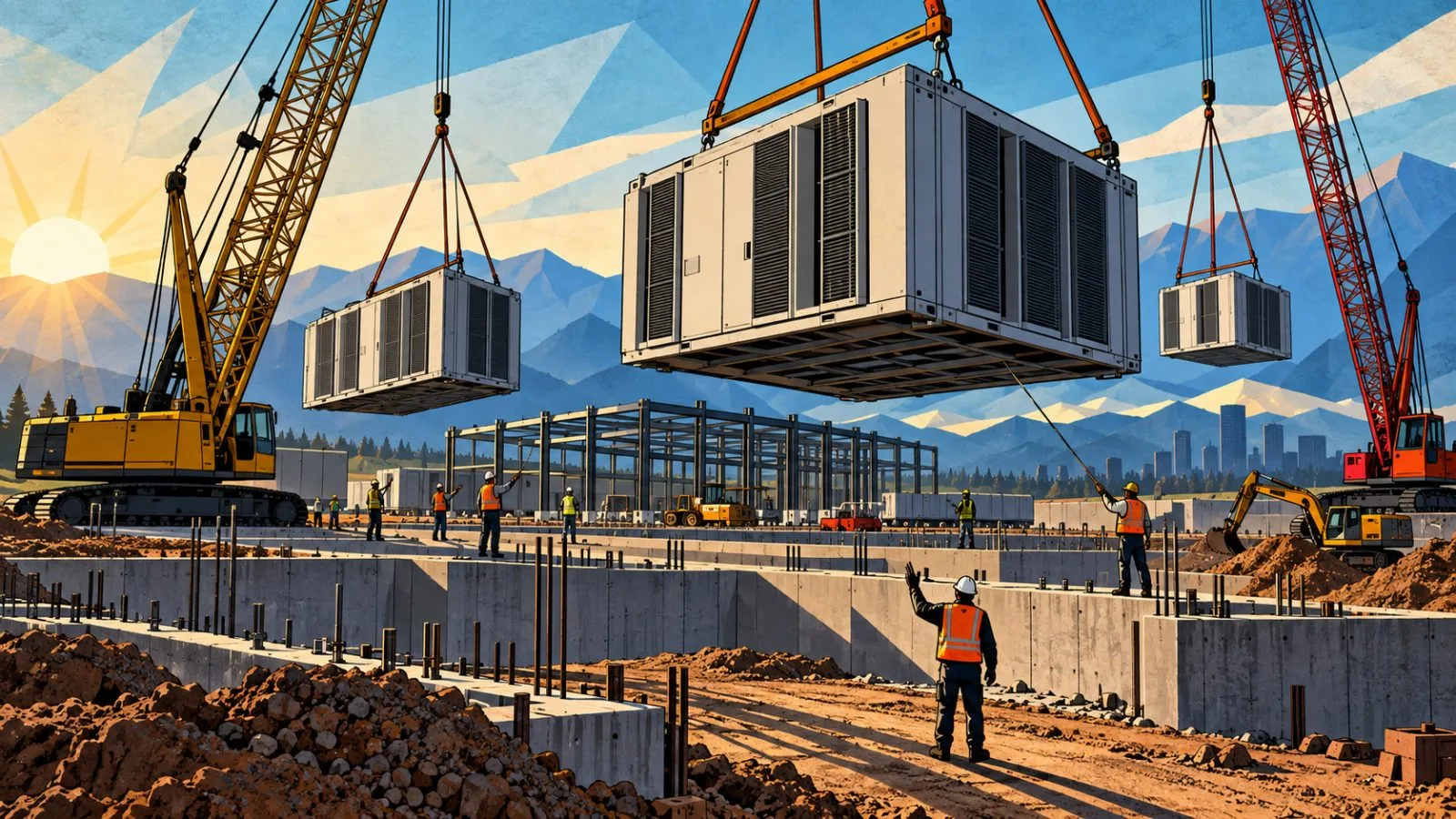
The potential market includes servers, networking equipment, power systems, construction and prefabricated facilities. Prefabricated data centers shift parts of construction into factories, which can reduce on-site work and delivery time.
Singapore-registered Brightray markets prefabricated data-center solutions. Its full-prefabrication system was developed by PrefabDC, a Chinese company. The activity reflects commercial interest from suppliers and manufacturers rather than an announced Chinese government initiative to build data centers in the United States.
Strategic concerns could constrain the opportunity. U.S. authorities are considering restrictions involving Chinese AI models and data-center components, while tariffs and dependence on China for critical infrastructure add further risks.
China’s official 2026–2030 plan targets cumulative information-infrastructure investment of 3.8 trillion yuan, or about $604.8 billion, by 2030. It does not identify a separate $295 billion allocation for data centers. A reported 2 trillion yuan data-center spending figure has not been confirmed by China’s official plan or a filing.
Power availability and grid connections are additional constraints for U.S. projects. New data centers can take as long as seven years to connect to the grid, and planned capacity additions face delays in several regions.
AI governance also came up at the Sept. 24 meeting between Chinese President Xi Jinping and U.S. President Donald Trump. Xi said the two countries could continue discussing AI risks and benefits and “jointly prevent the misuse and abuse of AI.”
“AI must be kept under human control,” Xi said.
The meeting did not announce Chinese data-center exports to the United States.