U.S. Hyperscaler Capital Spending Seen Reaching $1.2 Trillion in 2027
Data-center power demand is projected to reach 66 gigawatts in 2027, while debt is expected to finance 35% of hyperscaler capital spending.

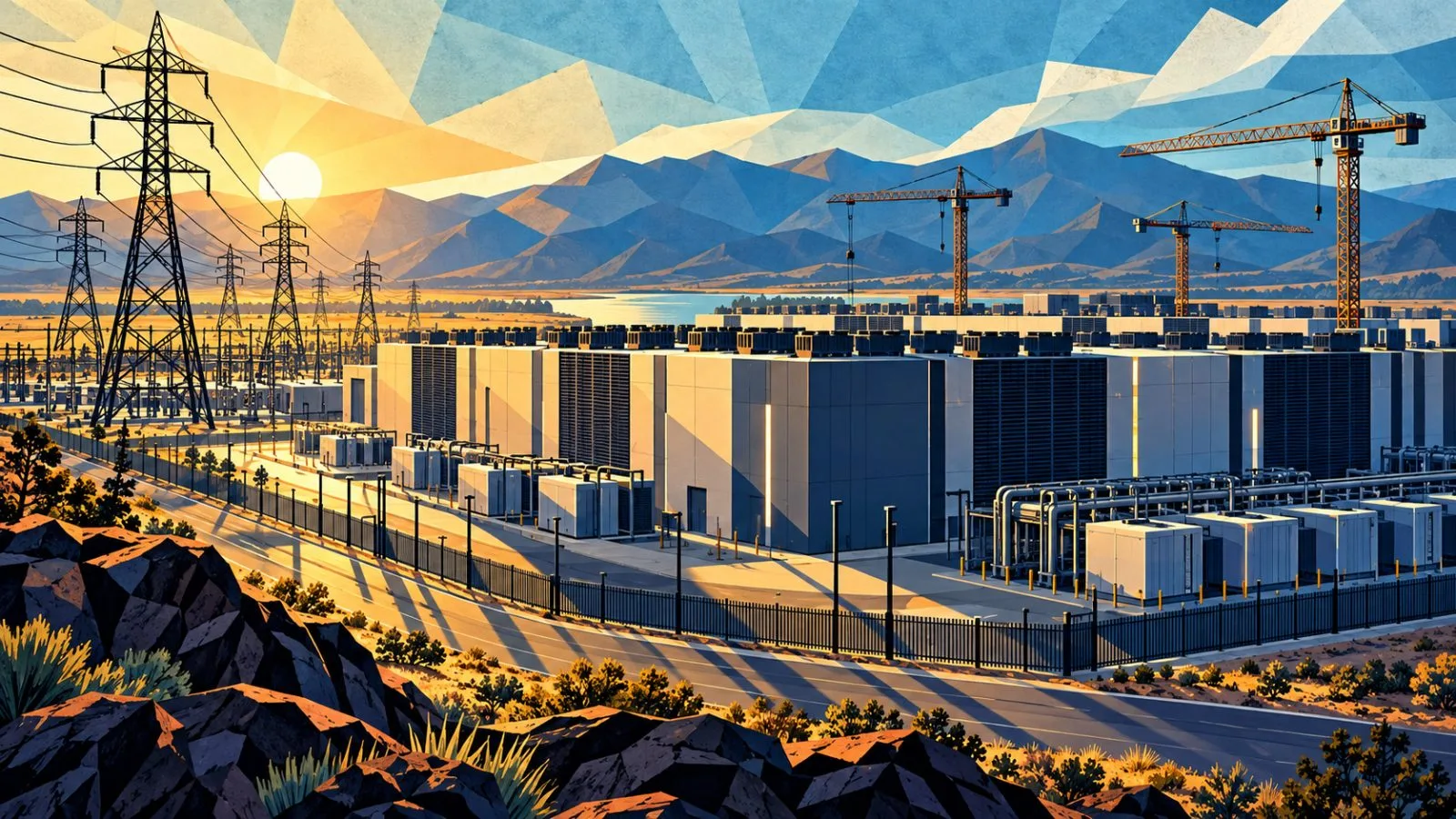
Capital spending by the largest U.S. cloud and internet companies is projected to reach about $1.2 trillion in 2027, extending an artificial-intelligence infrastructure buildout that is placing greater pressure on electricity supply, grid access and financing.
The estimate is up from roughly $800 billion in 2026, a 50% increase. The spending is expected to cover AI processors, data centers, networking equipment, cooling systems and power infrastructure. The projection rises to $1.4 trillion in 2028.
Electricity demand is becoming a central constraint. U.S. data-center power demand is projected to increase from 31 gigawatts in 2025 to 41 gigawatts in 2026 and 66 gigawatts in 2027. Data centers are expected to account for 8.5% of peak summer U.S. power demand in 2027, up from 4.1% in 2025.
The challenge extends beyond generating electricity. New projects also require grid connections, turbines, transformers, transmission capacity and skilled workers. New natural-gas plants can take five to seven years to become operational, while only about 50% to 60% of data-center capacity scheduled for the next one to two years is expected to come online on time.
Financing needs are rising alongside construction. Nearly $500 billion in AI-related debt had been issued globally as of Aug. 5, with hyperscalers accounting for 40% of the total. Debt is expected to finance 35% of hyperscaler capital spending in 2027.
The broader buildout is projected to require approximately $7.6 trillion in cumulative AI infrastructure capital spending from 2026 through 2031 across computing, data centers and power. Annual AI capital spending is projected to increase from $765 billion in 2026 to $1.6 trillion in 2031.
Global data-center power demand is forecast to rise 170% by 2030 from 2025 levels, underscoring the scale of the infrastructure required to support expanding AI workloads.