
U.S. Data Centers Could Face 32 GW Power Gap Through 2028
The projected shortfall could shift bottleneck risk from chips to electricity and delay orders for memory, optical and power-management products.

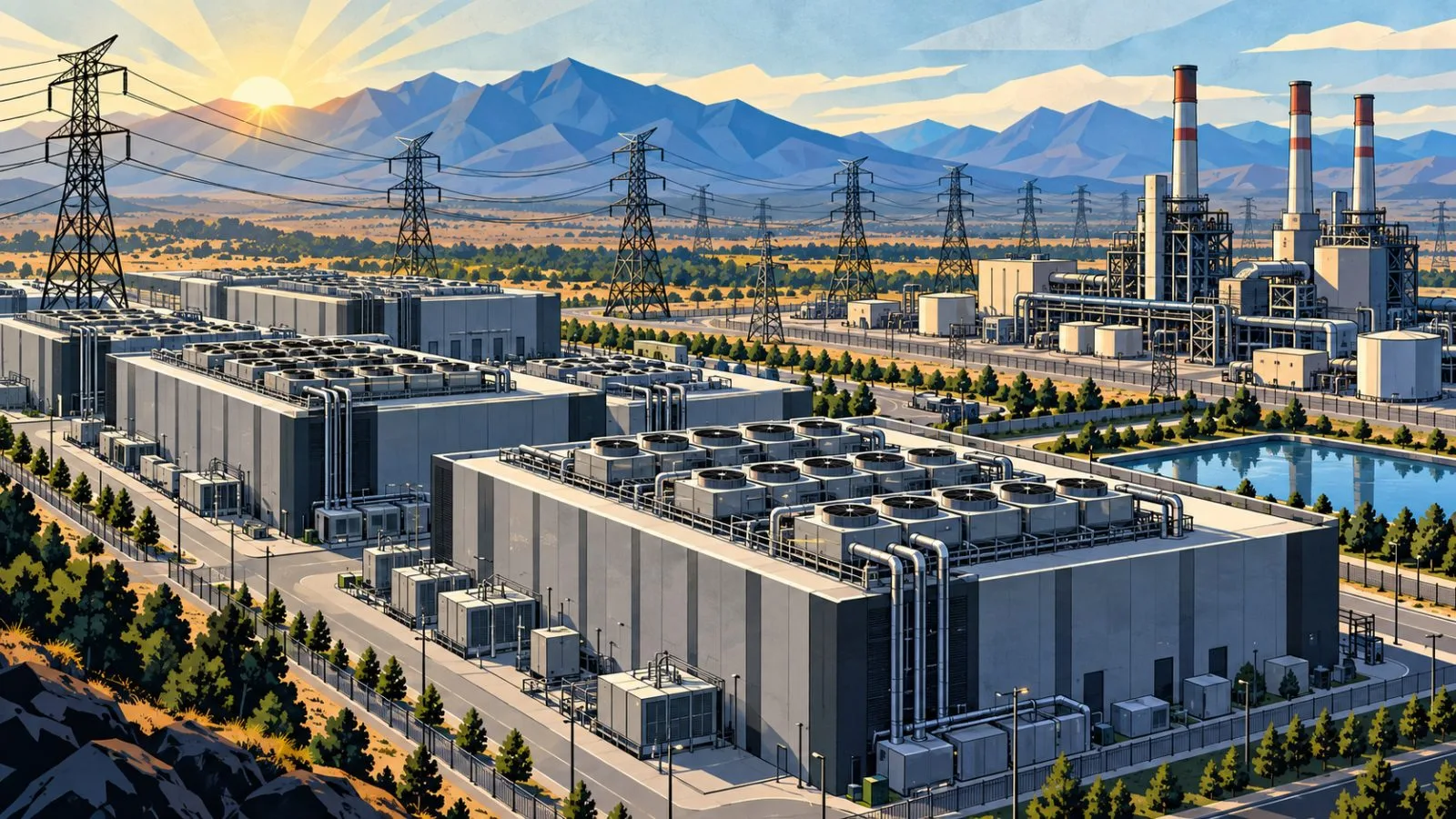
A projected 32 GW electricity gap across U.S. data centers from 2026 through 2028 raises the possibility that power, rather than chips, could become the limiting factor for infrastructure deployment and pressure related supply chains.
The shortfall represents about 34% of projected data-center power needs during the period. The risk extends across application-specific integrated circuits, memory, optical modules, power-management products and analog chips. Delayed or canceled orders could affect memory, optical and power-management products.
Memory, optical and power-management products could also face inventory-adjustment risk if data-center projects are delayed. ASIC demand and products are more sensitive to the availability of electricity.
Nvidia and Broadcom’s 2027 earnings forecasts are not expected to be materially affected. Their exposure is reduced by greater visibility into where chips are ultimately deployed and by operations that are not dependent on the U.S. market alone.
Oracle’s 1.3 GW Project Lighthouse in Wisconsin highlights the timing risk. Full-power operation could be delayed until October 2028 at the earliest, while a more pessimistic scenario would extend the delay to spring 2029.
Even after artificial-intelligence servers are installed, insufficient electricity can prevent them from generating computing capacity and revenue.
The United States is expected to add about 19 GW of gas-turbine and engine capacity between 2026 and 2028 under the base case. Bloom Energy fuel cells are projected to contribute about 6 GW, while nuclear power and conversions of crypto-mining sites could provide additional capacity.
Those additions would still not fill the projected gap. Overseas expansion may not quickly offset the shortfall because of permitting and geopolitical constraints.
The earlier global data-center power capacity forecast also examined the widening difference between demand capacity and available grid capacity.
Simon Yoon
ReporterSimon Yoon reports on blockchain technology for TokenPost. Send corrections or tips to info@tokenpost.com.