
 Add as a preferred source on Google
Four-Hour Batteries Now Cost Less Than Gas Turbines in 43 Markets
Battery storage is cheaper than open-cycle gas turbines across every surveyed market as AI data-center demand raises equipment prices and procurement delays.

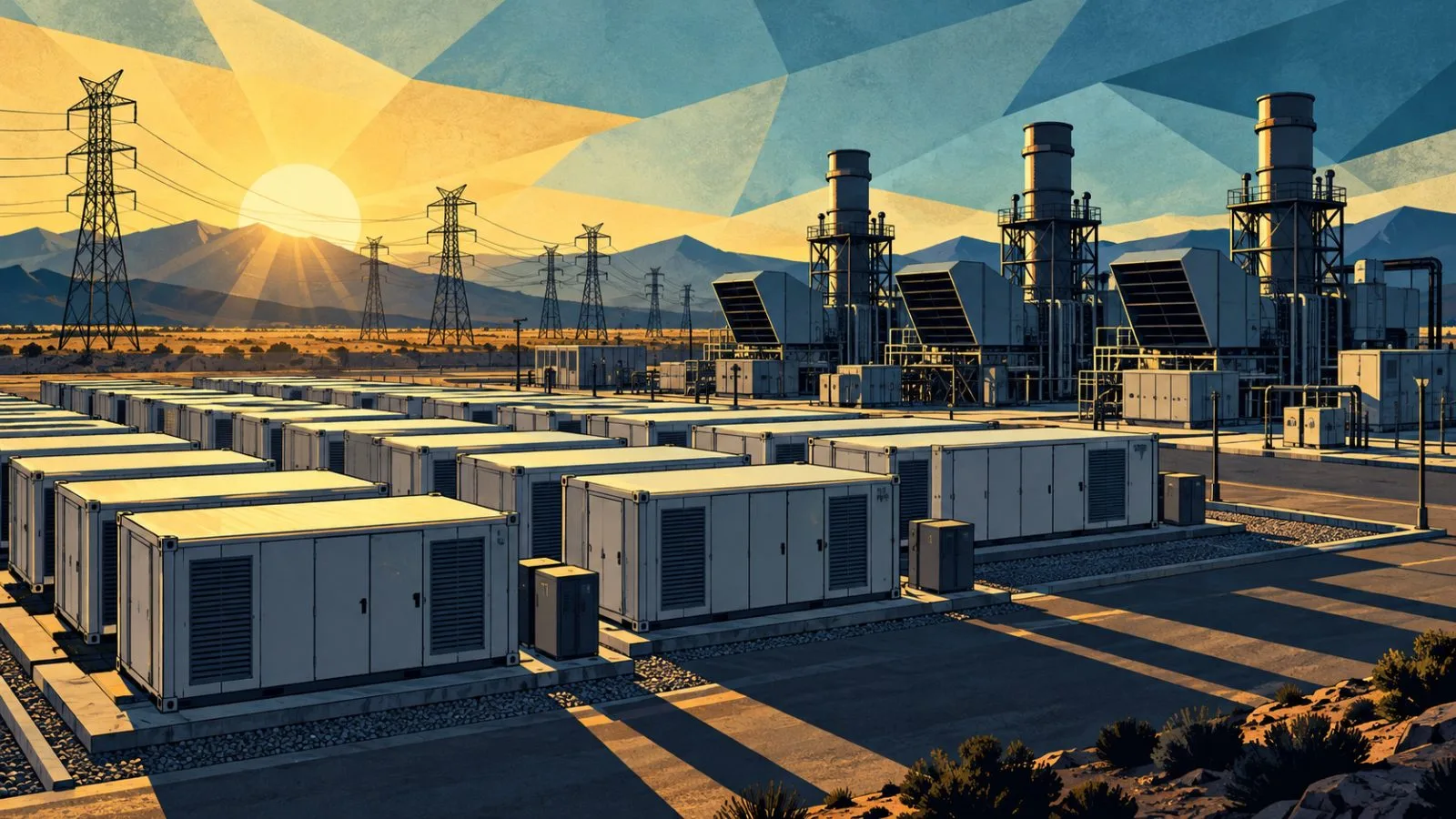
Four-hour battery systems now cost less than open-cycle natural gas turbines in all 43 markets surveyed across every continent, reshaping the economics of power supply for data centers and utilities.
AI data-center developers have pushed turbine prices higher as they compete for limited equipment. Open-cycle turbines, which are less efficient and more expensive to operate than closed-cycle models, are often used by utilities to supply electricity during periods of peak demand.
Open-cycle units now require two to four years to procure. Waitlists for closed-cycle turbines extend into the early 2030s, driving up costs for new natural gas power projects.
Battery-generated electricity is expected to become less expensive in the coming decades as gas-generated power costs rise. Four-hour battery costs in the Middle East and Africa are projected to fall 33% by 2035, allowing batteries to displace gas peaking power on cost across every gas market in the region.
Solar remains the cheapest source of new electricity in all 43 markets. In North America, tariffs and import restrictions are putting pressure on solar costs, although utility-scale projects are expected to be better positioned.
About 168 gigawatts of utility-scale projects are largely shielded from near-term price increases under safe-harbor rules covering projects that started construction or are completed by the end of 2027.
The findings expand on earlier coverage of the power requirements behind AI infrastructure. Energy storage costs in China are 55% below those in neighboring markets, further widening regional differences in the economics of new power capacity.
Simon Yoon
ReporterSimon Yoon reports on blockchain technology for TokenPost. Send corrections or tips to info@tokenpost.com.