
 Add as a preferred source on Google
China Links Clean-Power Expansion to Data-Center Growth
The East Data, West Computing program includes eight national hubs and targets at least 80% green-power use at newly built facilities in 2025.

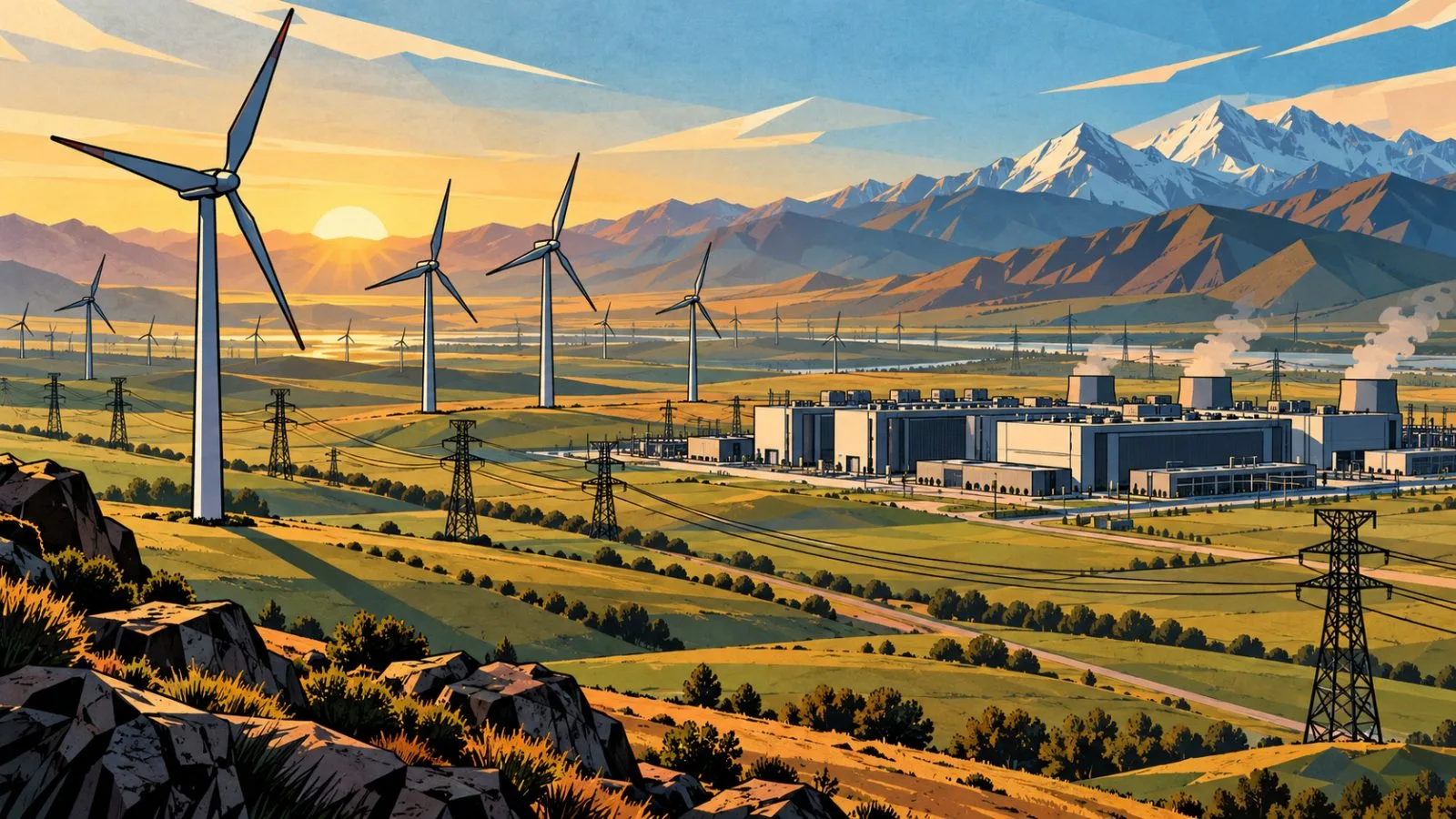
China is shifting more computing capacity toward renewable-rich western regions while data demand remains concentrated in eastern economic centers, creating a national infrastructure strategy built around power availability and data-center growth.
The East Data, West Computing program, launched in February 2022, covers eight national computing hubs and 10 data-center clusters. The hubs include Beijing-Tianjin-Hebei, the Yangtze River Delta, the Guangdong-Hong Kong-Macao Greater Bay Area, Chengdu-Chongqing, Inner Mongolia, Guizhou, Gansu and Ningxia.
The policy aims to ease land and energy constraints in eastern regions by moving some computing activity closer to western power resources. Newly built data centers at national computing hub nodes were targeted to obtain at least 80% of their electricity from green power in 2025.
The plan combines direct green-power supply, green certificates, efficiency improvements and broader grid development. It ties the expansion of digital infrastructure to China’s renewable-energy capacity without establishing that the approach will produce an artificial-intelligence advantage over the United States.
More than 1.46 million standard server racks had been installed across the 10 national clusters by the end of March 2024. The overall utilization rate was 62.72%.
Network latency between eastern and western hub nodes generally met a 20-millisecond target as of the end of March 2024. The power usage effectiveness of newly built data centers had also fallen as low as 1.10 by the end of that month. Power usage effectiveness measures the total facility power required for each unit of computing power, so a lower figure indicates less overhead from cooling and other supporting systems.
China’s data-center electricity consumption increased from 82.4 terawatt-hours in 2019 to 166 terawatt-hours in 2024. The figures show the rising power requirements of the country’s expanding data-center infrastructure, but do not establish that artificial-intelligence workloads caused the increase.
The infrastructure model addresses a basic reliability challenge for AI training and inference, which create a need for continuous electricity. Wind and solar generation fluctuate, so long-distance transmission, hydropower, nuclear generation and storage can help balance supply. It remains unclear whether those systems will provide a dependable advantage for China’s AI industry.
The geographic trade-off is central to the strategy. Moving workloads toward renewable generation can reduce pressure on eastern grids, but greater distance between power sources and major demand centers increases the importance of transmission capacity and network performance.
China’s program provides a framework for pairing computing growth with renewable energy. It does not show that data demand itself has moved west, nor does it confirm that China has achieved AI dominance. The latest reported infrastructure measures remain tied to the end of March 2024, while the green-power target applies to newly built facilities at national hub nodes for 2025.
Simon Yoon
ReporterSimon Yoon reports on blockchain technology for TokenPost. Send corrections or tips to info@tokenpost.com.