
 Add as a preferred source on Google
India Curtails 1.835 Billion Units of Renewable Power in July and August
Solar accounted for 1.462 billion units of curtailed generation as grid and operational constraints limited the use of expanding renewable capacity.

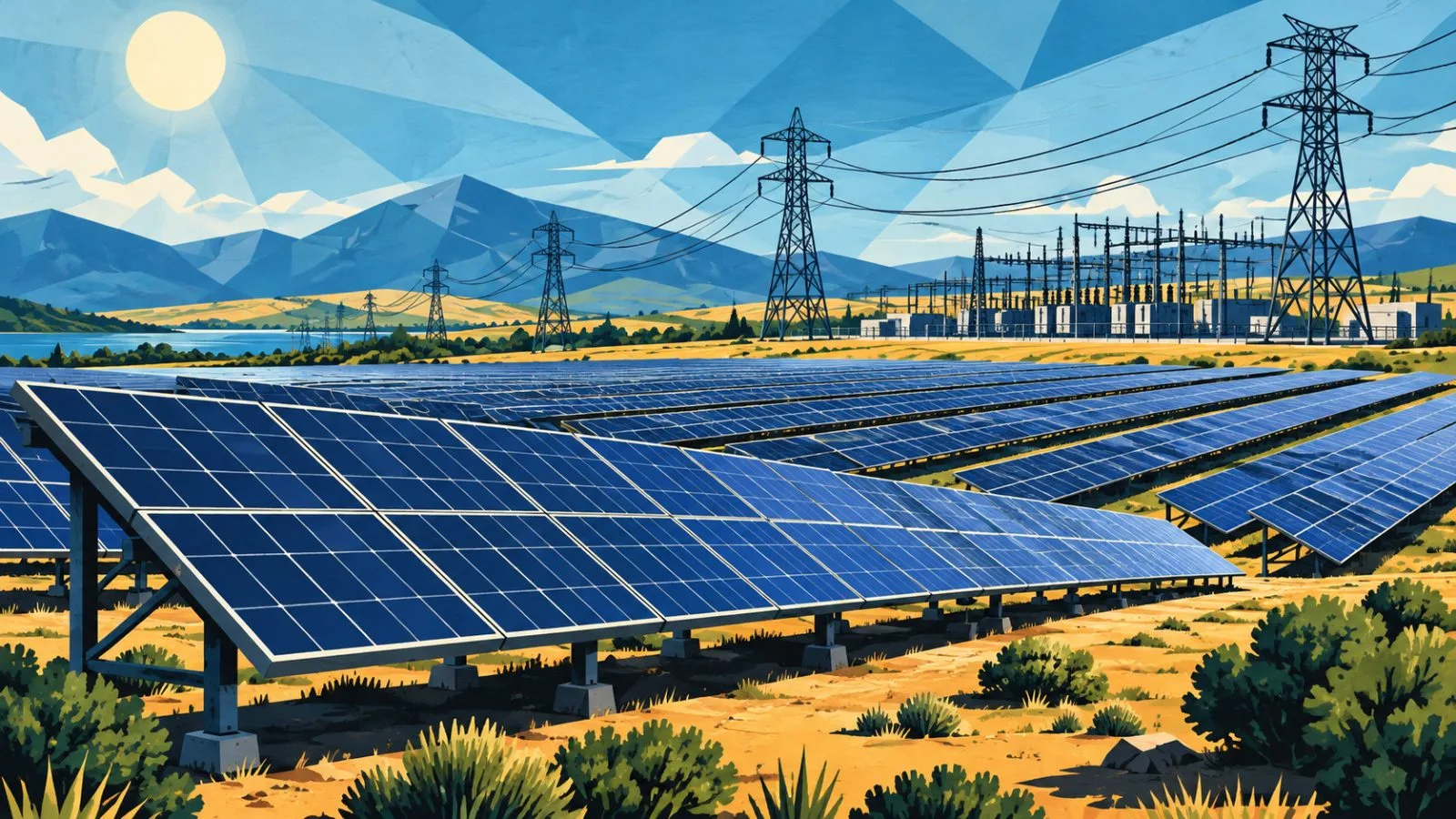
India curtailed 1.835 billion units of renewable electricity in July and August, highlighting the grid-integration challenges created by fast-growing solar capacity and rising power demand.
Solar power accounted for 1.462 billion units of the curtailed output, while wind power represented 373 million units. Curtailment occurs when grid operators reduce generation because transmission networks cannot safely absorb or move all available electricity.
The figures were included in a quarterly energy snapshot published Oct. 12, 2026. The curtailment reflected grid and operational constraints.
India’s peak electricity demand reached 270 gigawatts on July 16, up 18% from the comparable period a year earlier. During 62 days of the 92-day quarter, the daily demand high coincided with hours when solar power was being generated.
Solar generation increased 39% year over year during the second quarter of fiscal 2026-27, while hydropower generation fell 20%. Renewable generation excluding large hydropower reached 101 billion units, compared with 351 billion units from coal and lignite, which supplied about 66% of total electricity.
India had 168 gigawatts of installed solar capacity in August, out of total installed power capacity of 555 gigawatts. The figures show the difficulty of absorbing new renewable capacity while coal remains the country’s dominant source of electricity.
Coal dispatch to power plants declined from 74 million metric tons in May to 66 million metric tons in August. Coal stocks stood at 21 million metric tons on Sept. 30, equivalent to 36% of the normative requirement. The number of plants holding less than 25% of that requirement rose from 32 on Aug. 22 to 85 on Oct. 1.
Battery storage capacity was about 9.1 gigawatt-hours by the quarter’s end, with roughly 3 gigawatt-hours expected to be commissioned by December 2026. Storage tenders issued by August covered approximately 290 gigawatt-hours.
Simon Yoon
ReporterSimon Yoon reports on blockchain technology for TokenPost. Send corrections or tips to info@tokenpost.com.