
 Add as a preferred source on Google
Data Centers Emerge as Strategic Infrastructure in AI Race, VC Says
Hans Tung argues that computing capacity, electricity, chips and networks will determine which countries gain influence as artificial intelligence expands.

Hans Tung, managing partner at Notable Capital, said the countries that build computing infrastructure fastest may gain more influence from artificial intelligence than those that develop the most advanced models alone.
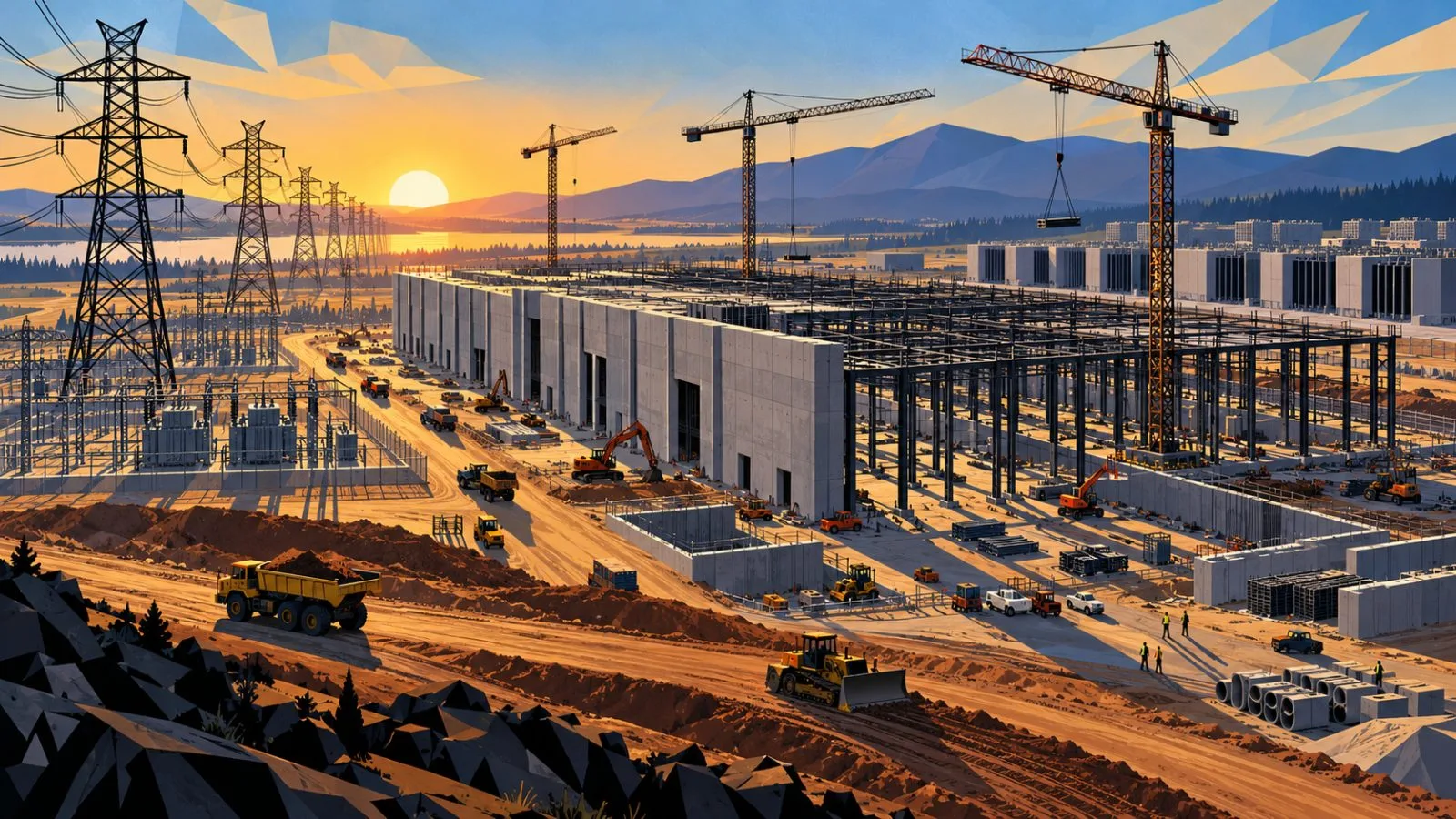
Tung compared data centers with the railroads, steel and steam-powered ships that helped shape earlier industrial powers. His argument is that technological leadership depends on the infrastructure needed to deploy an invention at scale, including electricity, networking, specialized chips and computing capacity.
“The models that win are the ones that are available,” Tung said.
The financial scale of the AI buildout underscores the competition. U.S. investment in data centers, power infrastructure and chips could total $10.3 trillion from 2025 through 2032, equivalent to 3.63% of annual gross domestic product.
One scenario assumes the United States completes a 188-gigawatt buildout by 2032. That expansion would require nearly $9 trillion in investment and average 3.2% of GDP annually during the period.
The comparison extends beyond computing. Britain’s use of steel and steam-powered ships and the Union’s railroad advantage during the U.S. Civil War showed how infrastructure could strengthen a country’s economic and geopolitical position, Tung said.
China’s transportation and industrial expansion offers a modern example. The country put more than 25,000 kilometers of dedicated high-speed rail into operation after 2008, exceeding the total operating in the rest of the world at the time. Its high-speed rail network surpassed 50,000 kilometers in 2025.
In 2024, Chinese yards held a majority share of worldwide commercial shipbuilding, compared with just 0.1% for U.S. yards.
China State Shipbuilding Corporation produced more commercial vessel tonnage in 2024 than the entire U.S. shipbuilding industry had produced since World War II.
China led the global shipbuilding market by 2010, a sharp rise from its sub-10% share of seagoing vessel completions a decade earlier.
Those figures illustrate Tung’s broader point: infrastructure can translate technical capability into national power. A country may develop important inventions without capturing the full economic benefit if it lacks the energy, transportation, manufacturing or computing systems required to make them widely available.
For AI, that means the contest is not limited to model performance. Data-center construction, power generation, chip supply and network capacity all affect how quickly companies can train and operate models for users.
“We have to work hard and make sure we win,” Tung said.
Simon Yoon
ReporterSimon Yoon reports on blockchain technology for TokenPost. Send corrections or tips to info@tokenpost.com.