
 Add as a preferred source on Google
Cambridge Heavy Builds Benchtop Laser Fusion Device for Faster Testing
The Massachusetts startup raised $6.2 million to develop a compact system that could support future fusion plants and produce scarce tritium.

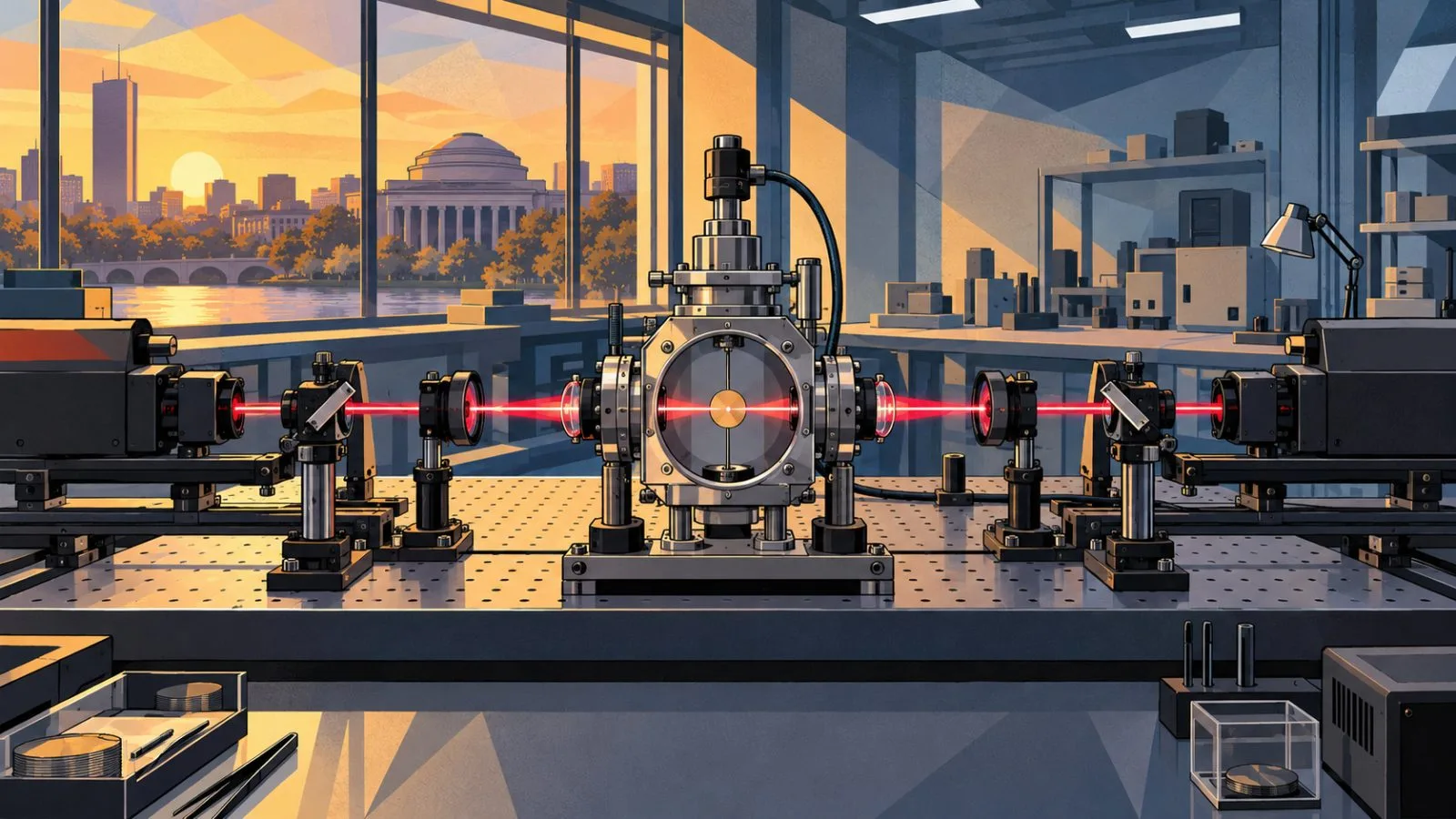
Cambridge Heavy Industries is developing a compact laser-powered fusion device that could accelerate reactor testing and help address a shortage of tritium, a fuel used by fusion plants.
The Cambridge, Massachusetts, startup has been operating from a lab near MIT while developing a benchtop system built around two main lasers. One laser divides into multiple beam lines that strike a flat, circular fuel target in timed concentric rings. The second laser adds heat and generates a magnetic field.
“We purposely built a small modular reactor. It’s tiny, it’s benchtop,” co-founder and CEO Yun Kai said. “Because it’s small, it makes everything easier.”
Kai said the modular design could enable 50 to 80 experiments, or shots, per day. Results from those tests will feed simulations designed to optimize the system with artificial intelligence.
Cambridge Heavy recently raised $6.2 million in seed funding led by Azolla Ventures. Overlay, Neta Foundation, P3A, MassCEC and the Rothrock family also participated.
The concept emerged from the lab of MIT chemist Keith Nelson, where researchers used laser pulses to study materials under extreme conditions. As the pressures increased, the researchers found they were approaching levels needed for fusion.
Cambridge Heavy plans to develop a power plant from the design in about a decade. The facility would be larger than the current prototype but smaller than many other fusion plants, with a footprint about the size of two basketball courts. The design will need to demonstrate that it can produce enough energy to support a power plant.
Before then, the startup plans to use smaller devices to produce tritium, a hydrogen isotope used as fusion fuel. Tritium sells for about $30,000 per gram, and only about 40 kilograms is believed to exist today.
The fusion industry could face a shortfall of about 28 kilograms by 2054 without new sources. Fusion companies are developing fuel systems intended to make reactors more self-sufficient, but those systems may take up to 10 years to develop, Kai said.
Simon Yoon
ReporterSimon Yoon reports on blockchain technology for TokenPost. Send corrections or tips to info@tokenpost.com.