
 Add as a preferred source on Google
CPO Production Testing Bottleneck Shifts to Speed and Cost
A full test of one photonic integrated circuit can take more than 100 seconds, even as optical alignment has fallen to seconds or less.

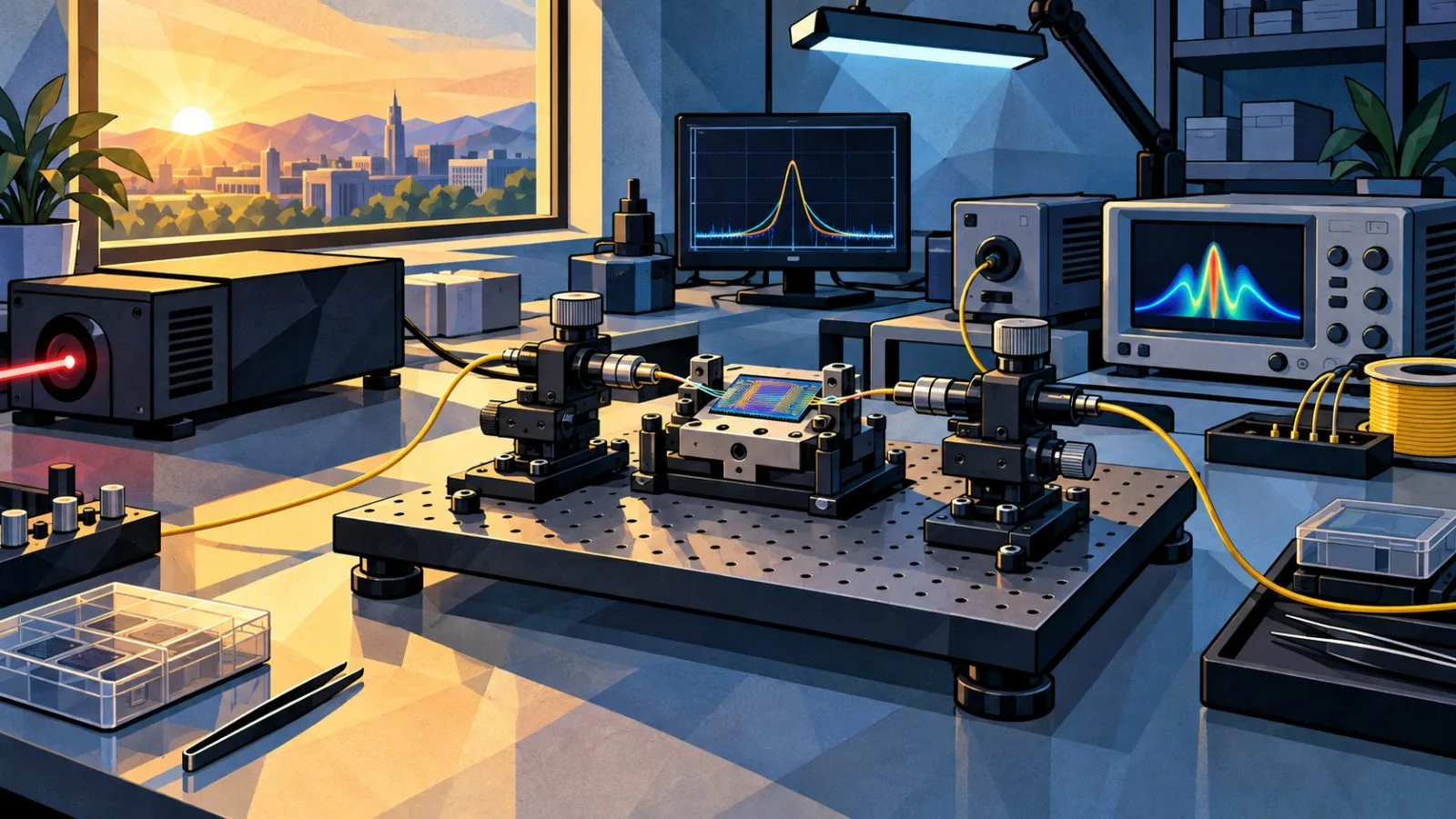
Co-packaged optics (CPO) is moving toward production, but testing speed and cost remain challenges as optical alignment times fall to seconds or less.
A complete test of one photonic integrated circuit (PIC) may still take more than 100 seconds. CPO combines optical engines with switching or computing chips in one package.
Testing can involve lasers, optical switches, power meters and spectrum analyzers. Because these instruments serve different functions and may come from different equipment categories, coordinating and calibrating them adds complexity. Equipping each test station with a full set of instruments could also leave expensive tools underused.
The supply chain spans automated test equipment, probes and test interfaces, optical and high-speed measurement instruments, test integration and automation, optical coupling and alignment modules, third-party testing and analysis, and packaging and production testing. Suppliers may work across multiple segments, so the categories overlap.
Potential ways to improve efficiency include using common software to coordinate electrical and optical measurements and sharing instruments among test stations. Those approaches could improve equipment use and reduce costs. Testing multiple devices in parallel could also lower the cost per unit.
Teradyne acquired Quantifi Photonics in 2025 to expand its optical measurement capabilities. Advantest announced a collaboration with VIAVI and SENKO in Sept. 2026 to combine automated testing, optical measurement and a detachable optical interface. The companies later demonstrated a simulated production test flow for CPO modules at ECOC 2026.
The industry is watching 2027 for test architectures and equipment investment strategies to converge. The year 2028 is expected to be a key point for assessing readiness for large-scale production.
Simon Yoon
ReporterSimon Yoon reports on blockchain technology for TokenPost. Send corrections or tips to info@tokenpost.com.