
 Add as a preferred source on Google
AI Chip Financing Raises Questions About Private Credit Risk
A $35 billion chip-financing deal tied to Anthropic was larger than second-quarter direct lending to U.S. private equity-backed companies, while AI loan spreads barely exceeded those for other private loans.

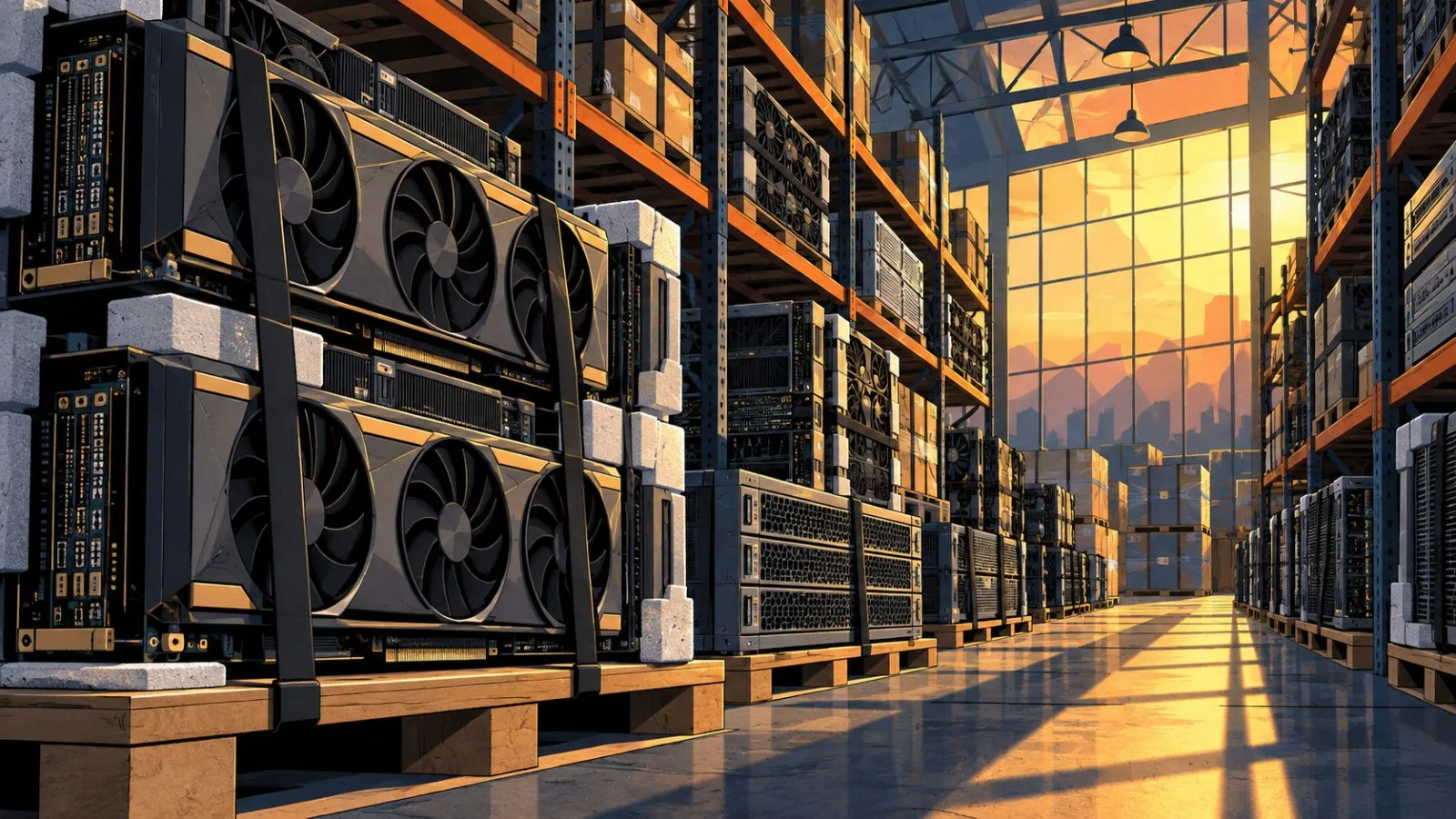
AI infrastructure borrowing is expanding into private credit, and Chamath Palihapitiya argues lenders may not be charging AI-related borrowers much more for their risks. The Social Capital founder’s analysis highlights a reported $35 billion chip-financing deal tied to Anthropic and warns repayment pressures could reach both AI infrastructure firms and software companies exposed to AI competition.
The $35 billion financing, led by Apollo and Blackstone, was used to buy chips for lease to Anthropic. The deal set a private-credit record and exceeded the roughly $23 billion in direct lending to U.S. private equity-backed companies during the second quarter.
Capital expenditures by Alphabet, Amazon, Meta, Microsoft, Oracle and SpaceX, including xAI, could total about $870 billion in 2026 and exceed $1.3 trillion in 2027.
Private credit consists of loans made directly by nonbank lenders, including private-credit funds and asset managers. U.S. direct lending outstanding grew from $96 billion in 2010 to $2.4 trillion in 2025. Borrowing by software and technology companies rose from $22 billion to more than $1 trillion over the same period.
Loan pricing and contract risk
A central concern is whether loan pricing reflects the uncertainty around AI businesses. Average spreads for private loans to AI-related companies were 6.2 percentage points over benchmark rates, compared with 6.1 points for other private-credit loans. That narrow difference may indicate lenders are underpricing AI risks, public markets are overestimating future AI profits, or both.
The analysis also points to mismatches between debt terms and the contracts expected to generate repayment cash flow. CoreWeave has used customer contracts averaging about three years to support loans with five-year terms. If customers do not renew or reduce their purchases, debt could remain after the contracts end. Newer graphics processing units could also reduce the value of existing equipment.
For Meta’s Hyperion data center, bonds extend to 2049 while some lease agreements require renewal every four years. That difference leaves long-term financing dependent in part on shorter-term commercial arrangements.
Prices cited for two infrastructure financings have also diverged. Apollo bought debt tied to xAI chip leasing at 99% of face value in December 2025, and its price later reached 106% after SpaceX acquired xAI. By contrast, debt associated with the $18 billion Project Jupiter data center financing fell to between 89% and 91% of face value.
Risks on both sides of AI
Palihapitiya’s analysis describes two possible sources of borrower stress. If AI services fail to generate enough revenue, companies investing in computing capacity and data centers may struggle to repay their loans. If AI adoption advances quickly, established software companies could lose customers or pricing power as customers shift to AI agents and newer applications.
Some large private-credit funds saw investor redemptions exceed new fundraising in early 2026. Because private loans are not easily sold on an active secondary market, continued withdrawals could lead managers to sell more liquid holdings, restrict redemptions or sell loans at a discount. Net withdrawals alone do not establish that the broader private-credit market is in crisis.
These developments are risks to monitor, not proof that an AI bubble has formed. Loan spreads, debt maturities, refinancing needs and secondary-market prices can indicate whether AI infrastructure is producing enough cash flow to support its growing debt load.
Simon Yoon
ReporterSimon Yoon reports on blockchain technology for TokenPost. Send corrections or tips to info@tokenpost.com.