
 Add as a preferred source on Google
China’s Data Center Expansion Puts Regional Water Stress in Focus
The sector’s water footprint was estimated at 15.7 billion cubic meters in 2022, when 72% of China’s computing capacity was in severely water-scarce regions.

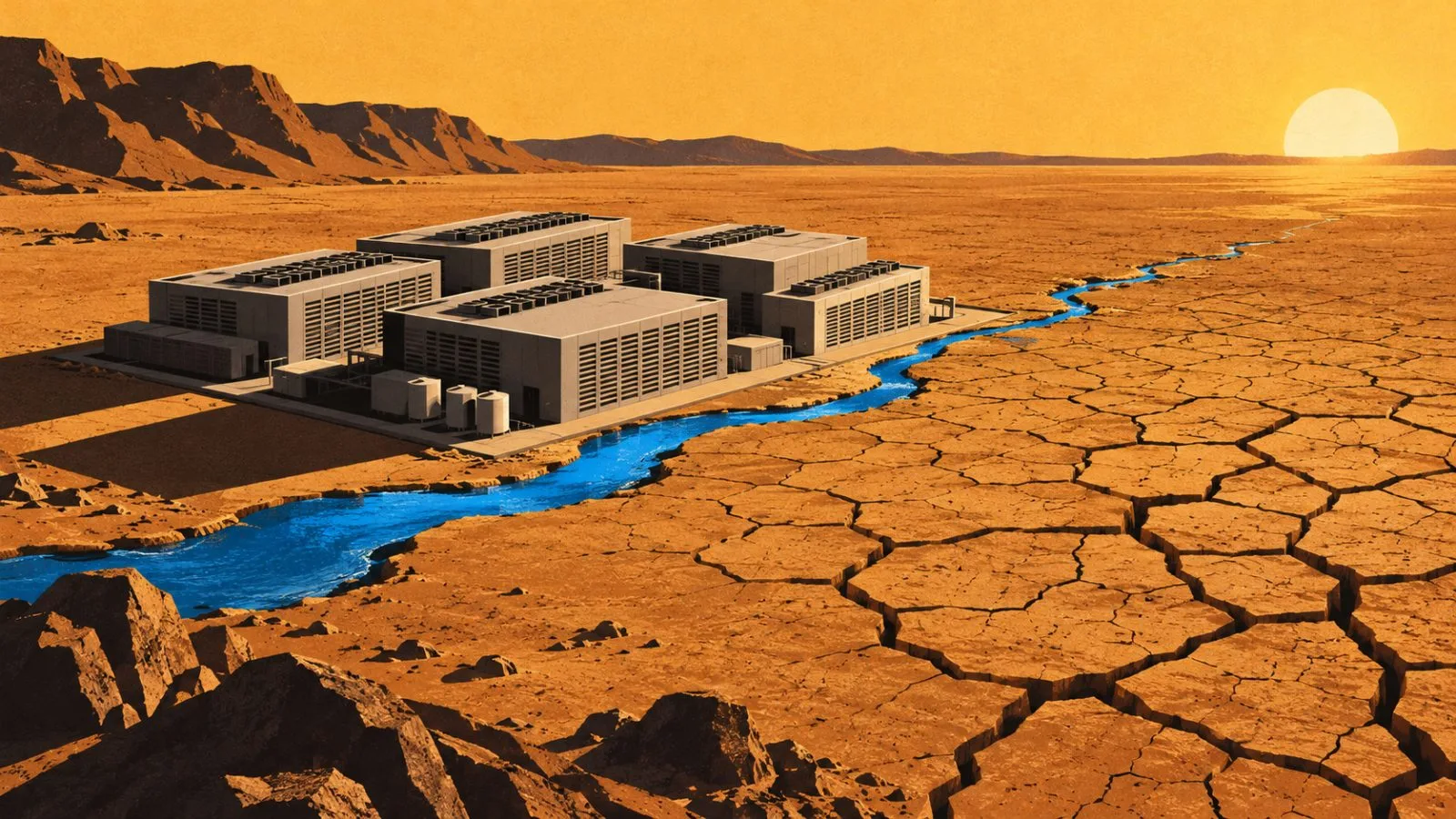
China’s plan to shift some computing work west faces a water constraint: 72% of its computing capacity was in severely water-scarce regions in 2022, when the data-center sector’s water footprint was estimated at 15.7 billion cubic meters.
The estimate covers data centers broadly, not AI facilities alone. It equaled 2.7% of China’s water consumption in 2022 and includes direct water use as well as indirect use tied to electricity, water supply and wastewater treatment. It therefore measures more than water used at data-center sites.
China’s national computing-network plan directs some eastern AI training, inference and other computing work toward western hubs. But the shift may add water-footprint pressure in parts of the west, including Gansu and Ningxia, where water scarcity is also a concern.
Installed data-center capacity in China was estimated at 32 gigawatts at the end of 2025. Announced projects point to electricity use of 289 terawatt-hours by 2030. The national plan set a target for new data centers in its hub nodes to use more than 80% green electricity by the end of 2025; that target does not establish whether the level was reached.
The sector’s expansion adds to competing demands on China’s water supply. The country used 594.45 billion cubic meters of water in 2025. Agriculture accounted for 62% of the total, industry 16% and domestic use 15.8%.
Water use per 10,000 yuan of gross domestic product fell 4.5% from 2024, while the measure for industrial value added declined 7.2%. Those efficiency measures cover the broader economy, not data centers alone.
A modeled scenario combining more efficient power and water use with a cleaner electricity grid projected that China’s data-center water footprint could fall 51.5% to 58.3% by 2050 compared with business as usual. The reduction depends on those changes occurring together; it is a scenario rather than a guaranteed outcome.
Simon Yoon
ReporterSimon Yoon reports on blockchain technology for TokenPost. Send corrections or tips to info@tokenpost.com.