
 Add as a preferred source on Google
Simulations Find Lithium Clusters in Battery Electrolyte
Clusters contained up to 40% of lithium ions under typical conditions and became more common as salt concentration rose.

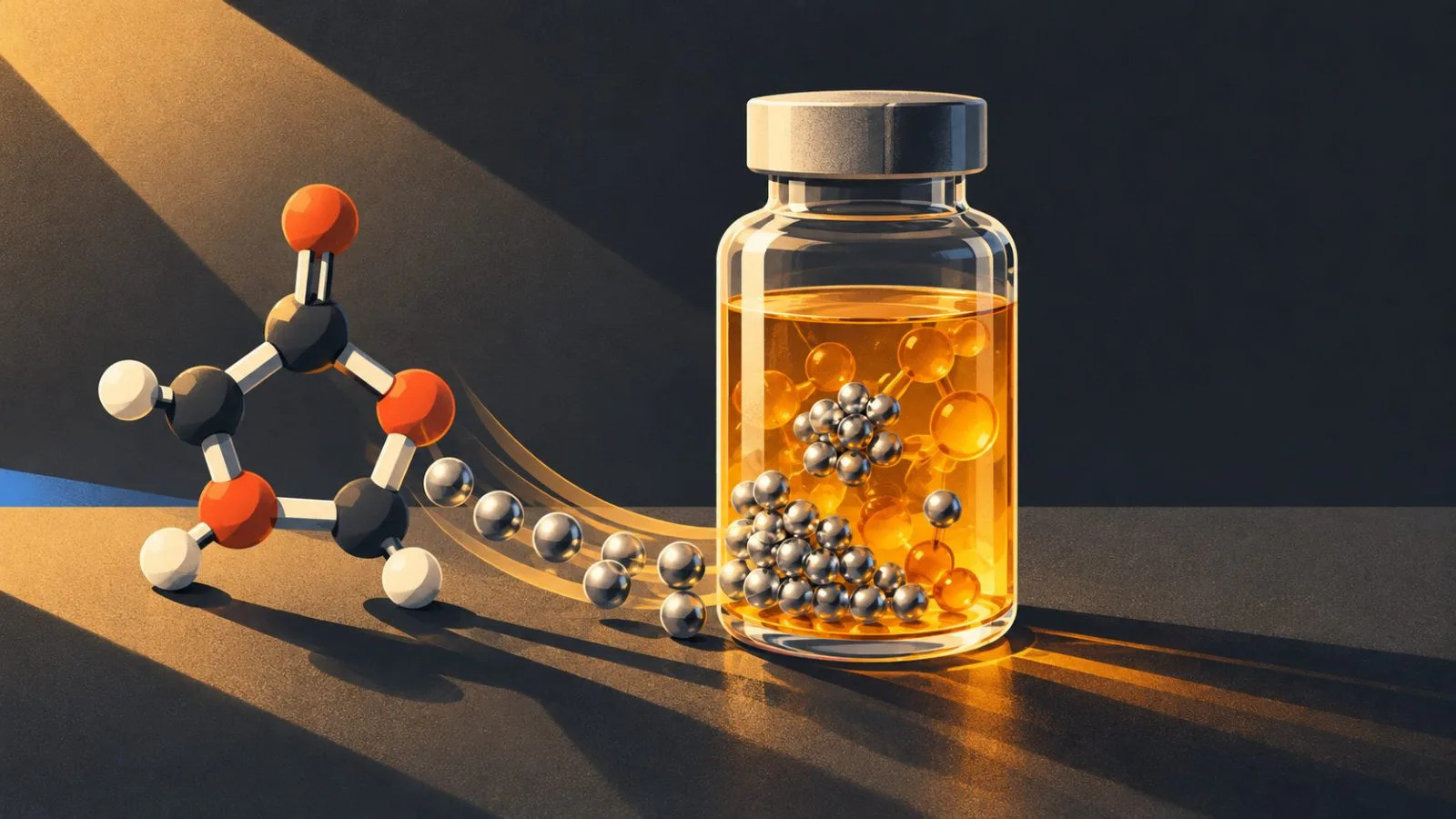
Simulations of lithium hexafluorophosphate (LiPF₆) dissolved in ethylene carbonate found clusters containing up to 40% of lithium ions under typical conditions, a pattern that may help explain battery-anode chemistry.
Researchers used Schrödinger’s QRNN machine-learning force field to model the electrolyte. The clusters formed without anions directly coordinating them and appeared more often at higher salt concentrations, challenging the assumption that lithium ions mainly remain isolated and surrounded by solvent molecules.
The QRNN simulations agreed well with experimental measurements of nuclear magnetic resonance, electrolyte density and viscosity, ionic conductivity and diffusion.
Calculations also indicated that the clusters have more favorable reduction potentials. That raises the possibility they may participate in initial formation of the solid-electrolyte interphase (SEI), a protective film on the anode that affects battery life and safety.
The proposed role in SEI formation remains a hypothesis. The findings may inform electrolyte design, but they do not demonstrate performance gains in a finished battery.
Simon Yoon
ReporterSimon Yoon reports on blockchain technology for TokenPost. Send corrections or tips to info@tokenpost.com.