
 Add as a preferred source on Google
Princeton Researchers Model Lower-Energy Route to Fusion Ignition
The model heats plasma before raising its density, but no current experiment reaches the temperatures associated with the modeled Cordey pass.

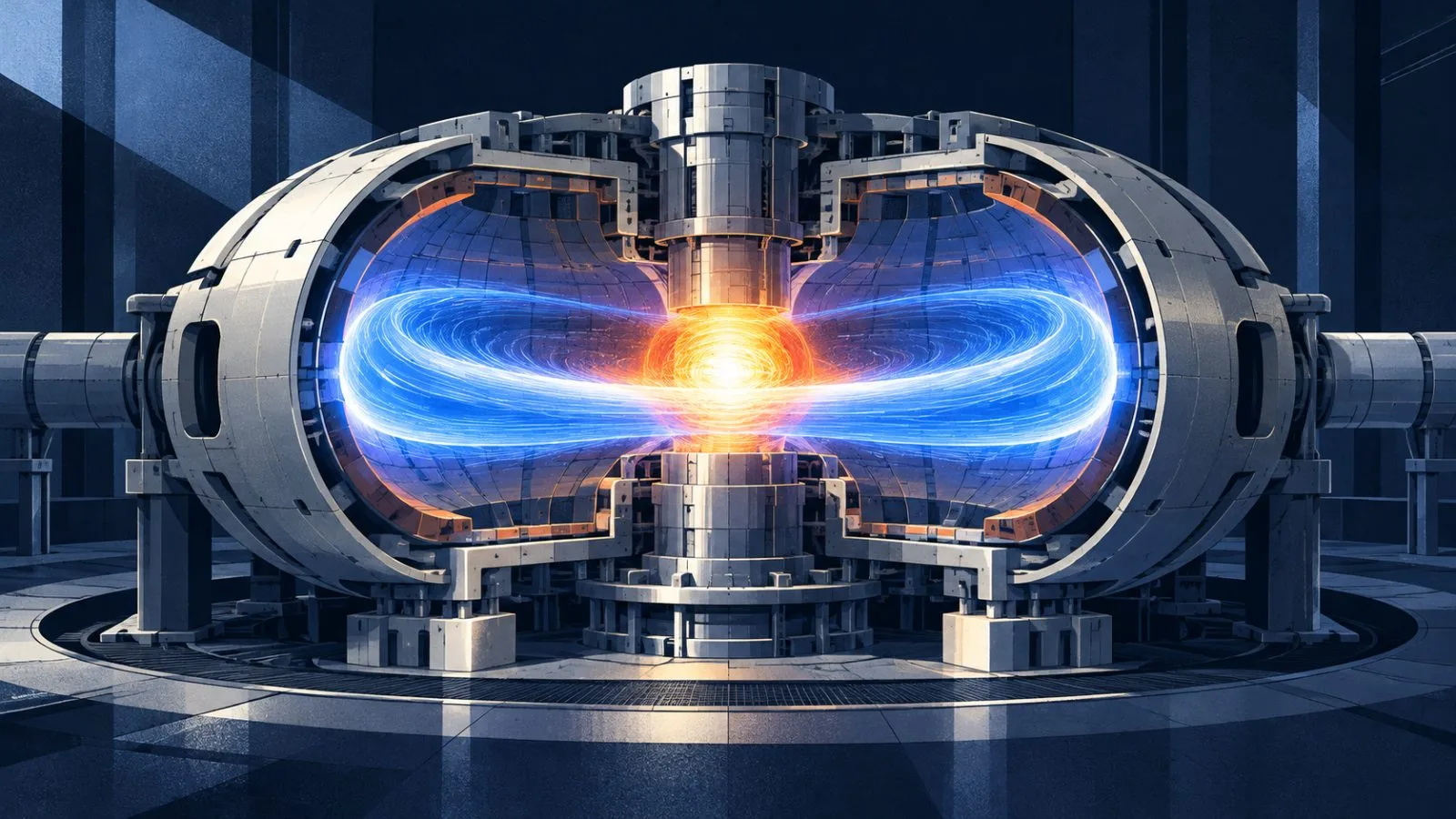
Scientists at the U.S. Department of Energy’s Princeton Plasma Physics Laboratory (PPPL) modeled a route to fusion ignition that heats plasma before raising its density. The calculations indicate this sequence may require less supplied energy than increasing density first, offering a different path for magnetically confined fusion systems.
The proposed sequence remains theoretical. No current experiment reaches the temperatures associated with the modeled Cordey pass, and the route has not been demonstrated experimentally.
Published Sept. 10, the study treats ignition as a progression through changing plasma conditions. It builds on the Lawson criterion, a framework for the conditions needed to keep plasma hot and dense long enough to sustain fusion. The analysis considers how the plasma moves toward ignition as its heat and density change.
Ignition here means fusion reactions produce enough heat to keep the plasma burning without continued external heating. That describes a state of the plasma; it does not establish that a reactor or full facility can generate more electricity than it consumes.
In an idealized plasma made of pure fuel, the modeled route reaches a point called the Cordey saddle at about Q = 5. Q compares the fusion power produced with the heating power supplied. The calculations also account for helium ash, impurities from reactor walls, synchrotron radiation and heat flowing out of the plasma.
The work could inform tokamak and stellarator designs. Both types of machines use magnetic fields to confine plasma. Liquid-lithium wall coatings may help keep tungsten out of the plasma while improving heat retention, and spin-polarized fuel can increase the fusion reaction rate.
Jonathan Menard, a PPPL physicist, said, “While more study is needed, we are excited by these results.” Researchers plan to examine the heat-first sequence through digital experiments.
Simon Yoon
ReporterSimon Yoon reports on blockchain technology for TokenPost. Send corrections or tips to info@tokenpost.com.