
 Add as a preferred source on Google
AI-Designed Phages Overcame Resistance in Some E. coli Tests
Researchers tested about 300 designs, and 16 produced viable phages. A comparable mix of naturally sourced phages did not achieve the same result.

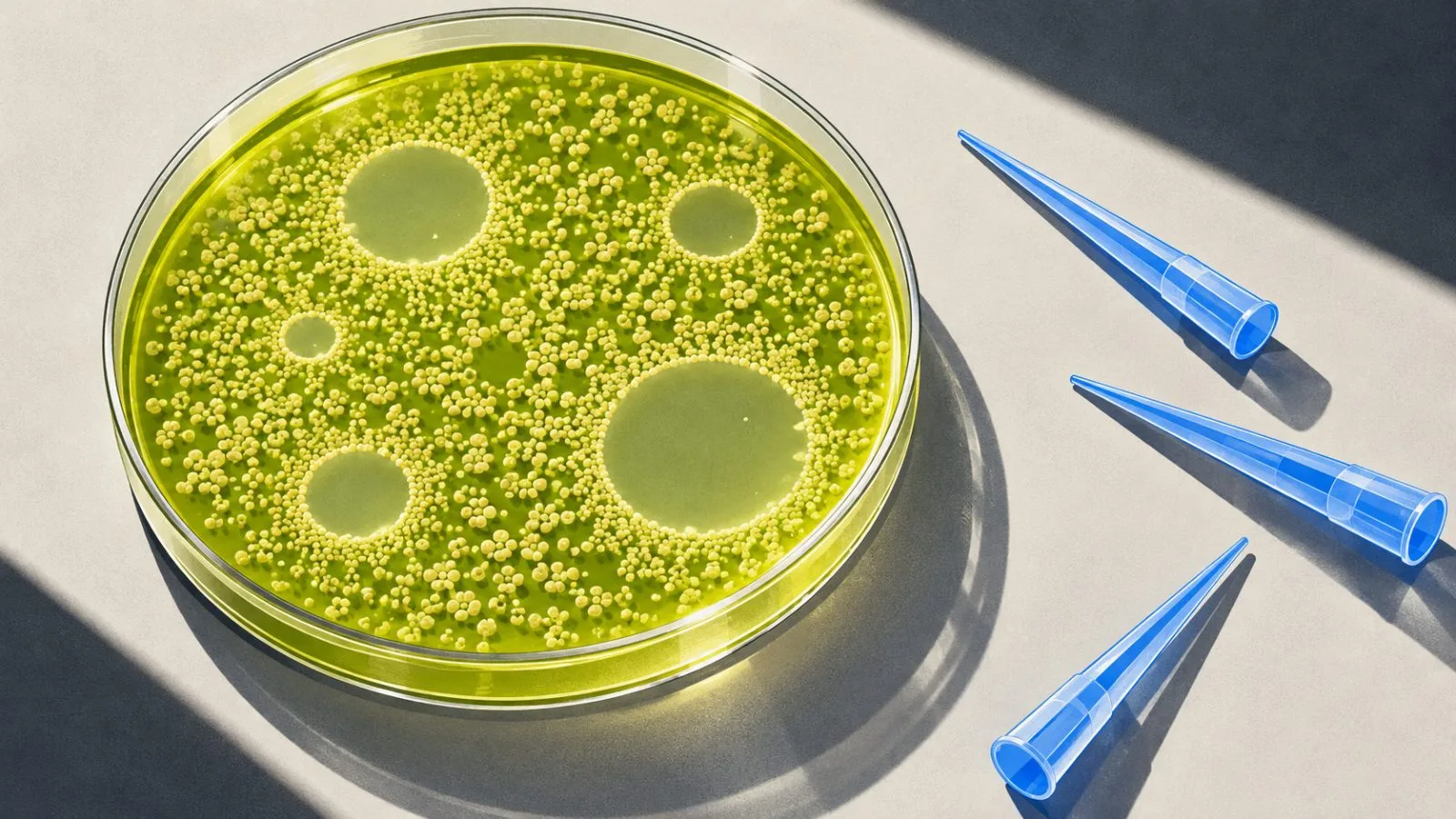
An AI-designed bacteriophage cocktail overcame resistance in some E. coli strains in laboratory tests, while a comparable mix of natural phages did not. The finding points to a possible path toward phage therapies, but remains an experimental result.
Researchers at Stanford University and the Arc Institute used Evo, an AI system trained on genetic material drawn from millions of sources spanning all domains of life. The system generated thousands of genome combinations within a framework for viruses that could use E. coli as a host. About 300 candidate designs were constructed and tested; 16 produced viable phages.
The experiment tested the cocktail against antibacterial resistance in some E. coli strains. A comparable mixture of naturally sourced phages did not achieve the same effect. Bacteriophages infect bacteria rather than humans, so the reported activity involved bacteria in laboratory tests. The finding suggests a possible therapeutic use for the phages, not a result from treatment in people.
The AI-designed genomes also differed from known natural viruses. One contained a feature far removed from familiar evolutionary patterns. Evo’s broad training base helped it recognize constraints that shape natural genomes. The study was published Aug. 6.
The work also raised biosecurity questions about AI systems that can produce viral genomes. Johns Hopkins Center for Health Security specialists argued that safeguards have not kept pace with genome design. “The ability to compose viral genomes using generative AI now exists; the governance to safely steer it does not,” they wrote. They identified research on eukaryote-infecting pathogens as an area that should not be pursued, warning that some designs could fall beyond existing countermeasures. Johns Hopkins specialists also noted that the team took greater care with biosafety and biosecurity than is typical among developers of powerful biological AI models.
Jordi García Ojalvo, a professor of systems biology at Pompeu Fabra University of Barcelona, assessed the experiment’s biosafety risk as lower than with some other AI tools because each genome required individual testing and few designs worked. “It is difficult to imagine these models automatically generating viable genomes ‘out-of-the-box,’” García Ojalvo said.
The findings add to laboratory research on AI-designed biological tools.
Simon Yoon
ReporterSimon Yoon reports on blockchain technology for TokenPost. Send corrections or tips to info@tokenpost.com.