
 Add as a preferred source on Google
Electric Plant AI Trails Species-Average Benchmark on Three Measures
Bombadil tracked seven plant-stress measures in aggregate, but one closely measured species showed no tracking on any measure.

Electric Plant’s Bombadil model tracked changes in plant-stress measures in aggregate, but its estimates on three of seven measures were less accurate than a species-average guess, highlighting a gap between tracking trends and producing precise readings.
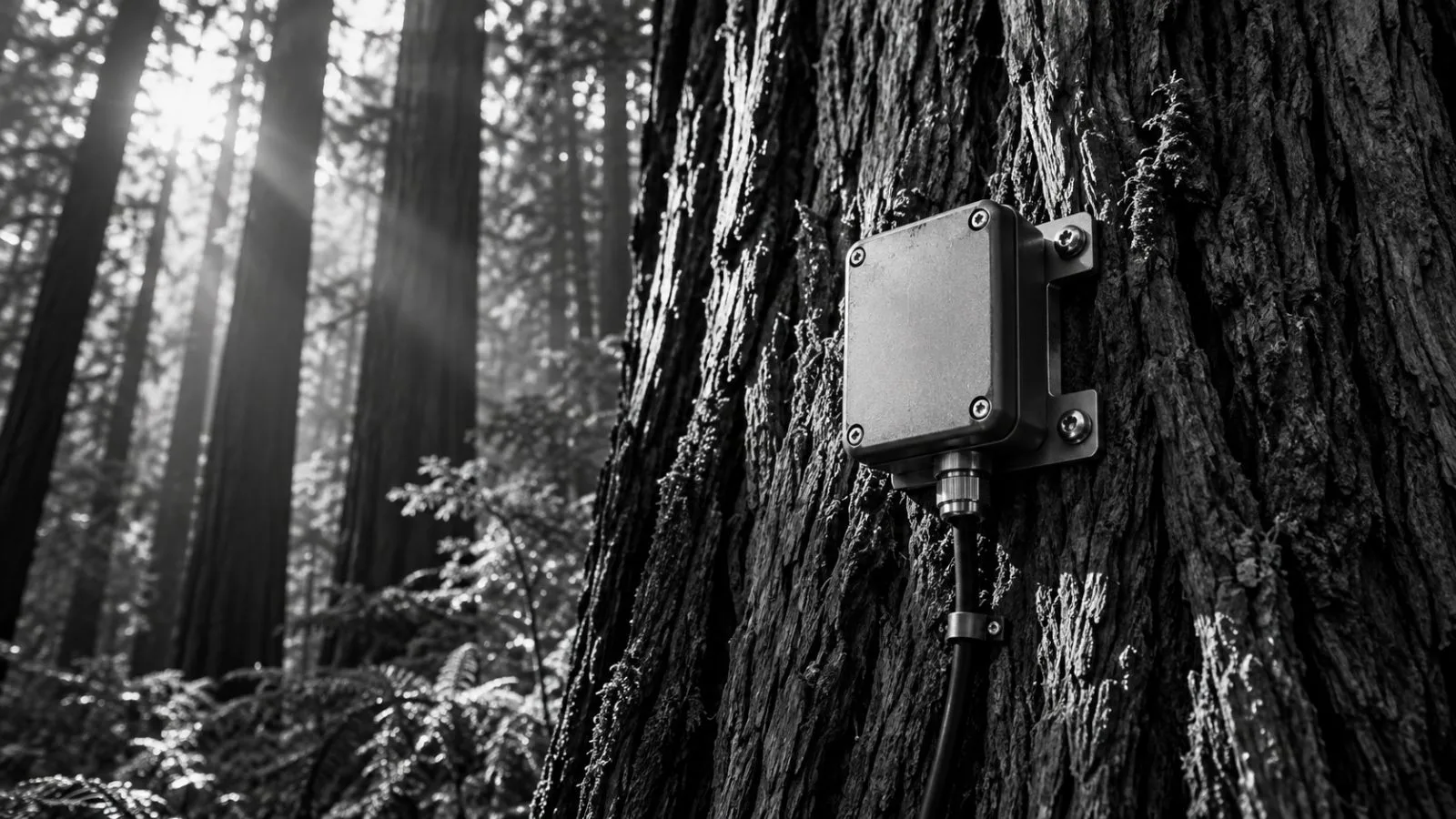
Bombadil analyzes electrical signals from electrodes inserted into plant tissue. It estimates five measures tied to photosynthesis and two tied to leaf temperature. The San Francisco startup has raised $11.2 million in seed funding to bring its sensors and model to growers.
In the closest examination, each measure covered 24 to 35 plants across four to six species. The aggregate correlation between Bombadil’s estimates and instrument readings ranged from 0.269 for the crop water stress index to 0.707 for a measure of photosynthetic electron transport. A positive correlation means the estimates generally moved in the same direction as the reference readings; it does not show that the estimated values were close.
The aggregate results masked uneven performance. One of the six closely measured species showed no tracking on any of the seven measures. Depending on the measure, 9% to 25% of sensors tracked in the opposite direction from the reference readings.
The model’s error exceeded the species-average benchmark for ΦII, a measure tied to photosynthesis, leaf temperature differential (LTD), and crop water stress index (CWSI). The benchmark uses an average for each species in place of the model’s estimate. A model can follow increases and decreases while still placing its estimates too high or too low.
A persistent offset separated estimates from their reference readings. The tests could not determine how much of that difference came from the model or sensors and how much came from variation in the leaves used for reference measurements. In a hypothetical recalculation, subtracting the observed offset would put all three measures below the species-average error benchmark. That recalculation does not establish a working correction in use.
Bombadil was trained on more than 4 million electrode-hours from more than 1,400 plants across 100 species. One electrode-hour represents one sensor recording for one hour. Commercial orchards were among the training sites. Electric Plant aims to use one model across species, while its process for new customers calls for a short on-site calibration.
The tests did not assess a site entirely absent from training. Each species was recorded at one site, and no plant was recorded for longer than three months, leaving performance across seasons and at new growing sites outside the evaluation.
Simon Yoon
ReporterSimon Yoon reports on blockchain technology for TokenPost. Send corrections or tips to info@tokenpost.com.