
 Add as a preferred source on Google
Data Center Delays Could Favor Operators With Power Already in Place
Ionic Digital has leased 234 megawatts at a Texas site to Nscale, with another 89 megawatts tied to future capacity availability.

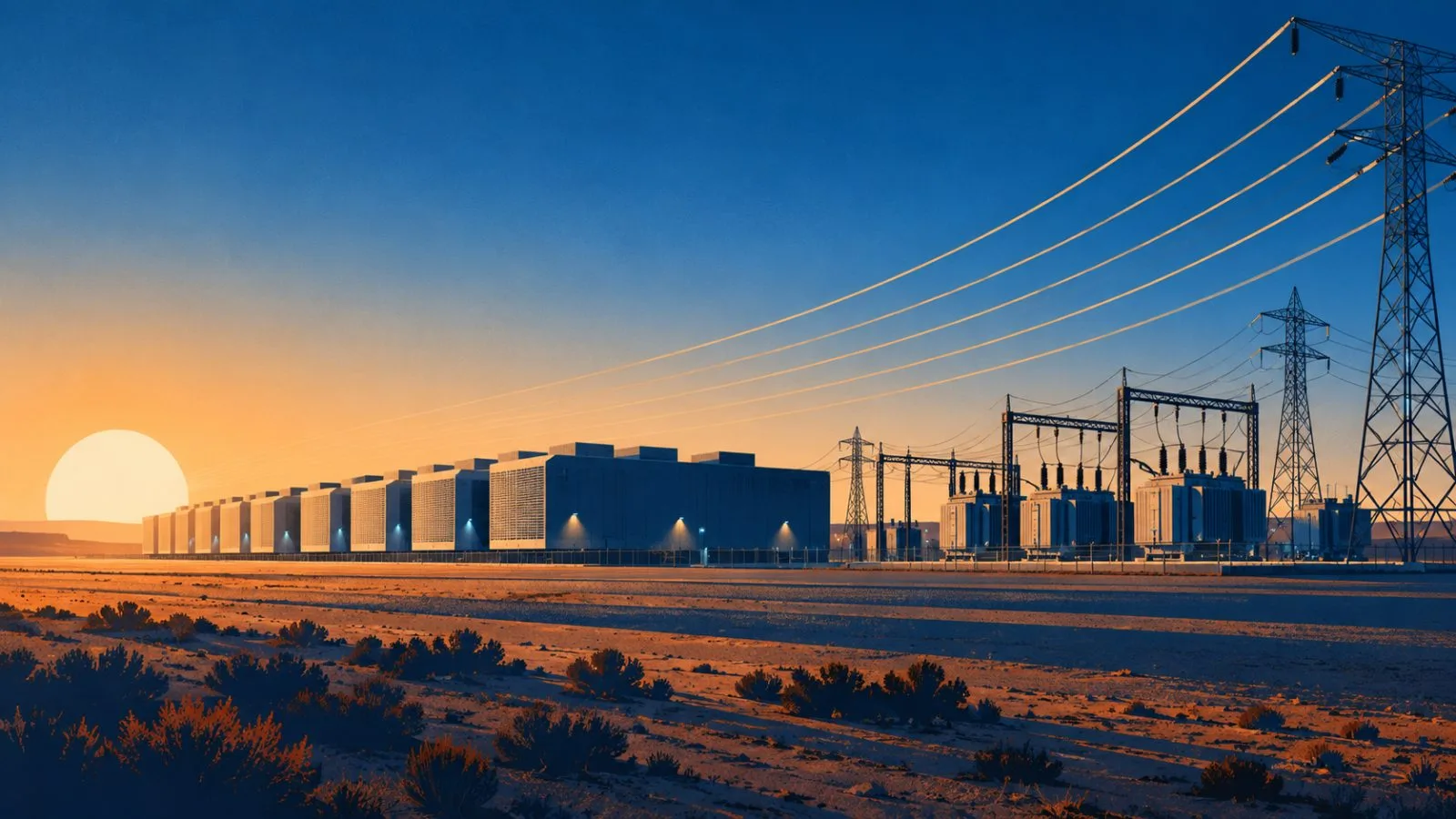
A slower data-center buildout could favor operators with power and facilities ready to use, while pushing developers’ cash flows later and slowing hyperscaler growth. A Texas lease by a former crypto miner shows how mining infrastructure is entering AI computing.
“Compute demand is significantly greater than supply, so the speed of the data center buildout matters,” wrote Torsten Slok, Apollo’s partner and chief economist, in an Oct. 21 analysis. Under a delay scenario, owners of operating sites, hyperscalers that secured power, land and chips, and suppliers of equipment with long lead times could be better positioned. Transformer lead times can reach 26 months.
The effects could vary across the AI sector. Delays could slow hyperscaler revenue and earnings growth. Developers could see cash flows pushed back while carrying costs continue, while highly valued AI stocks could face earnings revisions and lower valuations. Chipmakers could see deliveries outpace installations if data-center sites are not ready.
Global data-center power demand is projected to be 170% higher in 2030 than in 2025, with more than 60% of the growth in the United States. In the U.S., roughly 2,600 gigawatts of generation and storage projects are in the grid interconnection queue, more than twice the grid’s installed capacity. The median wait from application to commercial operation is about five years.
The queue does not measure planned data-center capacity: it includes projects at different stages and may contain overlap. The connection issue has also featured in coverage of power delays that could slow AI data-center openings.
Ionic Digital Inc. started as a cryptocurrency mining company in 2024 and now leases infrastructure for AI and high-performance computing. As of June 30, 2026, 234 megawatts at its Ward County, Texas, property were leased to Nscale. Its agreement includes another 89 megawatts once capacity becomes available, and the company is seeking regulatory approval to expand the site to 700 megawatts. The lease shows a former miner serving AI workloads, while the additional capacity depends on availability and approval.
Existing capacity may gain value when new supply is delayed, but that advantage can fade if supply catches up quickly or demand weakens.
Simon Yoon
ReporterSimon Yoon reports on blockchain technology for TokenPost. Send corrections or tips to info@tokenpost.com.