
 Add as a preferred source on Google
NVIDIA Adds Data, Training and Simulation Tools to Cosmos
Five cloud blueprints cover driving datasets, image attributes and video tasks. Porsche’s work across Volkswagen Group brands is expected to reduce repeated test drives by up to 90%.

NVIDIA outlined new Cosmos tools for preparing physical AI training data, adapting models and evaluating simulated behavior on Oct. 22, targeting developers building robots and autonomous vehicles.
Cosmos supports world-model development for physical AI. The new tools cover dataset preparation, model training and optimization, simulation and deployment.
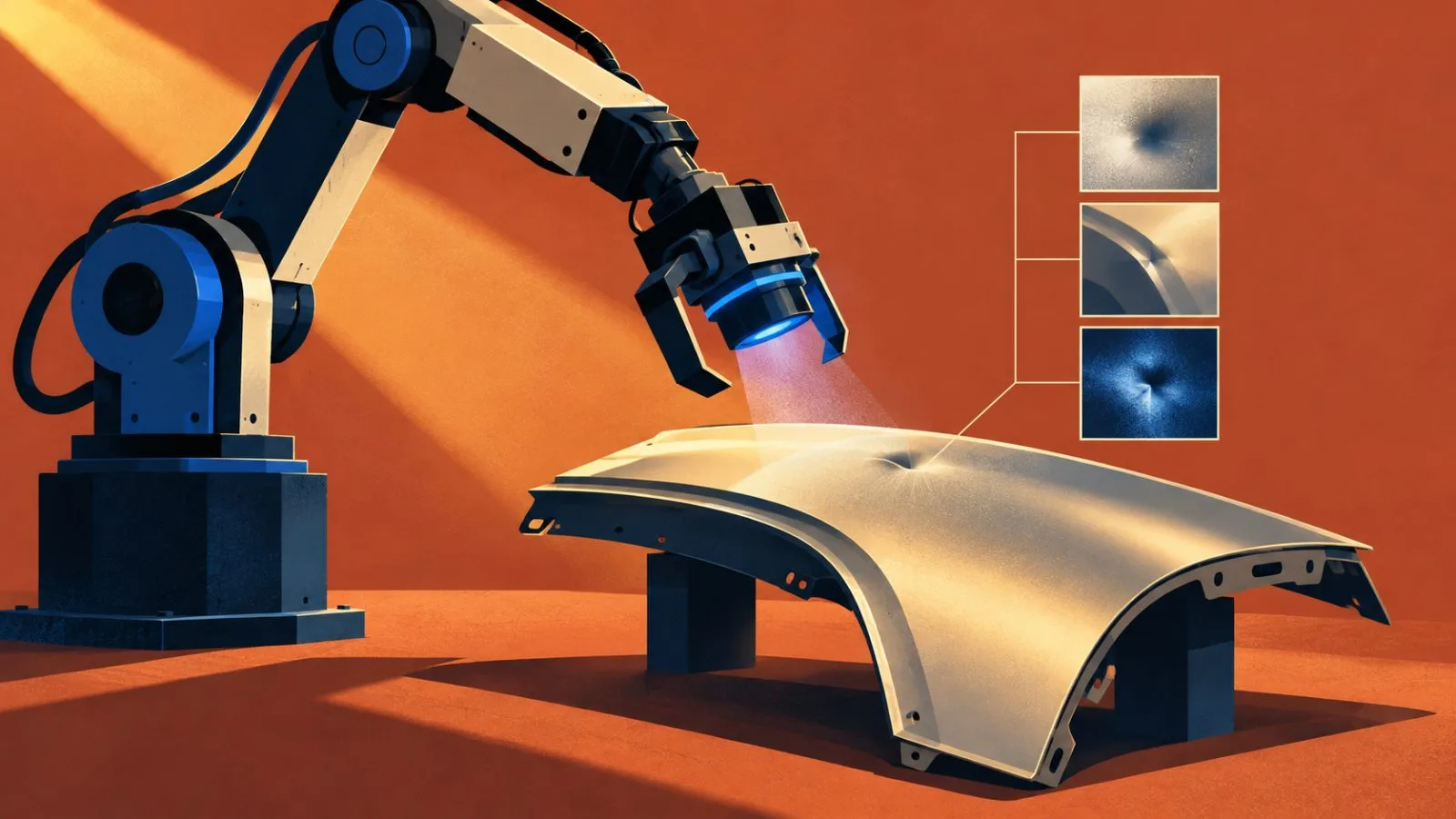
Cosmos Data Factory now has five cloud-native blueprints for generating autonomous-driving datasets, augmenting image attributes, creating event videos and defect images, and augmenting video data. They are available through GitHub, Microsoft Azure, Nebius and CoreWeave. Cosmos Curator also adds support for multimodal, multisensory inputs and processing blocks.
Porsche is using Data Factory through Voxel51 on Microsoft Azure to create a common data flywheel for autonomous-vehicle work across Volkswagen Group brands. The effort is expected to cut repeated physical test drives by up to 90% and development-cycle times by up to 85%.
Other examples include ANYbotics generating more than 1,500 synthetic video clips for industrial inspection robot training. Ultralytics retrained its YOLO model using real images and synthetic defect examples to improve defect localization and recall.
Cosmos Framework tools support fine-tuning and reinforcement learning for compatible models, including GR00T, Alpamayo, QWEN and Pi0.5, as well as other compatible Hugging Face models. Developers can then use distillation and quantization to prepare models for deployment. MicroAGI used videos of people manipulating objects to post-train Cosmos 3, then distilled its 32-billion-parameter reasoner into an 8-billion-parameter Nano model. The smaller model retained accuracy.
Cosmos 3 Nano variants support repeatable evaluations of autonomous policies in multiview, multisensor scenarios for autonomous vehicles and bimanual robots. Updated Cosmos 3 NIM microservices can deliver up to twice the inference speed with no quality loss in validated configurations. Metropolis Blueprint 3.3, for video search and summarization, can handle 40% more video streams on the same GPU.
Cosmos is a modular platform for generating training datasets, adapting world models and deploying supported models through NIM microservices.
Simon Yoon
ReporterSimon Yoon reports on blockchain technology for TokenPost. Send corrections or tips to info@tokenpost.com.