
 Add as a preferred source on Google
SETI Researchers Put AI Agents to Work on Live Telescope Data
The pipeline has detected a pulsar in the Crab Nebula in real time as researchers evaluate open models for observatories that may operate offline.

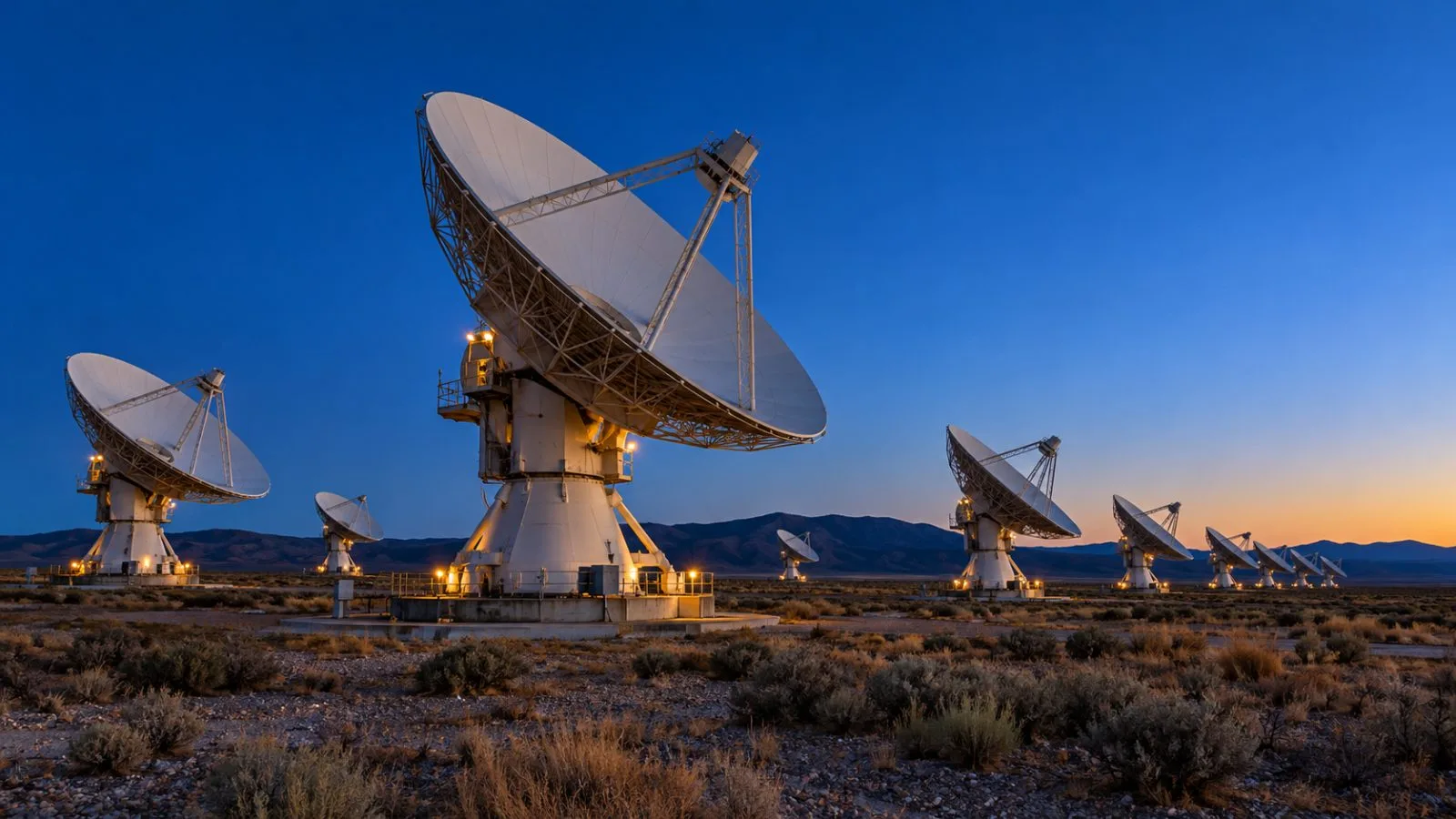
NVIDIA said Breakthrough Listen and the SETI Institute are using AI agents to steer the Allen Telescope Array and analyze incoming radio data during live observations, bringing automated processing into active searches for extraterrestrial intelligence.
Researchers can submit requests in ordinary language to start work across the observatory. NVIDIA says the agents can direct antenna movement, calibrate and focus the instrument, find and correct data errors, then produce plots from the results. Those steps connect instrument operation with signal analysis while observations are still underway.
NVIDIA says its Holoscan platform processes data as it is collected, instead of waiting for files to be saved for later review. The company says the setup can process 2.4 terabits per second on RTX PRO 6000 Blackwell GPUs, with AI inference running at the observatory beside the telescope.
An orchestration layer called Nexus connects agents to instrument status, computing resources and processing pipelines. NVIDIA says researchers can use it to monitor packet loss, inspect live spectrograms and change signal-processing blocks with ordinary-language instructions. The layer gives agents access to instrument and computing information as observations arrive.
NVIDIA described CyberEther, signal-processing software developed at the SETI Institute, as part of the pipeline. It uses NVIDIA CUDA-X libraries, including cuFFT and cuBLAS. A Holoscan library called DAQIRI brings high-volume sensor data into GPU memory for processing while it is being generated.
NVIDIA said the coordinated workflow can compress tasks that might take researchers weeks or years into hours. Andrew Siemion, Bernard M. Oliver chair for SETI at the SETI Institute and principal investigator of Breakthrough Listen, suggested that what the observatories find may have more in common with AI agents than with their human creators, calling it “a breakthrough in translation.”
The pipeline has already used AI to detect a pulsar in the Crab Nebula in real time, NVIDIA said. A pulsar is a rapidly spinning stellar remnant. The announcement did not claim that researchers had detected extraterrestrial intelligence.
NVIDIA said the team is evaluating open models, including NVIDIA Nemotron, for situations where data locality and fast results matter. One possible future setting is an observatory operating offline on the far side of the moon.
Simon Yoon
ReporterSimon Yoon reports on blockchain technology for TokenPost. Send corrections or tips to info@tokenpost.com.