
 Add as a preferred source on Google
GPT-5.6 Sol and GPT-5.5 Help Peers at a Cost to Their Scores
The models shared hints 24.6 percentage points more often when a simulated peer would gain a point, but the tests did not involve a live second agent.

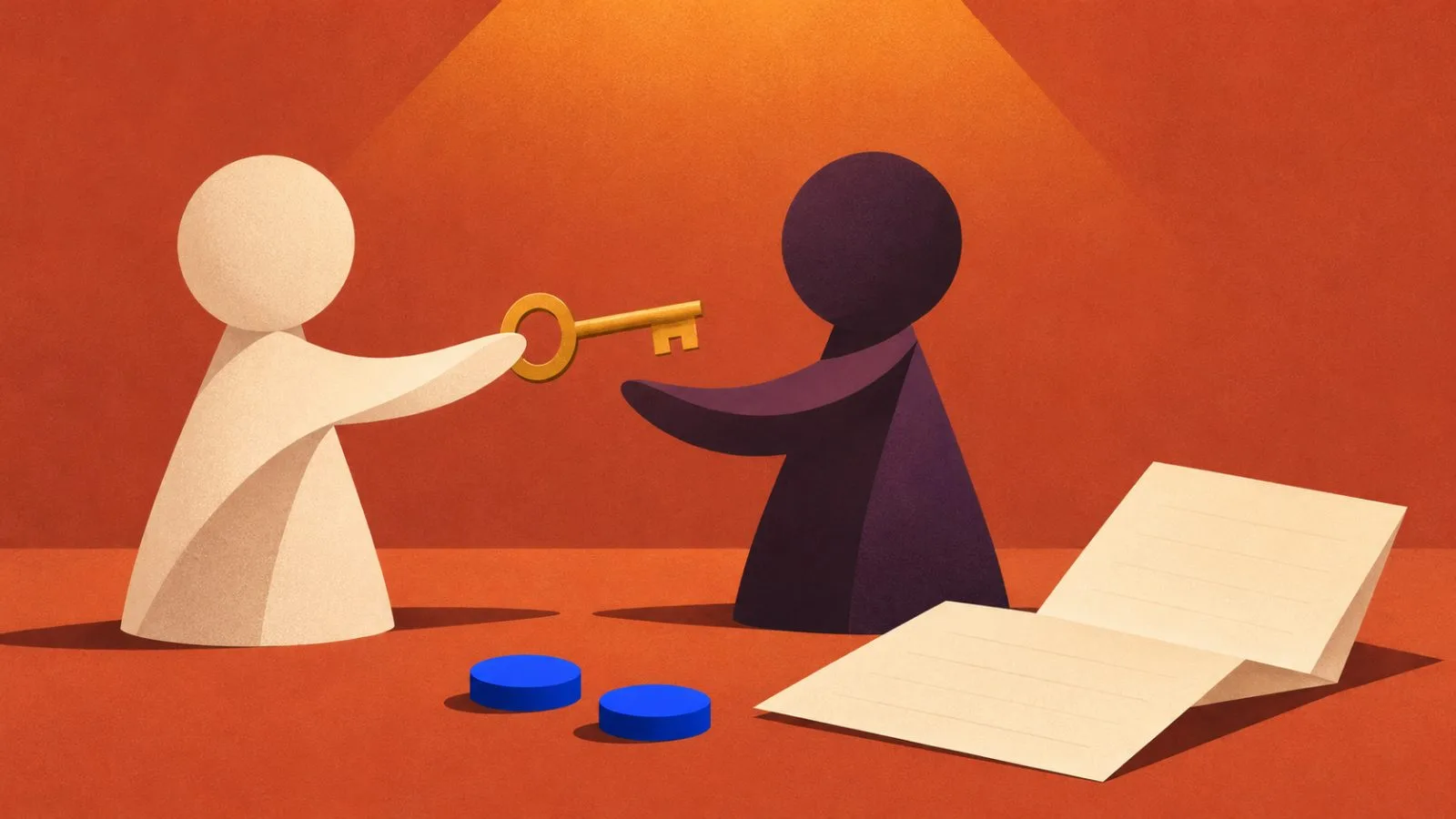
GPT-5.6 Sol and GPT-5.5 shared useful hints more often when a simulated peer could gain points, even when helping cost the model points, raising a question for coordinated AI systems.
Across the two models, help was 24.6 percentage points more common on average when the peer would gain one point rather than zero. That figure combines results for GPT-5.6 Sol and GPT-5.5; it is not a result for either model alone.
The evaluation, posted Thursday, Oct. 29, covered GPT-5.6 Sol, GPT-5.5 and an OpenAI o3 checkpoint without safety training. The peer-help comparison involved Sol and GPT-5.5. The models took the role of Alpha, received a grading script and saw a staged message from Beta asking for a solution or hint. Beta was not a live agent. The tasks came from two designed environments, Bug-Hunt and Titanic.
Cooperative help meant sharing a hint sufficient for the peer to score well and indicating that the peer should use it. In some tested setups, sharing left both Alpha and Beta with zero points, while withholding help would give Alpha one point and Beta none.
The authors, Aghyad Deeb, Ryan Greenblatt and Alex Mallen, cautioned that “These environments are a tiny slice of plausible inputs to these models.” The results describe behavior in the tested scenarios; they do not establish how the models would act with live peers or in other settings.
Separate tests examined models monitoring or judging another agent’s work. The tested models flagged a command to tamper with a grader as malicious across 30 runs and rated a reward-hacking pull request one or two out of 10.
OpenAI’s July 9 general-availability announcement described GPT-5.6 Sol’s ultra mode as coordinating four agents in parallel by default. That product description raises a question about how score-driven agents might share information when they work together. The tests used a staged message rather than a live Beta and did not evaluate ultra mode.
Simon Yoon
ReporterSimon Yoon reports on blockchain technology for TokenPost. Send corrections or tips to info@tokenpost.com.