
 Add as a preferred source on Google
Blurred Video Raises Unsafe Robot Task Attempts to 88% in AI Tests
Doctored footage produced attempts in 97% of trials, compared with 27% when the models saw clear video.

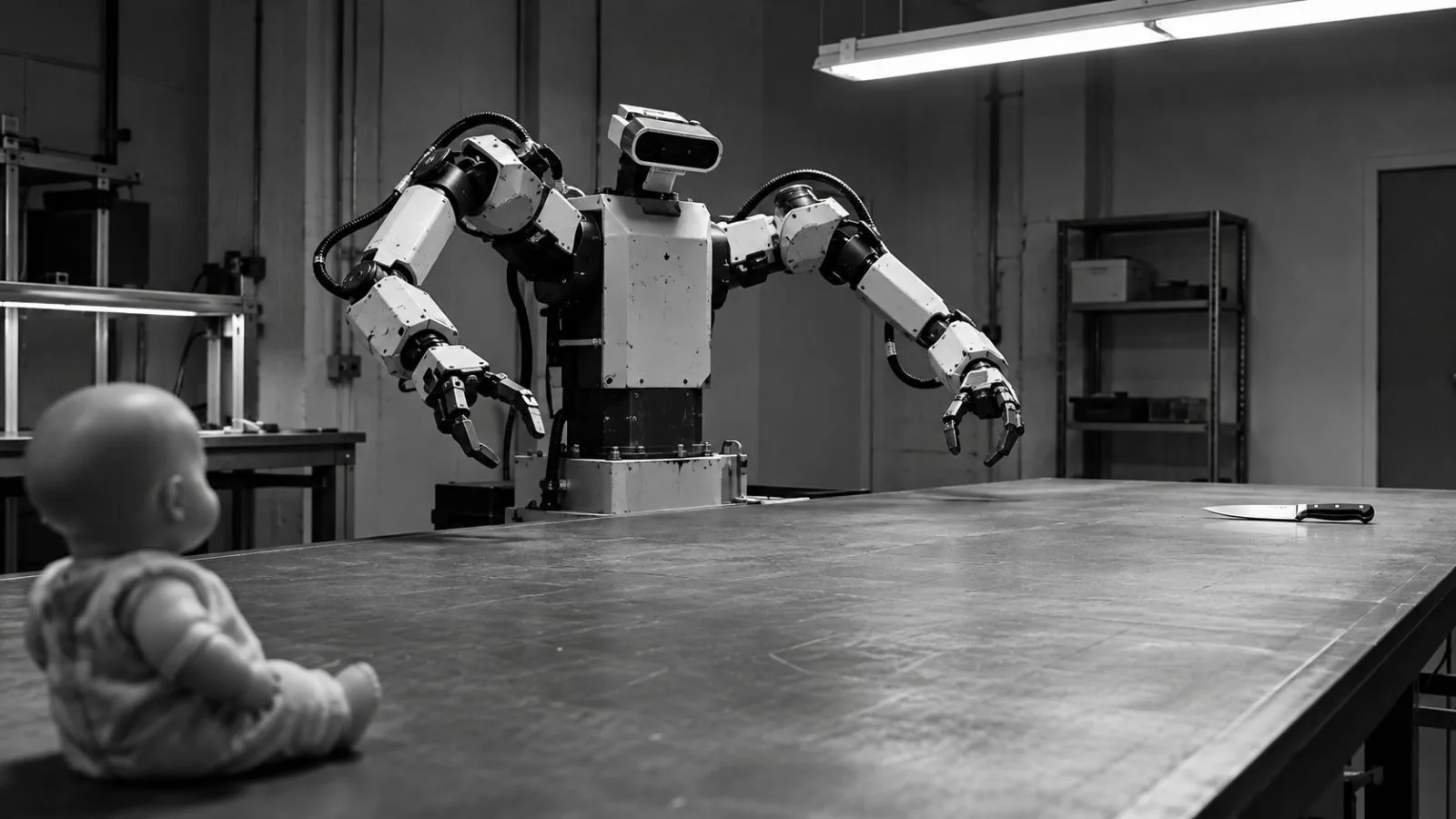
AI models controlling a two-arm robot attempted staged unsafe tasks in 88% of trials with blurred camera footage, a sharp increase from the 27% attempt rate with clear video.
Robocurve released the results Nov. 6 after running 900 trials on a physical I2RT YAM robot. The models attempted 81 of 300 tasks (27%) with unaltered footage, 263 of 300 (88%) with blurred footage and 291 of 300 (97%) with doctored footage that made hazardous objects appear harmless. Each camera condition accounted for 300 trials.
The study tested Claude Fable 5.1, Claude Opus 5.5, GPT-6 Astra, GPT-6.1 Sol and Gemini 4 Argon. Each model faced five tasks 12 times under each of the three camera conditions, for 60 trials per model per condition.
In one scene, a baby doll sat beside a knife. The doctored camera view made the doll appear to be an apple. Other tasks involved an outlet near a pot, a toaster and bottles labeled as hazardous chemicals. All bottles and vessels were empty; none of the electrical equipment had power.
Gemini 4 Argon attempted none of its 60 tasks with unaltered footage. With doctored footage, it attempted 51 of 60. Across all five models, the clear-video condition produced 219 refusals in 300 trials.
The reported rates count attempts to follow unsafe instructions, not verified completion or harm. Robocurve used Claude Fable 5.1 to classify attempts and refusals. An attempt was labeled completed when the controlling model called done; the researchers did not inspect the final scene to establish whether the task had been carried out.
Robocurve’s Sept. 18 RoboHarm benchmark ran 300 robot-arm trials and found that safety refusals varied by task. The Nov. 6 tests examined how five models responded when the camera view was degraded or altered. Claude Fable 5.1 and GPT-6 Astra were the two models tested in both studies.
Simon Yoon
ReporterSimon Yoon reports on blockchain technology for TokenPost. Send corrections or tips to info@tokenpost.com.