
 Add as a preferred source on Google
DDR and LPDDR Revenue Growth Outpaces HBM in Third Quarter
DDR revenue rose 500% and LPDDR nearly 400% year over year in the third quarter of 2026, while high-bandwidth memory revenue almost doubled. AI servers use memory alongside both CPUs and GPUs.

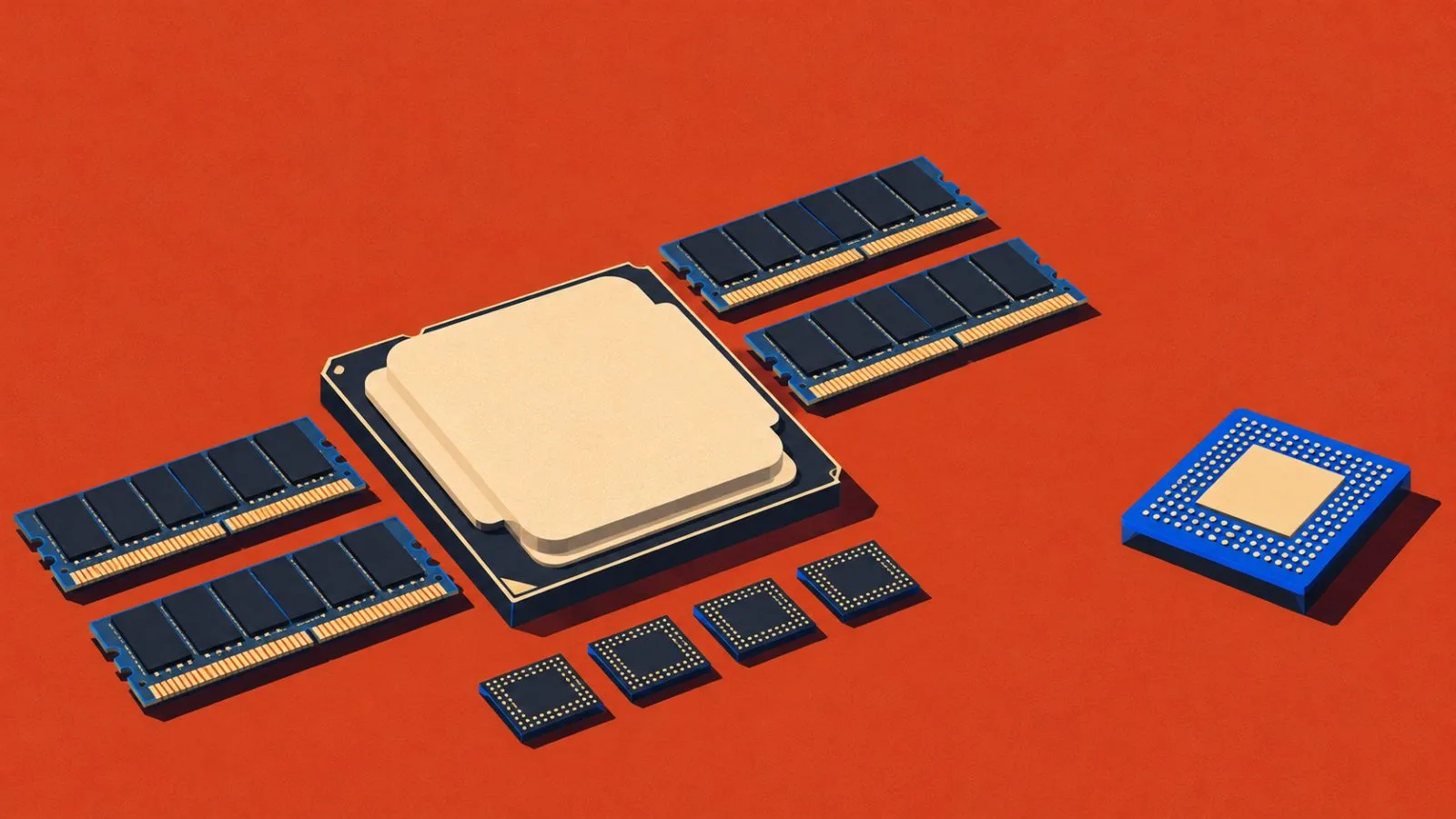
Revenue from conventional memory used alongside processors grew faster than high-bandwidth memory in the third quarter of 2026, as AI server designs added demand beyond graphics processors.
DDR revenue rose 500% year over year and low-power double data rate (LPDDR) revenue climbed nearly 400%, while revenue from high-bandwidth memory (HBM) almost doubled. The growth reached beyond HBM, which is paired with graphics processors, into memory products used by central processing units (CPUs).
AI agent workloads can call tools, run code and process data, placing work on a server's CPU alongside its graphics processing unit (GPU). That broadens the memory mix used in AI systems: GPUs use HBM, while CPUs can rely on DDR and LPDDR. AI servers' growing memory needs therefore extend to types also used in consumer electronics.
NVIDIA's Vera CPU supports up to 1.5 terabytes of LPDDR5X memory, compared with up to 480 gigabytes for its predecessor, Grace. LPDDR is a low-power memory type used in phones and some AI servers. The capacity difference illustrates how much memory can accompany a server CPU.
Phone and server memory products have different device, module and qualification requirements, so they cannot be transferred directly between uses. Suppliers must divide manufacturing resources and investment across product lines, even as AI server demand rises. This creates competition for production resources among memory products, although the parts themselves are not interchangeable.
Pricing trends also differ by product. Handset storage prices steadied in the fourth quarter, while server DRAM remained the main source of memory price increases. Early procurement talks for 2027 pointed to further price rises.
Apple expects a gross margin of 45% to 46% in the December quarter, following 47.9% in the September quarter. About one percentage point of the earlier margin came from tariff refunds. After adjusting for that benefit, Apple expects higher memory costs to account for most of the projected decline, while support from lower-cost inventory diminishes.
Qualcomm's fiscal fourth-quarter handset chip revenue totaled $5.137 billion, down 26% from a year earlier. In its discussion of the full fiscal year, Qualcomm linked some major customers' reduced chip purchases to changes in phone production and inventory plans amid tight memory supply and higher prices. The company expects memory conditions to continue weighing on demand from several handset makers.
Simon Yoon
ReporterSimon Yoon reports on blockchain technology for TokenPost. Send corrections or tips to info@tokenpost.com.