
 Add as a preferred source on Google
China AI Campus Delivers 120 MW in Under a Year, Targets 800 MW
A roughly 200 MW first phase was delivered in late October. The campus aims to supply more than 60% of power for its first two phases from its own wind farms.

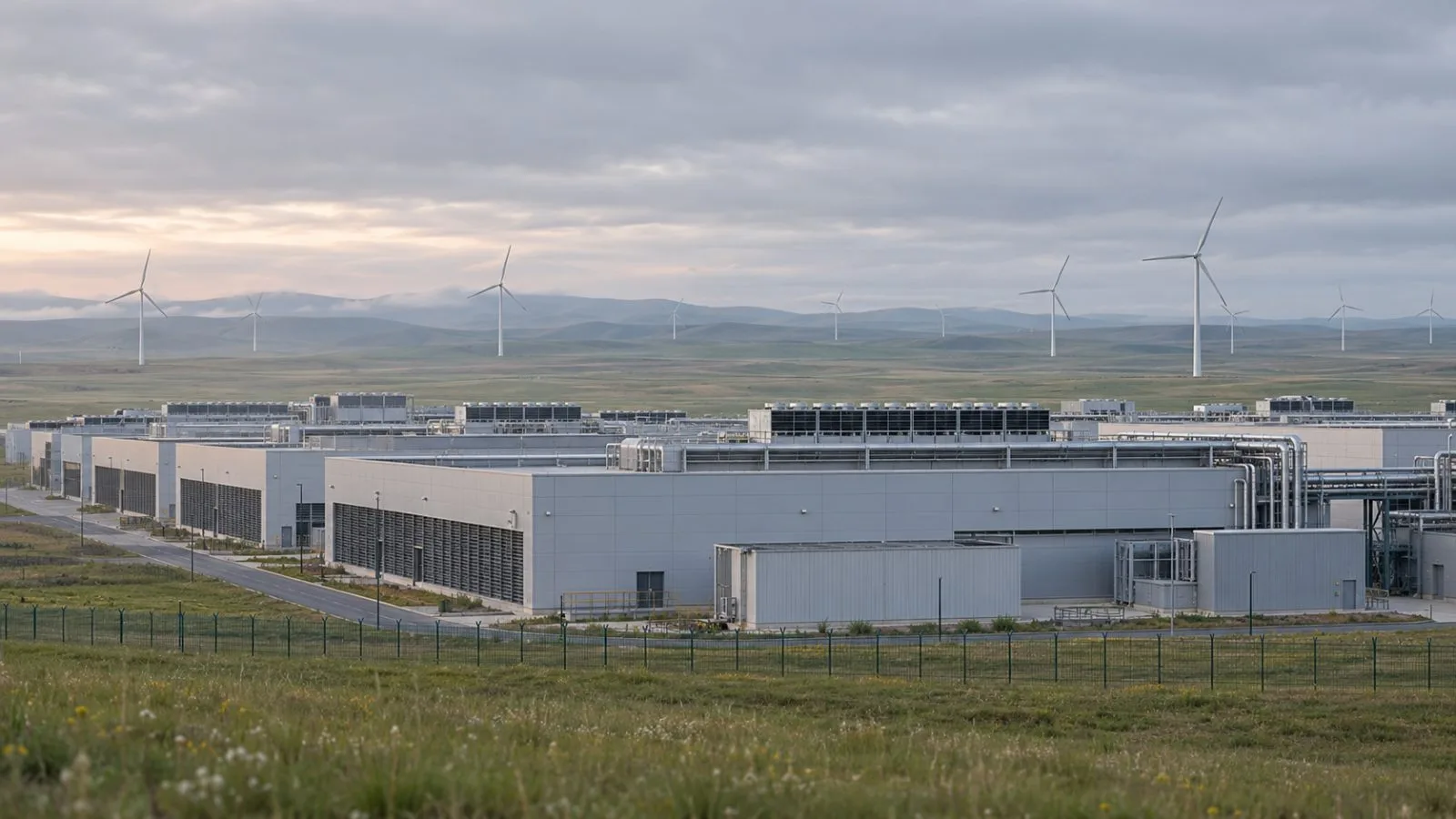
A Chinese AI campus delivered 120 megawatts in less than a year and plans to reach 800 MW by 2027, a scale similar to a planned U.S. Stargate site.
Construction costs may be as low as one-fifth those of similar U.S. projects. The 远景星河基地 campus is in 乌兰察布, Inner Mongolia, and is operated by wind and storage company 远景科技.
First-phase infrastructure was completed Aug. 6, when 远景科技 announced the campus had begun operations. After nearly three months of electrical and mechanical commissioning and computing equipment deployment, a customer received the roughly 200 MW first-phase project in late October. The 120 MW figure describes capacity delivered in less than a year; the later handover covered the larger first-phase project.
The campus’s target for the end of 2027 is 800 MW of IT power capacity. OpenAI’s Stargate core site in Abilene, Texas, is planned for about 820 MW, with that scale expected by the end of 2026. OpenAI’s broader Stargate plan initially targeted 10 gigawatts of U.S. AI infrastructure by 2029. In April, the company said it had lined up more than 10 GW in planned capacity, though not all of those data centers had been built and brought online.
远景科技 built two wind farms with a combined capacity of 420 MW and paired them with battery storage. The company aims to supply more than 60% of the electricity used by the campus’s first two phases with its own wind power. The Abilene site relies mainly on the grid and on-site gas generation.
A 5 MW data hall at the campus runs an 800-volt direct-current system. It converts 10-kilovolt alternating current directly to the direct current needed by server racks, avoiding several conversion stages. The campus also uses a shared water loop for liquid-cooled and air-cooled servers without central chillers.
Simon Yoon
ReporterSimon Yoon reports on blockchain technology for TokenPost. Send corrections or tips to info@tokenpost.com.