
 Add as a preferred source on Google
Morgan Stanley Sees 5 GW of U.S. Data Center IT Capacity Delayed to 2029
The projects are delayed rather than canceled, while the bank keeps its 2027 outlook and total AI capital-spending estimates unchanged.

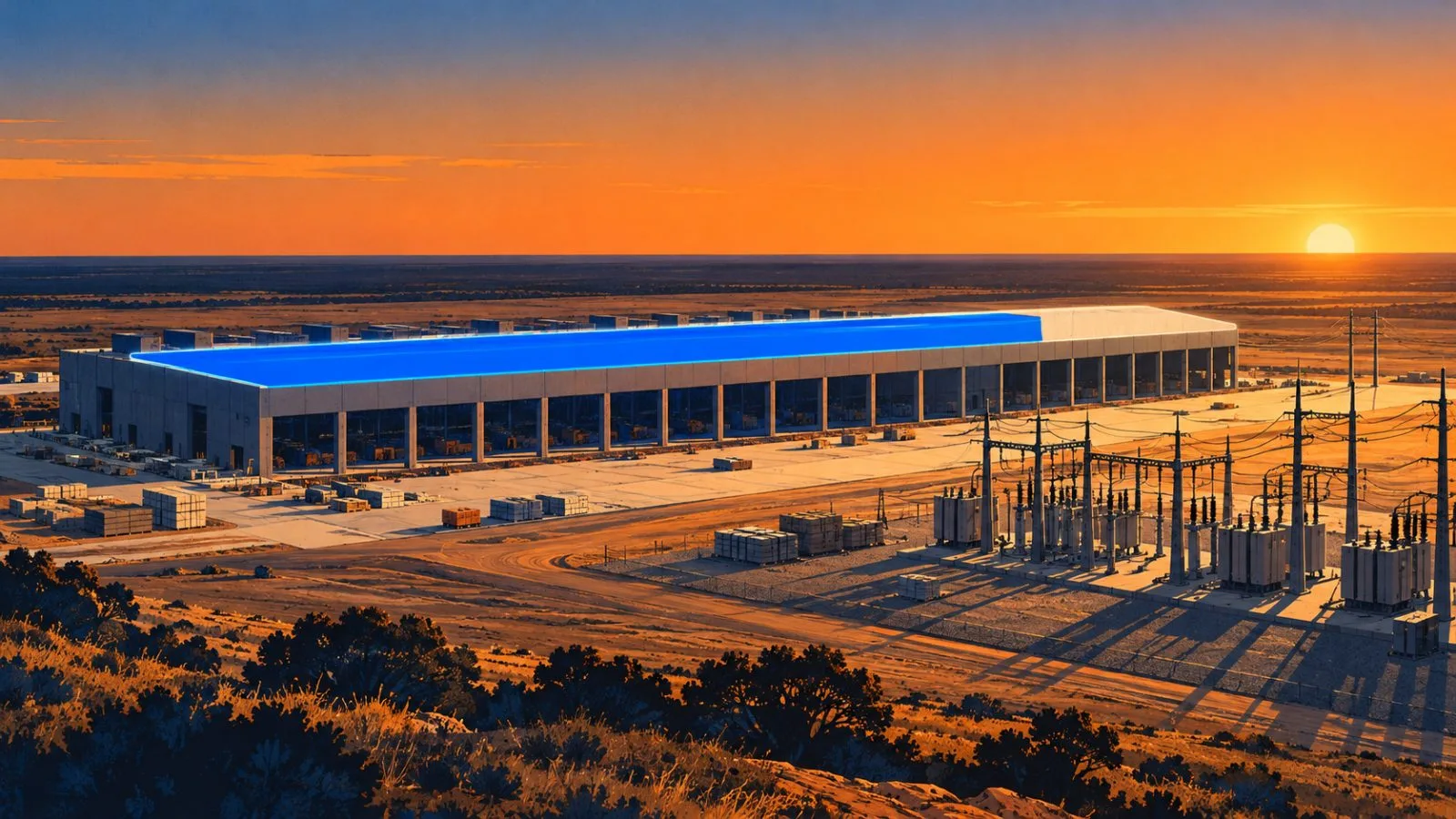
Morgan Stanley expects operators to bring about 5 GW of planned U.S. data center IT capacity online in 2029 instead of 2028, a one-year delay that leaves its total AI capital-spending forecasts intact.
The bank’s Nov. 8 outlook puts the delayed capacity at about 4% of planned U.S. capacity, concentrated in Texas and Ohio. Morgan Stanley estimates that about 20% of U.S. projects, representing roughly 10% of global projects, will be delayed by a year. It characterizes the change as a postponement rather than a cancellation.
Projects already under construction will not be interrupted, and Morgan Stanley’s 2027 capacity forecast is unchanged. The bank’s assessment is that election-related changes affect construction timing, not its view of AI demand.
The revised U.S. forecast puts 2028 data center additions at 19.9 GW, down from 24.9 GW. For 2029, Morgan Stanley raised its projection to 27.6 GW from 22.7 GW. Globally, it lowered its 2028 capacity forecast to 219 GW from 224 GW, while keeping its projection for 2029 and later at 271 GW.
Semiconductor shares had fallen sharply by the time of the outlook. As of Nov. 6, the median semiconductor stock covered by Morgan Stanley was 53% below its 52-week high, with an average decline of 48%. The Philadelphia Semiconductor Index had fallen about 40% since mid-June. Morgan Stanley viewed the market’s response to the election results as excessive because the delays change the buildout schedule rather than its AI demand outlook.
An analysis examined about 18,000 earnings reports and meeting records. It found that 44% of S&P 500 companies cited at least one quantifiable AI benefit in the past 12 months, up from 32% a year earlier. The share mentioning cost savings or AI-driven revenue growth rose to 26% from 16%. In financial services, 67% cited tangible improvement, compared with 42% a year earlier.
Simon Yoon
ReporterSimon Yoon reports on blockchain technology for TokenPost. Send corrections or tips to info@tokenpost.com.