
 Add as a preferred source on Google
Asia Vital Components Ships Double-Sided Cold Plates for AI Servers
AVC expects all GPU- and ASIC-based AI servers to use liquid cooling by the end of 2027 and plans to increase liquid-cooling capacity by more than 50% that year.

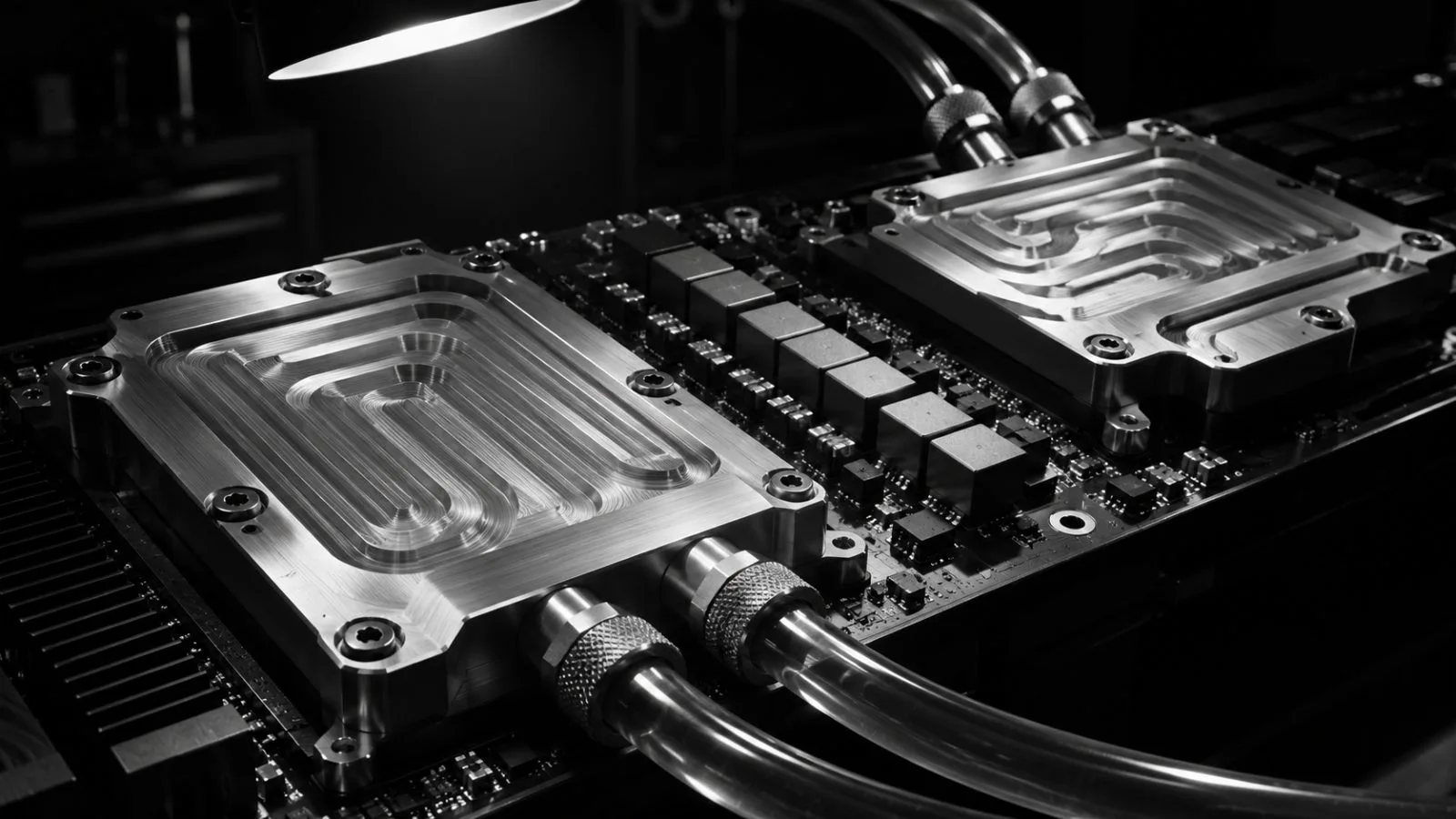
Taiwan-based Asia Vital Components (AVC) has begun shipping double-sided cold plates for AI servers built around vertical power delivery, a board layout that can put electrical components in areas where heat also builds up.
Vertical delivery sends power through the board toward a chip, rather than routing it from the sides. A cold plate is a metal block that carries liquid through internal channels to move heat away from a chip. The double-sided design is intended to cool from both directions, addressing heat around power components. Customers are increasingly choosing double-sided cold plates for vertical power delivery systems. The layout shifts cooling needs beyond the processor itself and toward nearby power components.
The company is also developing cold plates for chips with thermal design power above 2,300 watts. Thermal design power, or TDP, estimates the heat a chip is expected to generate under heavy workloads.
AVC expects all AI servers based on GPUs or ASICs to use liquid cooling by the end of 2027. It also expects revenue from ASICs to pass GPU revenue in its server segment during 2027. An ASIC is designed for a specific computing task, while a GPU is a more general-purpose graphics processor. Major cloud companies build custom ASICs to run their AI workloads more efficiently. AVC has worked with AWS, Google, Meta and OpenAI on GPU designs and custom ASIC chips. The company gave these forecasts during its Nov. 10, 2026, earnings call.
AVC's third-quarter 2026 revenue set a record, rising 51.8% from a year earlier. Gross margin reached 33.86%, up 7.74 percentage points year over year. Demand for higher-value liquid-cooling products and a stronger sales mix supported the margin gain. October 2026 revenue also reached a record, rising 34% year over year.
AVC plans to increase liquid-cooling production capacity by more than 50% in 2027, with most new capacity at its Vietnam facilities. The company has planned capital spending for the Vietnam expansion.
TokenPost has previously covered an eight-rack blueprint with direct liquid cooling for servers built around Nvidia's Vera Rubin architecture.
Simon Yoon
ReporterSimon Yoon reports on blockchain technology for TokenPost. Send corrections or tips to info@tokenpost.com.