
 Add as a preferred source on Google
AI Researcher Revises Claim of New Maya Site After 2025 Study
Pietro Miotti said 48 agents flagged a candidate in Mexico that he later located in a 2025 study; withheld coordinates leave the claimed match unverified.

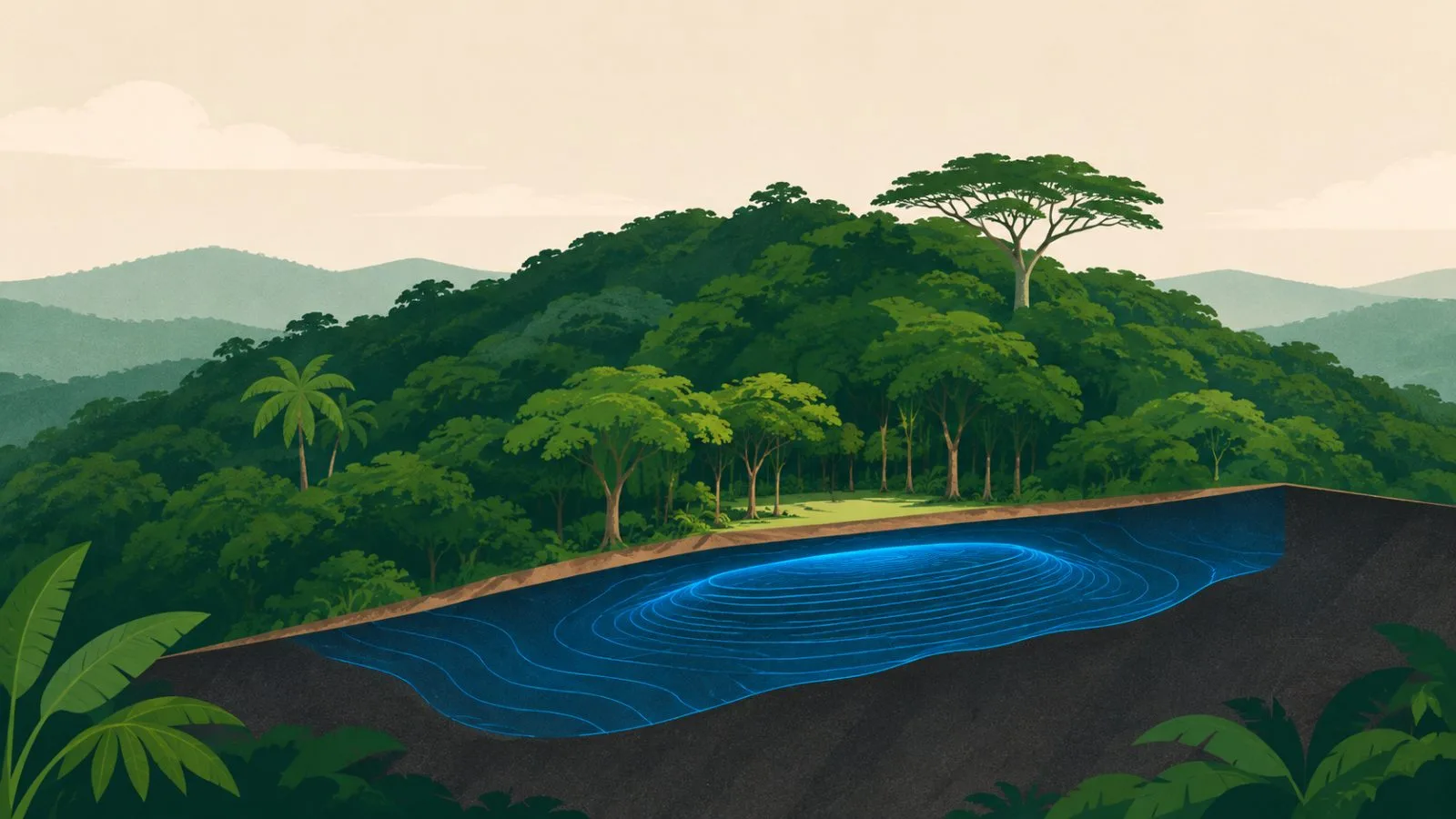
AI researcher Pietro Miotti revised his claim of a new Maya site in Mexico, saying a 2025 study had already mapped the candidate location, though the claimed match remains unverified.
In a Nov. 11 update, Miotti explained that he and the agents had missed the earlier research while reviewing existing literature. “The agents missed it while going through the literature, so they rediscovered it rather than discovered it,” he wrote.
The agents flagged a hilltop in lidar imagery. Miotti described features he interpreted as a plaza, an oval pyramid and a raised courtyard as speculative. He estimated the pyramid at 8 to 12 meters tall and suggested a nearby hollow might have been a reservoir. No fieldwork has confirmed those interpretations, so the location remains a candidate site rather than a confirmed archaeological discovery.
Miotti said 48 agents reviewed images made from lidar strips covering about 1,200 square kilometers. Lidar uses laser pulses to map ground through openings in forest canopy. He said he used no specialized archaeological classifier.
The 2025 study Miotti cited was written by Francisco Estrada-Belli, Marcello A. Canuto, Ivan Šprajc and Juan Carlos Fernandez-Diaz. It models settlement distribution across 95,000 square kilometers of the Central Maya Lowlands and discusses lidar data from areas that include southern Campeche and southern Quintana Roo.
Miotti pointed to page 14 of the study as showing the candidate’s location. He kept its exact coordinates in a confidential annex, leaving the claimed match unverified.
Miotti said he sent a report about the location to Mexico’s National Institute of Anthropology and History (INAH) on Oct. 20 and received a reply the next day. The agency said, “no registered archaeological site was identified at the location given in your report.” The response addressed whether an archaeological site was registered at that location.
Ivan Šprajc, an archaeologist and co-author of the study, said “just spotting something does not add much to our knowledge.”
Simon Yoon
ReporterSimon Yoon reports on blockchain technology for TokenPost. Send corrections or tips to info@tokenpost.com.