
 Add as a preferred source on Google
NVIDIA Says Chip Tracking Cut AI System Turnaround to Two Weeks
The two-week interval applies when supply and demand require it. NVIDIA’s supply-and-capacity commitments stood at $279 billion as of July 26.

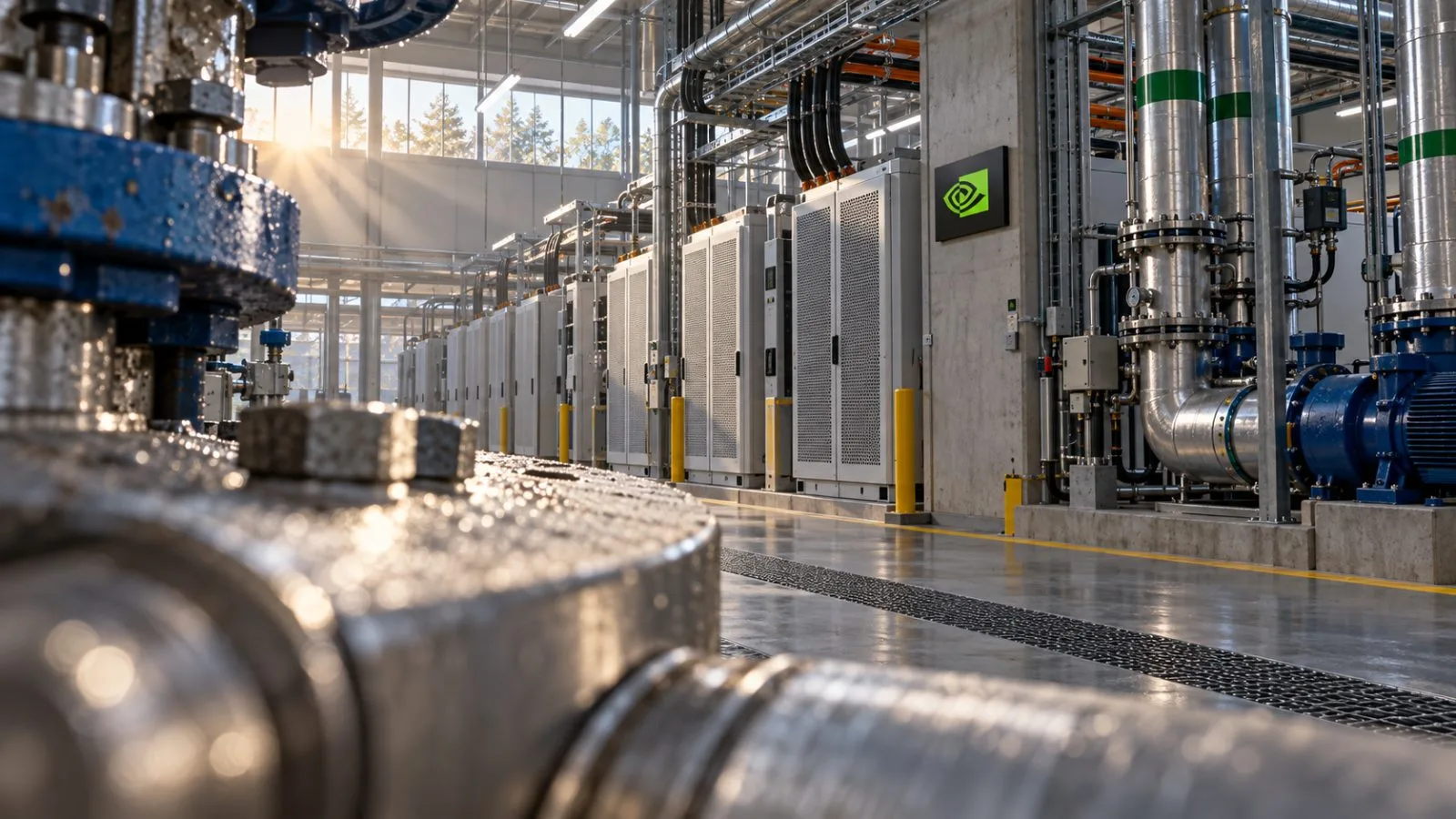
NVIDIA Executive Vice President of Operations Deb Shoquist said the company cut the time from a chip leaving TSMC to a system leaving Foxconn or Wistron from five weeks to two when supply and demand require it.
“We keep track of every chip, from the identification number on the die all the way to the customer invoice,” Shoquist said. She said factory performance is reviewed weekly and NVIDIA allocates chips based on those reviews.
The two-week figure measures the interval between a chip leaving TSMC and a system leaving Foxconn or Wistron.
NVIDIA’s work has expanded from chip manufacturing into data-center systems. Shoquist said that shift brought more manufacturing partners and new supply chains, including for co-packaged optics. She said NVIDIA supported and invested in optical suppliers Coherent and Lumentum, but gave no investment amounts.
A cable cartridge from Amphenol illustrates the precision involved. Shoquist said it contains 1,500 small cable legs, each requiring precise assembly to meet a quality level below one defect per million. Amphenol built more than 100 automated production lines for production in Vietnam.
The partner network includes TSMC, Foxconn, Wistron, SPIL, King Yuan Electronics (KYEC), Unimicron, Lumentum, Coherent and Amkor. NVIDIA’s partnership with TSMC dates to 1998. SPIL and KYEC were assembling and testing its chips more than 20 years ago.
As of July 26, 2026, NVIDIA had $279 billion in supply and capacity commitments, compared with $119 billion one quarter earlier. The commitments were primarily for memory and manufacturing facilities. Some agreements can be canceled, delayed or changed before they become firm orders.
Simon Yoon
ReporterSimon Yoon reports on blockchain technology for TokenPost. Send corrections or tips to info@tokenpost.com.