
 Add as a preferred source on Google
AI Makes Progress on Hard Math Problems, Raising Questions About Proofs
Ittai Abraham described working on a problem set for two years before an AI model made progress on one problem in an hour.

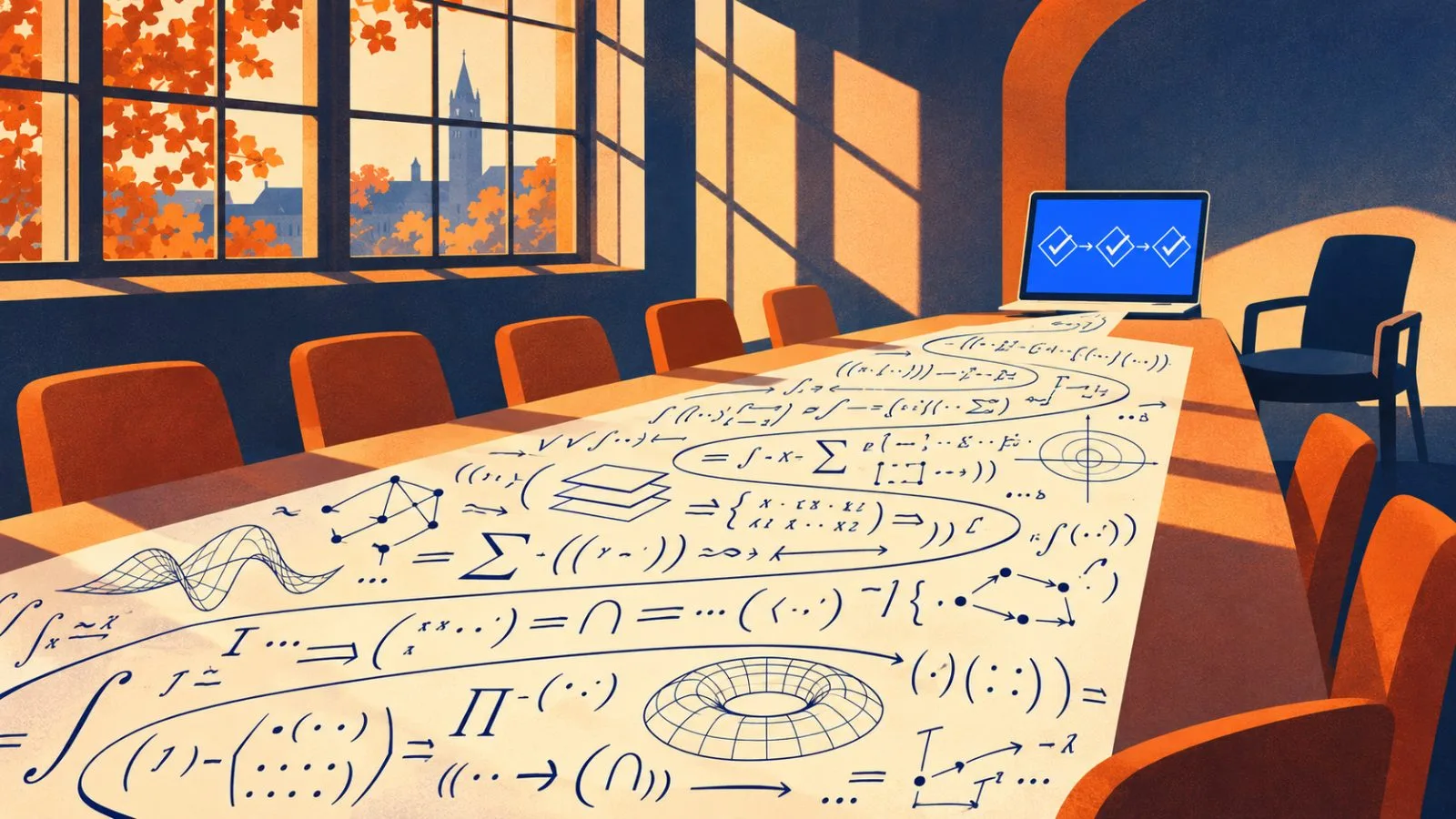
Researchers discussed AI’s progress on difficult mathematical problems and why machine-generated proofs may be hard for people to inspect, even when a computer can check every step.
At a discussion hosted by a16z Frontier, researcher Ittai Abraham described working for two years on a set of mathematical problems before an AI model made progress on one of them in an hour. The example focused attention on the speed of AI-assisted work and how researchers can evaluate the reasoning behind it.
Stanford cryptographer Dan Boneh raised the hypothetical of AI solving P vs. NP, a major open question in computer science. Boneh said a computer could check every step of a proof, while a result stretching to a billion pages could remain difficult for people to understand.
The discussion separated two questions: whether a proof can be checked and whether people can follow its reasoning. AI-generated proofs may leave out important steps or devote too much attention to straightforward ones, making it harder for mathematicians to see how a result was reached.
Participants also considered whether mathematics could take on a role more like astronomy, with researchers interpreting results produced by machines and building theories and tools to explain them. They discussed what to tell students considering math Ph.D. programs, including the importance of foundational skills and a deeper understanding of mathematical theory.
TokenPost has also examined how to assess AI-generated math answers.
Simon Yoon
ReporterSimon Yoon reports on blockchain technology for TokenPost. Send corrections or tips to info@tokenpost.com.