
 Add as a preferred source on Google
Google’s Willow Processor Wins 98.3% of Quantum Game Trials
The 105-qubit chip exceeded the game’s 88.9% classical ceiling in a four-qubit test; researchers also ran other experiments across the full processor.

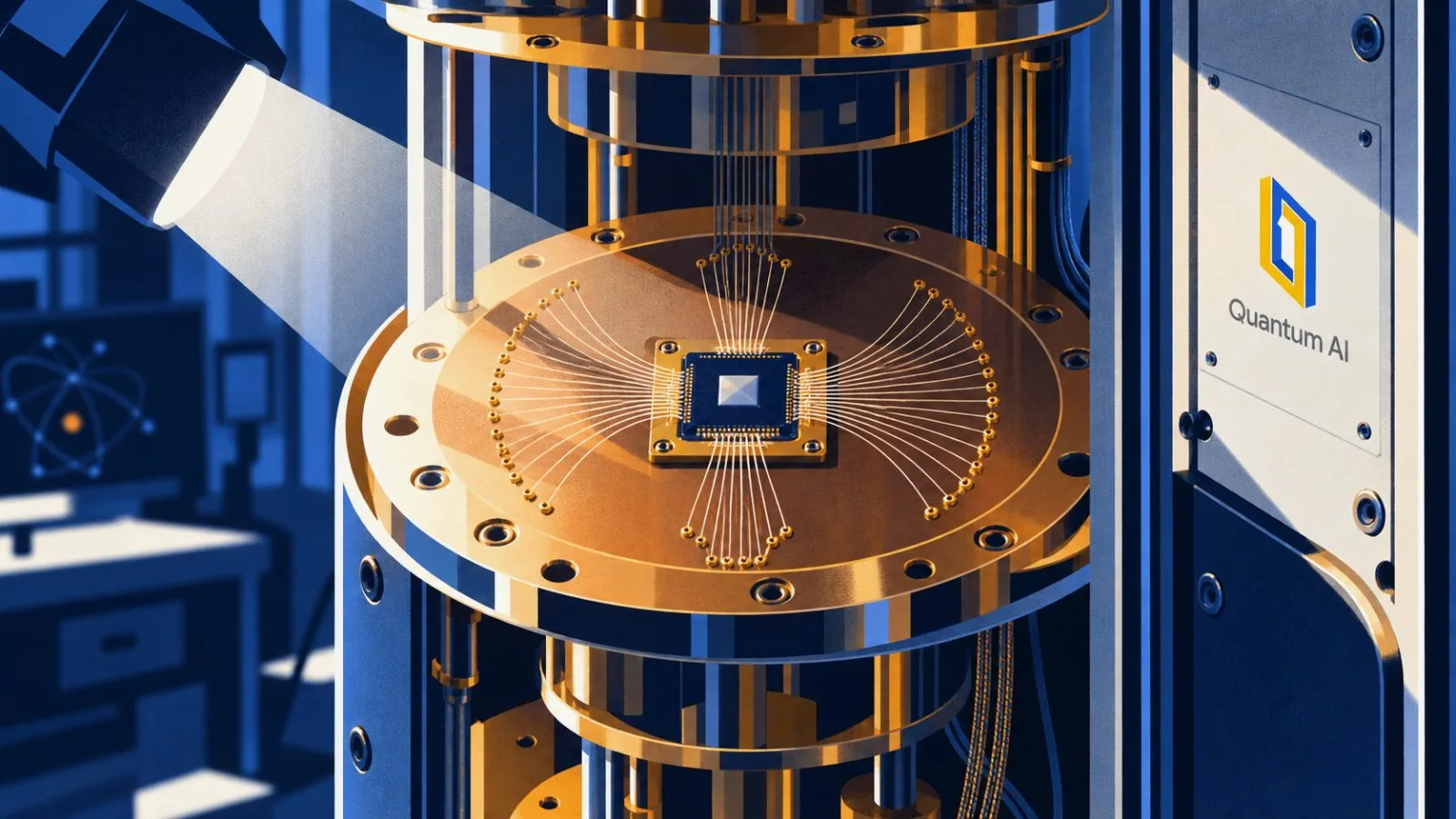
Google’s Willow processor won 98.3% of trials in a quantum game with a known classical limit, demonstrating quantum contextuality in a test that can also help identify possible hardware errors.
The four-qubit version of the Mermin-Peres magic square game has an 88.9% maximum success rate for classical strategies. Willow exceeded that threshold in a study published Nov. 19 in Science.
Researchers ran nine game assignments 100,000 times each. Most losses were attributed to residual hardware noise.
Quantum contextuality means measurement outcomes can depend on the context in which a quantum system is measured. The team also tested GHZ-type games and hidden linear function problems, extending experiments to all 105 qubits in Willow.
The hidden linear function tests used a shallow-circuit algorithm, which requires fewer layers of quantum operations. That limits the number of operations and reduces opportunities for noise to affect results.
The magic square game offers a way to compare hardware performance with a fixed classical ceiling. A shortfall from the ideal quantum score can point to possible hardware errors. Winning these games, however, does not establish that the processor can perform commercially useful computations.
Willow is a superconducting transmon processor that Google Quantum AI announced in December 2024. The study first appeared as a preprint in December 2025 before its publication in Science on Nov. 19.
Simon Yoon
ReporterSimon Yoon reports on blockchain technology for TokenPost. Send corrections or tips to info@tokenpost.com.