
 Add as a preferred source on Google
South Korean Banks Buy Crypto Exchange Stakes as Bitcoin Slides and Volumes Drop
South Korean financial giants including Hana Bank and Samsung affiliates are acquiring crypto exchange stakes despite Bitcoin declines and falling retail trading volumes, signaling a shift toward institutional infrast…

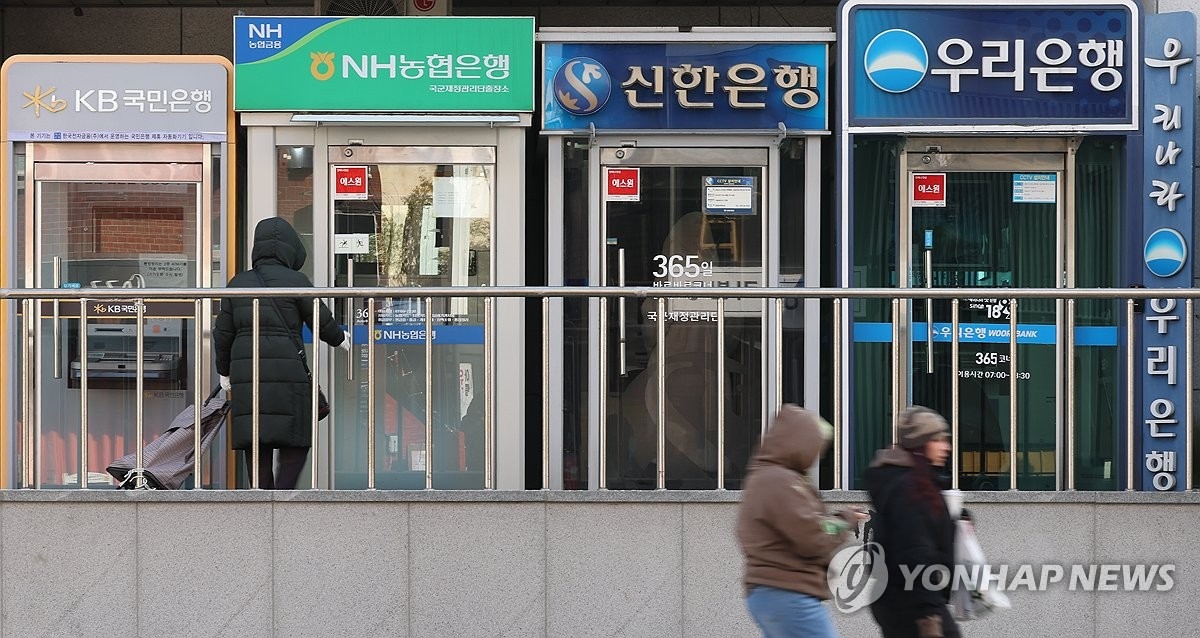
Bitcoin (BTC) is sliding and retail liquidity is thinning, but some of South Korea’s biggest financial groups are moving in the opposite direction—buying stakes in crypto exchanges. The divergence highlights a widening gap between short-term price action and a longer-term contest for who controls the country’s digital-asset ‘front end’: licenses, distribution rails, and customer access.
BTC fell to around $73,000 as risk sentiment deteriorated, triggering roughly $326.9 million in leveraged liquidations over 24 hours, with about 81.9% of the wiped-out positions on the long side. At the same time, BlackRock’s spot Bitcoin ETF, iShares Bitcoin Trust (IBIT), saw about $528 million in net outflows in a single session, underscoring a broader ‘risk-off’ tone amid geopolitical strain in the Middle East and persistent macro uncertainty. Even President Trump’s pro-crypto remarks failed to steady sentiment, instead serving as a convenient catalyst for profit-taking.
In South Korea’s domestic market, activity has noticeably cooled. Combined trading volume across the country’s five largest crypto exchanges has fallen by roughly 48% from a year earlier, reflecting reduced retail participation and lower speculative churn—conditions that, in a typical market cycle, would discourage new capital from entering the sector.
Yet Korea’s traditional financial incumbents appear to be treating the drawdown as an entry point. Hana Bank is seeking to acquire a 6.55% stake in Dunamu, the operator of Upbit, in a deal valued at about 1 trillion won (roughly $730 million). Less than two weeks later, Hanwha Investment & Securities indicated it would purchase an additional 3.90% stake in Dunamu. In the same month, a Samsung-affiliated group—Samsung Securities, Samsung SDS, and Samsung Card—also disclosed plans to acquire a combined 4.0% stake.
Elsewhere, Mirae Asset Consulting moved earlier in the year, acquiring 92.06% of Korbit, one of South Korea’s longest-running exchanges. Market chatter has also circulated around a potential joint acquisition of Coinone involving Korea Investment & Securities and global exchange OKX, though no formal agreement has been confirmed publicly.
The pattern is less paradoxical than it looks. Retail-led signals—liquidations, ETF flows, and shrinking spot volumes—describe today’s trading cycle. The exchange stake-buying spree, by contrast, is a bet on infrastructure: ownership, regulatory positioning, and distribution capabilities that could define the next stage of Korea’s digital-asset market.
For banks and brokerages, an exchange is not merely a venue for coin trading. It is a gateway into a broader stack of services that institutional players expect to grow as regulation evolves: stablecoins, tokenized securities, custody, and ‘real-world asset’ (RWA) products. Equity exposure offers a way to secure access to a virtual asset service provider framework, liquidity pipes, existing user bases numbering in the millions, and valuable transaction data—assets that are difficult to replicate quickly once market structure hardens.
That is why the deals matter even as prices weaken. The strategic question is not “where is Bitcoin today,” but who will control the customer interface and compliant distribution rails for digital-asset finance over the next decade. In Korea, stablecoin issuance models, tokenized asset rules, and custody standards are still being shaped. Participants that establish themselves before the framework is finalized can influence how the rules are implemented—and potentially set de facto standards through early scale and industry partnerships.
The regulatory race is already visible. While the Bank of Korea has emphasized stablecoin structures led by bank-majority consortia, platform companies and payments players—including Kakao-linked entities, card issuers, and major exchanges such as Dunamu and Bithumb—are exploring their own routes into the ecosystem. The more volatile the market becomes, the faster the scramble to lock in positions during perceived regulatory gaps.
Industry observers note that the market’s center of gravity is shifting from retail speculation toward institutional infrastructure-building, and the change has accelerated over recent months. Retail investors may still focus on charts and near-term volatility, but the competitive battlefield is moving to cap tables and licensing pathways.
Even the conference circuit is reflecting the transition. Organizers of Korea Blockchain Week 2026, scheduled for September, are increasingly filling headline speaking slots with figures from traditional finance rather than predominantly overseas blockchain foundations—an indicator that legacy institutions are preparing to play a more direct role in the next phase of market development.
Bitcoin’s price will continue to react to macro data and geopolitics, but the deeper shift underway in Korea is structural: who owns the exchanges, who holds the licenses, and who controls the customer touchpoints that future digital-asset products will need. In a down market, fear can dominate trading screens. Behind them, capital is positioning for an infrastructure contest that may prove far harder to unwind than any single price cycle.
Article Summary by TokenPost.ai
🔎 Market Interpretation
Risk-off pressure dominates price action: BTC slid to ~$73,000 amid worsening macro/geopolitical sentiment, triggering ~$326.9M in 24h liquidations with ~81.9% on long positions.
ETF flows confirm weakening risk appetite: BlackRock’s spot BTC ETF IBIT saw ~$528M net outflows in one session, reinforcing the broader de-risking impulse.
Korea retail participation is cooling: Combined volume across Korea’s five largest exchanges is down ~48% YoY, signaling thinner retail liquidity and reduced speculative churn.
Apparent divergence is structural, not contradictory: While retail-led indicators (liquidations/flows/spot volume) describe the current cycle, large financial groups are positioning for the next cycle by buying exchange equity and access.
Competitive focus shifts from charts to control points: The “front end” of digital assets—licenses, compliant distribution rails, and customer interface—appears to be the true battleground in Korea.
💡 Strategic Points
Exchange stakes = infrastructure option: Hana Bank seeking 6.55% of Dunamu (Upbit) at ~₩1T (~$730M), with follow-on interest from Hanwha (+3.90%) and a Samsung-affiliated group (+4.0%) demonstrates a coordinated push to own gateways rather than trade tokens.
Consolidation accelerates in down markets: Mirae Asset Consulting’s acquisition of 92.06% of Korbit suggests incumbents use drawdowns to buy regulated footprint and user bases more cheaply than in bull cycles.
Licensing and compliance moats are forming: Equity exposure to exchanges can secure positioning within the VASP framework, access to liquidity plumbing, and defensible compliance processes that are hard to replicate once regulation hardens.
Revenue expansion beyond spot trading: Financial incumbents see exchanges as platforms for future offerings—stablecoins, tokenized securities, custody, and RWA products—where regulated distribution and trust matter more than short-term volume.
Data and distribution are strategic assets: Millions of existing users plus transaction/behavioral data create cross-sell potential for banking/brokerage products and improve underwriting, risk models, and compliance monitoring.
Regulatory influence via early scale: With stablecoin issuance models, tokenization rules, and custody standards still being shaped, early movers can influence implementation and set de facto standards through partnerships and market share.
Stablecoin power struggle is emerging: The Bank of Korea signals preference for bank-majority consortia, while platform/payments players (e.g., Kakao-linked entities, card issuers, major exchanges) explore alternative routes—raising competitive stakes for who issues and distributes digital won-like instruments.
Institutionalization is visible culturally: Korea Blockchain Week 2026 elevating traditional finance speakers indicates the ecosystem’s center of gravity is shifting from retail speculation to institutional infrastructure-building.
Key takeaway for market participants: BTC volatility may drive headlines, but the more durable outcome could be ownership and governance of Korea’s digital-asset onramps—changes that are harder to reverse than a single price cycle.
📘 Glossary
Retail liquidity: Trading activity and depth primarily driven by individual investors; when it thins, price moves can become sharper and spreads wider.
Leveraged liquidation: Forced closing of borrowed (leveraged) positions when collateral isn’t sufficient; can amplify rapid price drops or spikes.
Long position: A bet that price will go up; long liquidations occur when price falls and margin is exhausted.
Spot Bitcoin ETF: An exchange-traded fund designed to track Bitcoin’s spot price; flows (in/out) are often used as a sentiment gauge.
Risk-off: Market regime where investors reduce exposure to volatile assets (e.g., crypto) and prefer safer holdings.
VASP (Virtual Asset Service Provider): A regulated entity that provides crypto-related services (exchange, custody, brokerage), typically subject to AML/KYC rules.
Distribution rails: The operational and regulatory channels that deliver financial products to customers (accounts, wallets, payments, brokerage apps).
Custody: Safekeeping of digital assets (keys, security, insurance, compliance); critical for institutional participation.
Stablecoin: A token designed to maintain stable value (often pegged to fiat); governance and issuer credibility are central regulatory concerns.
Tokenized securities / tokenization: Representation of traditional financial assets (stocks, bonds, funds) as blockchain-based tokens for issuance, trading, and settlement.
RWA (Real-World Assets): Physical or off-chain financial assets (e.g., invoices, real estate, treasuries) tokenized for on-chain ownership and financing.
Customer interface / “front end”: The user-facing gateway (exchange app, brokerage, bank platform) where customers onboard and access digital-asset products.