
 Add as a preferred source on Google
S&P Revises Samsung Outlook to Positive on AI-Driven Memory Demand
S&P raised Samsung Electronics’ credit outlook to positive, citing sustained AI-driven memory demand and stronger long-term earnings potential.

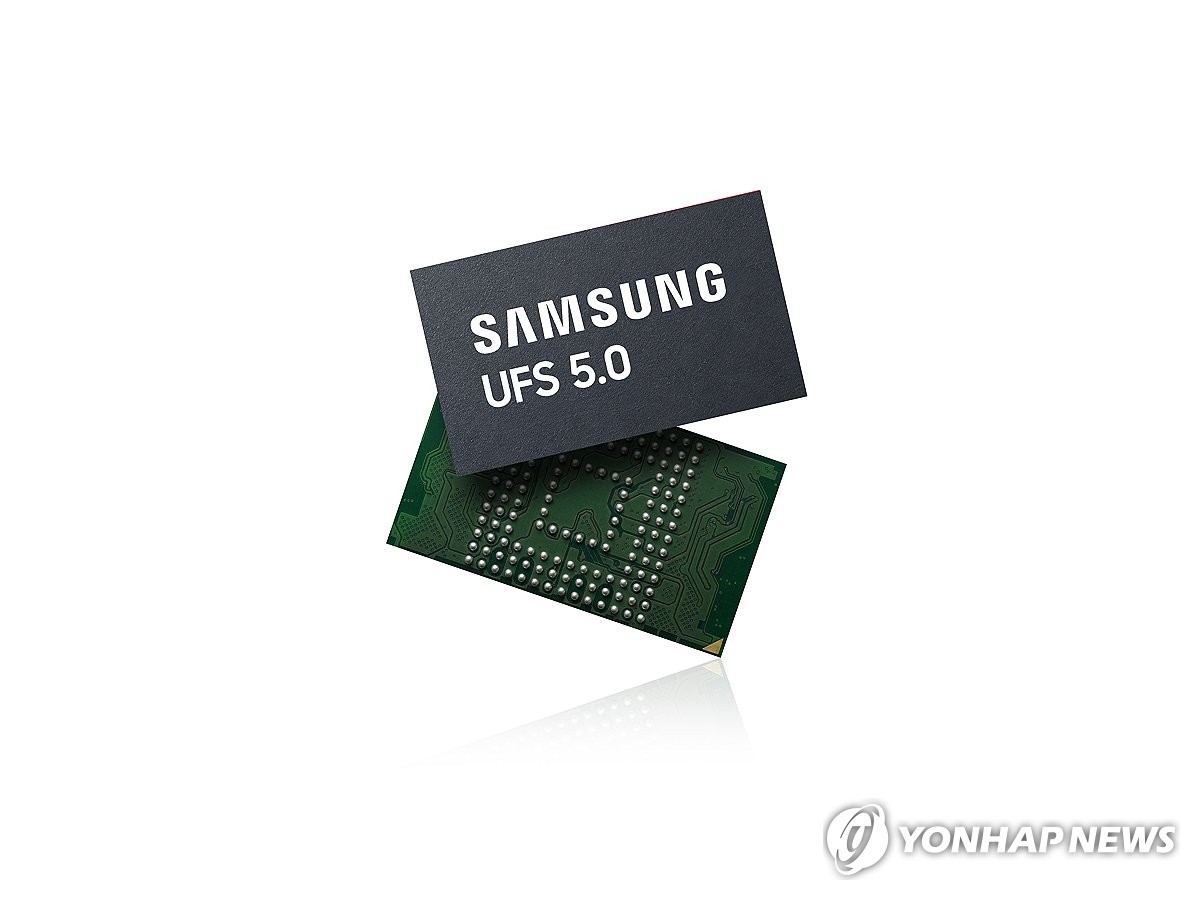
Standard & Poor’s (S&P) has revised Samsung Electronics ($005930.KS) credit outlook to 'positive' from 'stable', signaling growing confidence that an AI-driven surge in memory demand could translate into stronger earnings and cash generation over the next two years and beyond.
In a report dated Monday ET (July 21), the global ratings agency reaffirmed Samsung Electronics’ long-term issuer credit rating at AA- and its short-term rating at A-1+, but said the company is increasingly positioned to expand share in high-bandwidth memory (HBM) and foundry manufacturing—two segments now central to the semiconductor supply chain supporting AI data centers. While S&P stopped short of upgrading the company immediately, a shift to a 'positive' outlook is widely viewed as an early indicator that a rating lift could follow if operating and market conditions play out as expected.
The key driver behind the outlook change is the sharp improvement in memory industry fundamentals. As hyperscale cloud operators accelerate investment in AI infrastructure, demand for high-performance server memory has tightened, while supply expansion remains constrained in the near term. S&P noted that some DDR5 chip prices are estimated to have risen by three to four times year over year, highlighting the intensity of the current supply-demand imbalance.
Importantly, the agency expects the tightness to persist through 2026 and 2027. It pointed to projections that combined capital expenditures by the world’s four largest hyperscalers could climb to roughly $1 trillion in 2028—around four times their 2024 level—while meaningful capacity additions from memory suppliers may not materially arrive until after 2028. That lag, S&P argued, could keep pricing power elevated for leading manufacturers and support structurally higher profitability than in prior cycles.
S&P also materially lifted its financial expectations for Samsung Electronics. It forecast annual revenue of about KRW 683 trillion in 2026 and KRW 821 trillion in 2027, both of which would mark record highs. Earnings before depreciation and amortization were projected to rise from around KRW 91 trillion in 2025 to KRW 393 trillion in 2026 and KRW 502 trillion in 2027, driven primarily by stronger memory pricing and improved mix.
While higher memory costs could pressure Samsung’s handset operations through input inflation, S&P’s base case assumes the profit uplift in the memory segment will more than offset those headwinds at the consolidated level. The agency added that a greater share of 3–5 year long-term supply agreements and a shift toward customized memory products could help dampen the industry’s historically sharp boom-bust swings—an important consideration for credit quality given how closely leverage and cash flows can track semiconductor cycles.
On competitiveness, S&P struck a more constructive tone than it has in some prior assessments of the company’s semiconductor execution. The agency said Samsung could regain an edge in the latest HBM4 generation by combining 1c DRAM with a 4-nanometer base die, and it believes yield issues flagged in the previous HBM3E generation have been substantially improved. In foundry, it noted that leading-edge process yields appear to be moving toward normalization, and that ongoing capacity constraints at Taiwan Semiconductor Manufacturing Company (TSMC) could create openings for Samsung to emerge as an alternative supplier for certain workloads.
Still, S&P emphasized that the 'positive' outlook is not unconditional. A sharp reversal in memory demand—such as if hyperscalers pull back AI-related spending—or a renewed loss of technological leadership that materially erodes market share could push the outlook back to 'stable'.
For now, the agency’s message is that Samsung’s path to a potential upgrade hinges on whether the current memory upswing becomes more than a cyclical windfall—evolving instead into durable earnings supported by long-term contracts, sustained technology leadership, and consistently strong free cash flow.
Article Summary by TokenPost.ai
🔎 Market Interpretation
S&P shifts Samsung’s credit outlook to “positive” (rating affirmed at AA-/A-1+), signaling a higher probability of an upgrade if AI-led memory strength translates into durable cash flow and improved cycle resilience.
AI data-center buildout is tightening memory markets: hyperscaler capex is projected to surge toward ~$1T by 2028, while meaningful memory capacity additions may lag until after 2028, sustaining pricing power for leaders.
Pricing momentum underscores imbalance: S&P cites some DDR5 prices up ~3–4x YoY, reflecting constrained near-term supply versus accelerating server-memory demand.
HBM and foundry are strategic pillars: S&P views Samsung as better positioned to gain share in HBM (especially HBM4) and potentially benefit from TSMC capacity constraints as customers seek secondary sourcing.
Key market risk remains a demand reversal: any hyperscaler pullback in AI spending or renewed technology execution issues could quickly weaken the thesis and revert the outlook to “stable.”
💡 Strategic Points
Upgrade pathway (what S&P needs to see): sustained earnings and free cash flow beyond a typical cycle, supported by (1) stronger pricing, (2) stable customer contracting, and (3) consistent technology leadership in memory/foundry.
Structure the cycle: move from spot-driven volatility to contracted stability: expanding 3–5 year long-term supply agreements and increasing customized memory could reduce boom-bust swings—an explicit credit-quality lever.
HBM execution is central: S&P believes prior HBM3E yield issues improved and highlights potential competitiveness in HBM4 (e.g., combining 1c DRAM with a 4nm base die) as a differentiator for AI accelerators.
Foundry optionality: normalization of leading-edge yields plus external capacity tightness at TSMC may create share opportunities, but the upside depends on consistent yields, customer qualification, and schedule reliability.
Internal offset: memory tailwinds vs handset headwinds: higher memory prices may inflate component costs for Samsung’s device business, but S&P expects memory profitability to more than offset this at the consolidated level.
Monitoring triggers:
Positive: persistent AI server demand through 2026–2027, continued HBM ramp success, rising share in premium memory, and stronger consolidated cash generation.
Negative: AI capex slowdown, rapid supply catch-up, renewed yield/technology setbacks, or meaningful market-share erosion in HBM/foundry.
📘 Glossary
Credit outlook (S&P): directional view (e.g., stable/positive/negative) on where a credit rating may move over the next 6–24 months, assuming base-case conditions.
Issuer credit rating (AA-): measure of an issuer’s capacity to meet financial commitments; higher ratings imply lower perceived default risk.
HBM (High-Bandwidth Memory): stacked DRAM designed for very high data throughput, critical for AI GPUs/accelerators in data centers.
HBM3E / HBM4: successive HBM generations; newer versions generally target higher bandwidth, improved efficiency, and tighter integration requirements.
DDR5: mainstream server/PC DRAM standard; in AI servers, higher density and performance drive strong demand.
Foundry: contract chip manufacturing business (making semiconductors for other companies) using advanced process nodes (e.g., 4nm).
Hyperscalers: large cloud/data-center operators (e.g., global top players) whose infrastructure spending heavily influences semiconductor demand.
Capex: capital expenditures—spending on factories, tools, and equipment that expands or upgrades production capacity.
Pricing power: a supplier’s ability to raise prices without losing demand, often strongest when supply is constrained.
Yield: percentage of usable chips from a wafer; higher yields reduce cost and are essential for profitability and reliable supply.
Base die: foundational silicon layer used in advanced packaging/stacked memory design to connect components and manage signal/power delivery.
Long-term supply agreement (LTSA): multi-year contract that stabilizes volumes/pricing and can reduce cyclicality versus spot-market exposure.
Free cash flow (FCF): cash generated after operating expenses and capital spending; a key metric for debt capacity and credit strength.