
 Add as a preferred source on Google
ASML and TSMC Signal Chip Expansion, but AI Returns Remain Unproven
ASML's equipment sales and installed-base management supported its latest quarter, while TSMC kept its 2026 capital spending budget at $60 billion to $64 billion.

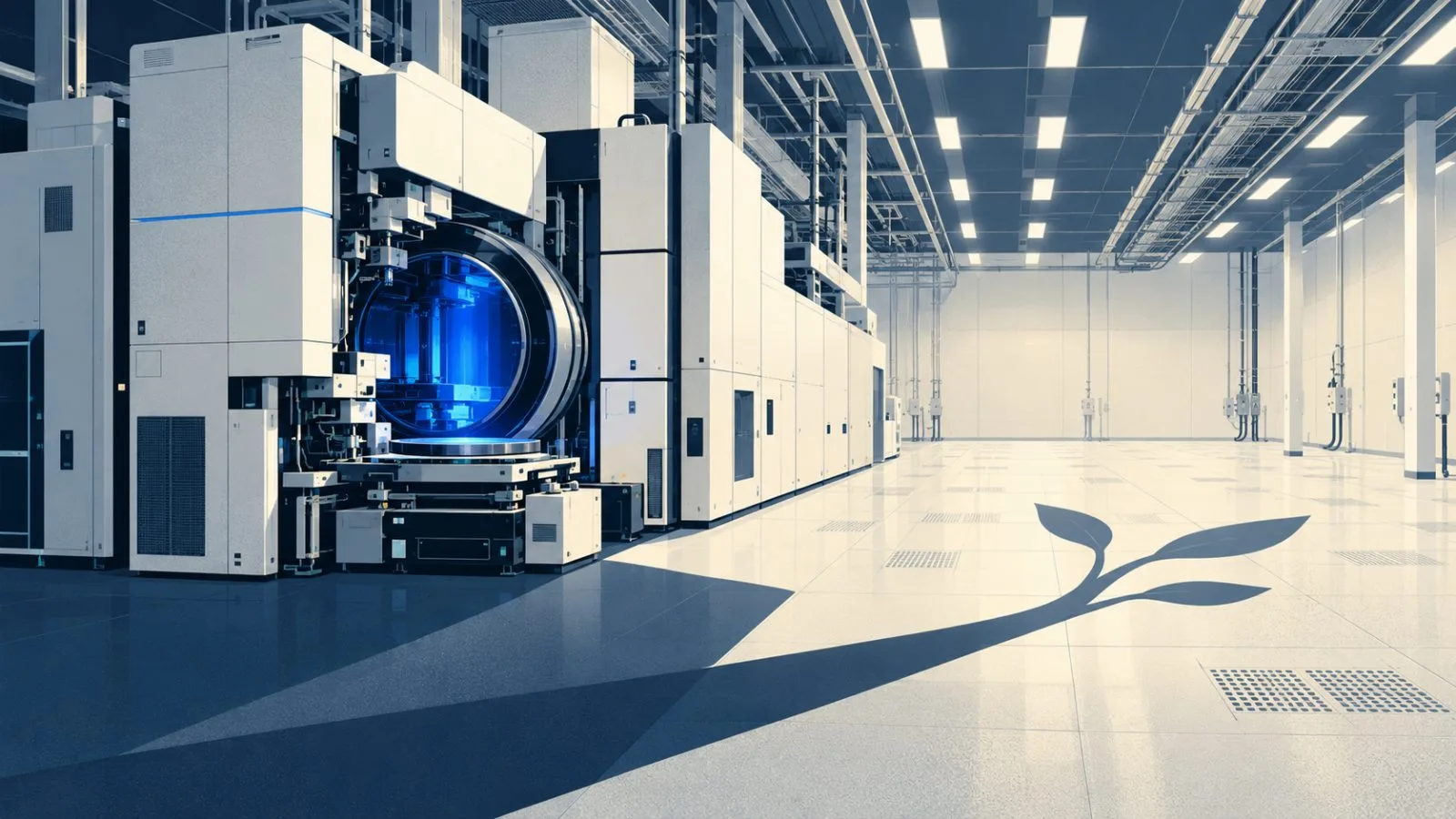
ASML and Taiwan Semiconductor Manufacturing Co. (TSMC) are preparing for more chip production as equipment demand stays strong, but their latest outlooks do not establish whether AI applications will earn enough to justify the investment.
ASML's third-quarter revenue reached a new high, rising about 25% from the previous quarter. Net income also increased, gross margin moved up to 57.5% from 54%, and sales of new lithography systems climbed to 113 from 86. The results show growth in both equipment sales and the profitability of the business, but they do not measure the returns that customers may get from AI-related capacity.
ASML's installed-base management business also contributed to the quarter. It covers the company's equipment already operating at customer sites. Demand for upgrades that improve production efficiency supported that business and helped lift ASML's overall gross margin above expectations. The activity is a reminder that chipmakers can seek more output through upgrades to existing equipment as well as purchases of new systems.
ASML forecast a fourth-quarter gross margin of about 57% and a full-year 2026 margin near 56%, while raising its annual revenue outlook. The earnings update follows earlier attention to ASML's capacity-expansion guidance. Those projections give a view of the company's expectations for sales and profitability, but do not establish how much equipment customers will ultimately buy or how profitable the resulting chip capacity will be.
Supply is a separate constraint. ASML's current plans would not cover all customer demand in 2027 and 2028. The company is studying whether to increase its 2028 capacity growth beyond the 30% increase it previously communicated. Some customers have also expressed interest in equipment orders for 2029 and 2030. That interest is not a confirmed order or booked revenue, so it should not be read as guaranteed future sales.
TSMC's results show strong demand at a major chipmaker as well. Third-quarter revenue totaled $46.72 billion, up 41.2% from a year earlier. The company forecast fourth-quarter revenue of $52.3 billion to $54.3 billion, with advanced-process demand and a rapid ramp-up of its 2-nanometer technology expected to support business.
TSMC kept its 2026 capital spending budget at $60 billion to $64 billion. It expects total spending from 2026 through 2028 to be substantially higher than in the prior three years. TSMC has also flagged tight equipment supply and the need to coordinate with suppliers early, making access to production tools part of its expansion planning.
Taken together, ASML's demand outlook and TSMC's spending plans point to continued preparation for greater chip production. But the companies describe different parts of the supply chain: ASML sells equipment to multiple chipmakers, so its overall demand does not directly establish TSMC's orders or market share. TSMC's spending budget, in turn, shows a plan to invest; it does not show how much additional capacity will be used or what returns it will produce.
That distinction matters for the AI investment debate. Equipment demand and capital budgets show that companies are preparing for expected demand. They do not establish whether AI applications will attract enough use to generate revenue and profit that support the spending. TSMC has also described consumer and price-sensitive markets as facing higher component costs and economic uncertainty, and it is taking a cautious approach to 2027 planning.
John Kim
John Kim reports on the digital-asset business for TokenPost. Send corrections or tips to info@tokenpost.com.