
 Add as a preferred source on Google
Samsung Says 2027 HBM Supply Is Already Sold Out at Agreed Target Prices
Samsung expects about ₩84.4 trillion in companywide 2026 capital spending, including ₩76.8 trillion for Device Solutions (DS).

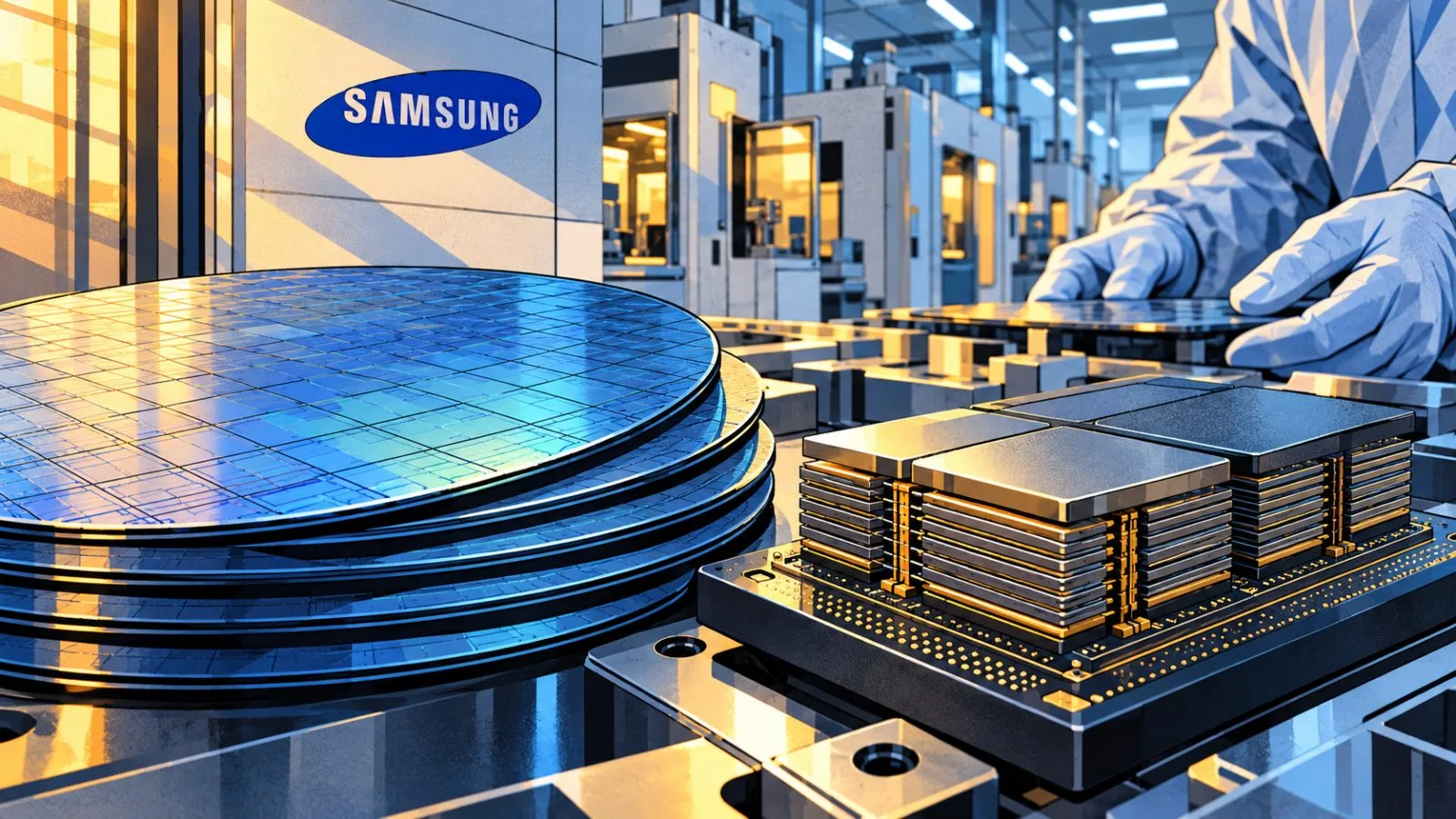
Samsung Electronics said its 2027 high-bandwidth memory (HBM) supply volume was sold out at agreed target prices, while major customers continued to request additional supply.
Jaejune Kim, executive vice president of Samsung’s Memory Business, made the statement during an earnings call at 9 p.m. ET Oct. 28 (01:00 UTC Oct. 29). The disclosure adds a supply detail to Samsung’s earlier 2027 AI memory outlook.
Samsung expects about ₩84.4 trillion in companywide capital spending in 2026, including ₩76.8 trillion for Device Solutions (DS), its semiconductor division. The DS allocation is ₩29.3 trillion above the division’s 2025 spending of ₩47.5 trillion, an increase of about 62%. Samsung also plans ₩3.9 trillion in investment for Samsung Display.
DS includes Memory, System LSI and Foundry. Samsung plans to direct DS investment toward new fabs and infrastructure to meet demand from artificial intelligence and high-performance computing. Foundry investment is also expected to increase, focused mainly on the company’s Taylor, Texas, fab, which Samsung expects to begin operating in 2027.
For the quarter ended Sept. 30, Samsung’s Memory Business recorded ₩140.7 trillion in revenue, up 427% from a year earlier. Kim said HBM4 revenue more than tripled from the prior quarter and accounted for about 60% of HBM revenue. DS reported ₩147.1 trillion in third-quarter revenue and ₩106.5 trillion in operating profit; Samsung’s companywide figures were ₩195.3 trillion in revenue and ₩107.4 trillion in operating profit.
Kim said tight memory supply was expected to continue into 2028. He said industrywide investment increases in 2027 were unlikely to meaningfully lift memory output the following year because building fabs and bringing them to wafer production takes time.
John Kim
John Kim reports on the digital-asset business for TokenPost. Send corrections or tips to info@tokenpost.com.