
 Add as a preferred source on Google
U.S. Consortium Proposes $4.4 Billion LNG Project in Pakistan
The estimate combines a $1.7 billion Port Qasim terminal with a planned 1,100-kilometer pipeline. Financing and regulatory approvals remain unsettled.

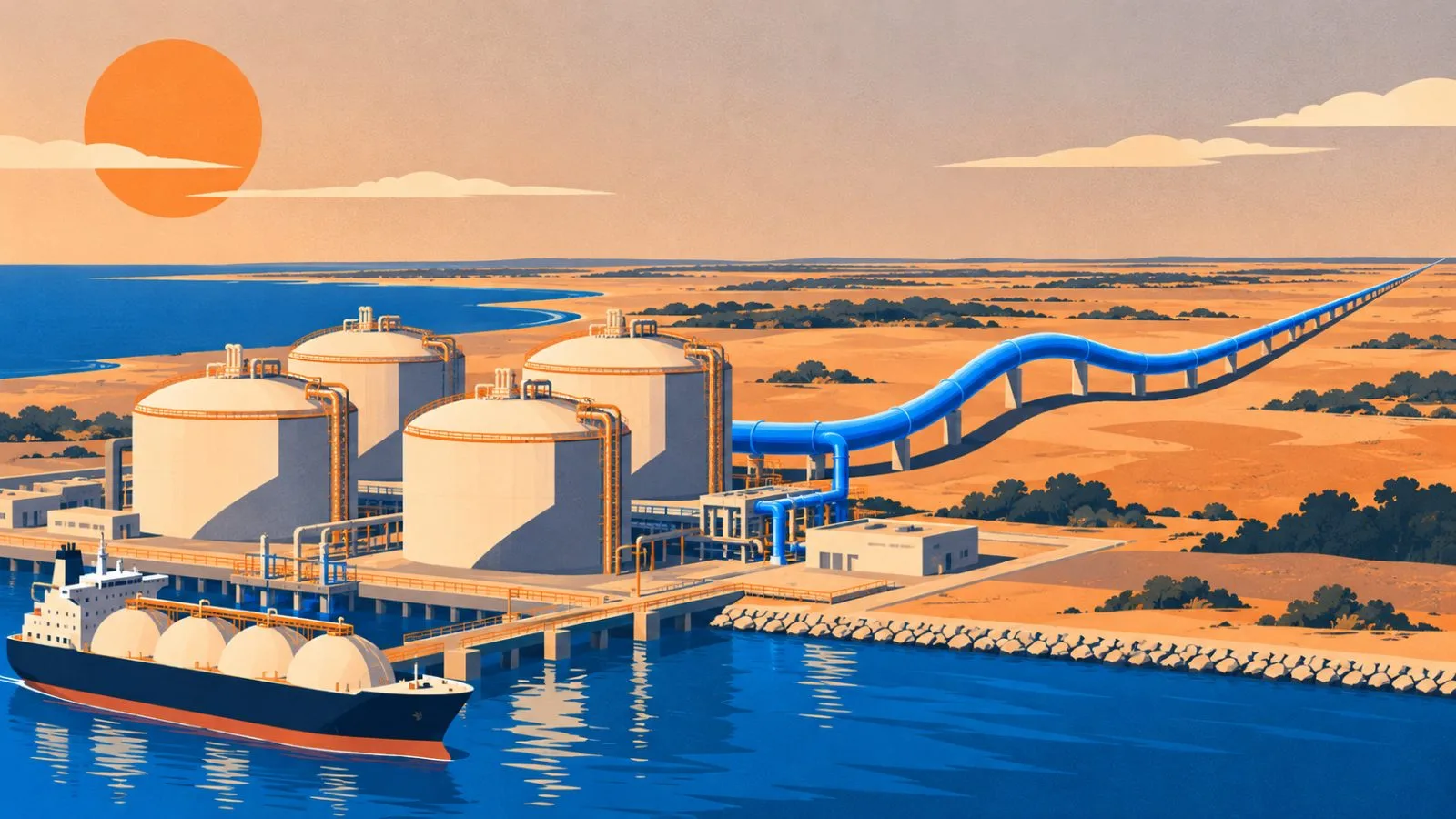
A U.S.-led consortium is proposing a liquefied natural gas (LNG) terminal and gas pipeline in Pakistan with a combined cost of up to $4.4 billion, a plan that would add storage and transport capacity.
Global Vision Energy Partners and Khanjee Holdings lead the group, which also includes Luxembourg-based General Mediterranean Holding and strategic co-investors. The terminal phase is estimated at $1.7 billion and would have four tanks, each with capacity for 140,000 cubic meters. Together, they would provide 560,000 cubic meters of static storage. A second phase would add a 1,100-kilometer pipeline, bringing the combined estimate to as much as $4.4 billion.
The pipeline is designed to carry about 1.2 billion cubic feet of gas a day, with a proposed diameter of 42 to 48 inches. The proposal projects annual terminal throughput of about 35.6 billion cubic feet, based on three inventory turns a year. The terminal would offer storage, regasification and pipeline transmission services to multiple customers.
Proposed charges for the first 10 years are $4.93 per million British thermal units (mmBtu) for terminal and storage services and $1.91 per mmBtu for pipeline transmission. The proposal projects those rates would fall to $2.20 and $0.92 per mmBtu, respectively, after the first decade. These are infrastructure service fees, not the cost of LNG cargoes. Domestic regasification tariffs would require approval from Pakistan’s Oil and Gas Regulatory Authority (OGRA).
The sponsors have obtained site consent from the Port Qasim Authority and applied to OGRA for a provisional license. The project has been approved for consideration under a U.S. Trade and Development Agency (USTDA) project preparation program. Partial financing from the U.S. International Development Finance Corporation and guarantees from the U.S. Export-Import Bank remain possible; no binding equity commitments have been confirmed.
The proposal is distinct from Pakistan’s earlier consideration of direct LNG imports. It follows the abandonment of a similar Port Qasim terminal plan by Energas. Energas Chairman Muhammad Ali Tabba cited “a fundamental change in national energy policy and requirements” as a reason the earlier project could not proceed. The new proposal still needs financing, a license and approval of domestic regasification tariffs.
John Kim
John Kim reports on the digital-asset business for TokenPost. Send corrections or tips to info@tokenpost.com.