
Hormuz Tensions Highlight Yuan Oil Trade Shift and Challenge to Dollar Dominance
Iran’s reported push for yuan-based oil trade through the Strait of Hormuz highlights growing geopolitical pressure on dollar dominance and emerging crypto-linked financial rails.

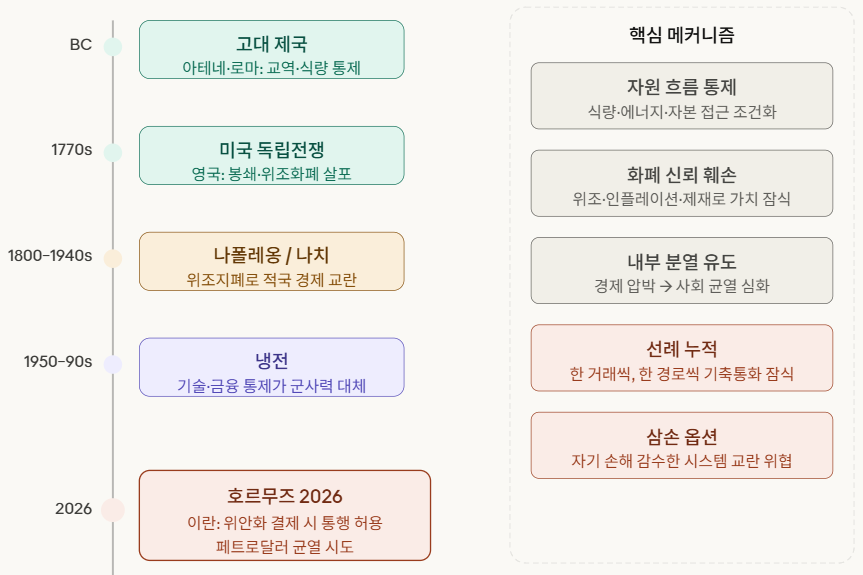
Economic warfare rarely begins with gunfire. It starts with rules—who gets to trade, who gets access to credit, and which currency clears the transaction. As tensions swirl again around the Strait of Hormuz in 2026, a familiar historical playbook is resurfacing in upgraded form: pressure the rival’s economic foundations, reshape incentives, and let the market do the damage.
The modern trigger point is the world’s most strategically sensitive energy chokepoint. The Strait of Hormuz carries a significant share of global seaborne oil flows, making even modest disruption a catalyst for volatility across crude markets, shipping insurance, and risk assets. Against that backdrop, reports suggesting Iran is signaling smoother passage for oil shipments settled in Chinese yuan have attracted attention—not because the dollar system will be displaced overnight, but because it introduces deliberate ‘friction’ into the long-standing ‘petrodollar’ architecture.
History offers a blunt lesson: when winning on the battlefield is uncertain or too costly, states often turn to the economy. During the U.S. Revolutionary War, George Washington eventually abandoned conventional head-to-head engagements in favor of asymmetric tactics. The British Empire, however, complemented military power with financial and trade measures—blockades, colonial credit constraints, and even currency destabilization. Benjamin Franklin documented how counterfeit money and inflationary pressure were used as tools to weaken an adversary’s ability to fund resistance.
That logic echoed across Europe in later centuries. Napoleon’s France explored currency counterfeiting as a way to undermine British confidence, while Nazi Germany’s ‘Operation Bernhard’ attempted to flood the system with forged pound notes to corrode trust in the currency itself. The throughline is consistent: when direct confrontation is limited, destabilize what sustains the opponent—its payments system, trade routes, and public confidence.
Iran’s reported Hormuz messaging fits that grammar. The proposal, as framed in regional coverage, is not an explicit declaration that the yuan should replace the dollar, but an effort to create incremental alternatives—deal by deal, corridor by corridor, precedent by precedent. Tehran has strong incentives to test such pathways as sanctions pressure constrains its access to traditional financial rails. Beijing, meanwhile, remains a major buyer of Iranian crude, while Russia’s sanctions-evasion networks have already accelerated experimentation with non-dollar settlement structures.
There are clear constraints. Yuan settlement faces ‘verification’ and ‘security’ hurdles, limited global convertibility, and reliance on Chinese banking channels that can themselves become pressure points. Yet the strategic value of economic warfare often lies less in immediate replacement than in gradual normalization. A parallel settlement option that clears even a fraction of flows can, over time, reduce the monopoly power of a single invoicing currency and complicate enforcement of sanctions regimes.
The sanctions dimension adds another layer of paradox. Governments typically describe sanctions as necessary responses rather than grand designs, but their downstream pattern is strikingly repeatable: supply disruptions aggravate inflation, the most vulnerable bear disproportionate costs, and polarization intensifies as economic stress erodes political center ground. In this sense, economic warfare does not merely weaken a rival’s material capabilities; it also rearranges internal social and political balances—sometimes in unpredictable ways that outlast the original dispute.
Hormuz also spotlights what strategists sometimes describe as a ‘Samson option’ dynamic: the credibility of a threat increases when the threatening party would also pay a heavy price for carrying it out. A full blockage of the strait would rattle global energy markets and squeeze Iran’s own economy, but that mutual damage is precisely what can make the threat feel plausible to markets. As a result, even rhetoric or selective enforcement can move prices, tighten financial conditions, and amplify geopolitical risk premiums—without a single shot fired.
For the crypto and digital asset sector, the significance is not merely macro. Economic conflict is increasingly migrating into the architecture of money itself. ‘Stablecoin diplomacy’ has emerged as a geopolitical tool, with dollar-backed stablecoins functioning as a digital extension of dollar-based trade settlement, while yuan-linked stablecoins or central bank digital currencies (CBDCs) represent potential counterweights. In that context, Iran’s reported yuan-settlement signaling reads less like a narrow trade negotiation and more like a chapter in the broader contest over future ‘financial rails’.
The implications extend to policy and market structure across Asia. Debates over won-based stablecoin frameworks, the global positioning of Korean digital asset exchanges, and CBDC strategy are no longer purely domestic technology questions; they increasingly sit within a geopolitical competition over settlement standards, compliance leverage, and cross-border liquidity channels.
Economic warfare is rarely announced. It is administered—through clearing systems, shipping lanes, currency choice, and the slow revision of precedents. And when it works, it often requires no manifesto at all—only the quiet realization that the rules of trade have changed.