
Quant CEO Kim Han-saem Urges ‘Measuring Fear’ as Crypto Markets Test Uncertainty Models
Alchemy Lab CEO Kim Han-saem argues crypto success depends on quantifying uncertainty, highlighting his ARGUS model’s performance during major market shocks.


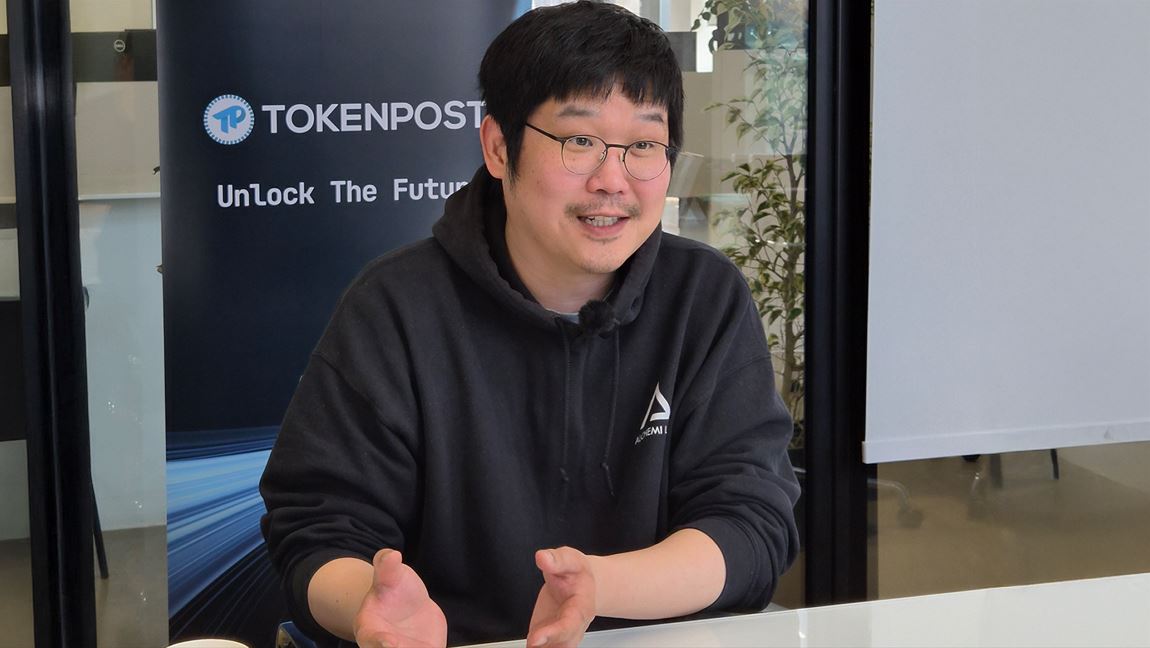
After nearly two decades in quantitative finance, Kim Han-saem has reached a conclusion that sounds less like a trading mantra and more like a philosophy of survival: ‘buy fear’—but only if you can measure it. In an interview in Seoul in early April, Kim argued that what separates opportunity from disaster in crypto is not conviction or speed, but the ability to quantify uncertainty before the market forces emotion into the equation.
Kim, the founder and CEO of Alchemy Lab, is not a typical crypto entrepreneur. His résumé includes roles spanning global markets and Korea’s financial establishment, including time at S&P and Mirae Asset, and later as chief investment officer at Dunamu Investment Management, an affiliate of Dunamu, the company behind Upbit. Yet he insists his decision to leave a stable career wasn’t driven by ideology about decentralization or a single ‘aha’ moment about Bitcoin (BTC). It was culture—specifically, what he describes as the difference between corporate inertia and startup focus.
“At big companies, 70% of the day was useless,” he said, recalling routines of calls, reporting lines, and meetings that pushed actual work into after-hours. Joining Dunamu was, in his words, the first time he experienced deep immersion: fewer interruptions, faster iteration, and a sense that the work itself could be absorbing enough to make 3 a.m. feel like an inconvenient stopping point.
Still, Kim does not romanticize entrepreneurship. He frames it bluntly—as responsibility rather than freedom. “Startups are about paying salaries,” he said, adding that payday used to be the most frightening day of the month. That fear, he noted, has eased over time, but he claims the company is only now transitioning from laying a foundation to what he calls “real” execution.
At the center of that execution is ARGUS, Alchemy Lab’s quantitative system. Kim’s pitch is deliberately unfashionable in a market obsessed with predicting direction. “We don’t forecast ‘signals,’ we forecast uncertainty,” he said. Where many trading systems attempt to beat the market by calling tomorrow’s price move, Kim argues that ‘modern portfolio theory’ is often misunderstood: the core problem is not finding certainty, but measuring how uncertain the future is—and pricing that uncertainty correctly.
To make the idea accessible, Kim uses a consumer analogy rather than a statistical one. Investing, he said, has ‘value-for-money.’ If risk is the cost and expected return is the benefit, then some trades are like paying an absurd price for a simple coffee—too much uncertainty for too little upside. “Some assets simply have uncertainty that overwhelms what you expect to earn,” he said. “Those are trades you shouldn’t take.”
His view also challenges common assumptions about what a “good” model looks like. A truly well-informed forecasting system, he said, should not consistently predict positive returns day after day; if markets incorporate information efficiently, the model’s average expected return for tomorrow should be roughly 0%. Counterintuitive as it sounds, he argues that repeated, easy directional calls can be a warning sign of overfitting—mistaking noise for edge.
Kim describes fear as something that can be computed—an output rather than a feeling. He referenced Warren Buffett not as a balance-sheet savant, but as someone with an extraordinary ability to “calculate how much to expect and how much to fear.” Kim’s own response is more technological than intuitive: because he believes most people cannot reliably make that calculation under stress, he delegates it to machines.
That approach, Kim claims, explains why his system can behave non-intuitively during ‘black swan’ events. He said that during major market shocks—events such as the Terra-Luna collapse, the FTX bankruptcy, and periods of intensifying tariff and geopolitical tensions—he did not feel fear in the way many traders describe it. Not because the danger did not exist, but because, in his framing, the model “priced” the danger first.
The mechanism he cited comes from information theory: ‘Excess Surprise.’ When prices fall far more than the model’s predicted uncertainty range, that gap is treated as an abnormal shock. A sophisticated system, Kim said, should be less “surprised” by normal volatility—and more decisive when reality diverges sharply from what was priced in. “The smarter the model is, the less it panics,” he said. “It calculates that this is the moment to enter.”
Alchemy Lab reported that since March 2021, ARGUS experienced eight black swan-style episodes, generating profits in six and minimizing losses in two. Kim cited specific periods to illustrate the point: during the LUNA unwind, he said Bitcoin (BTC) fell 23% while ARGUS gained 9.06%. During the sharp BTC decline in January to February 2026, he said BTC dropped about 10% while ARGUS rose 13.24%.
Those claims, while difficult to independently verify without audited performance data, speak to a broader institutional narrative now shaping crypto: the shift from discretionary, personality-driven trading to systematized risk budgeting. In an asset class still prone to reflexive leverage and liquidity cascades, funds that can survive tail events are increasingly valued as much for their drawdown control as for their headline returns.
On the current market cycle, Kim’s message is notably cautious. With Bitcoin down to the $60,000 range after previously trading near $120,000, he said the market still appears to be in a downtrend. While he declined to discuss positions, citing the system’s ‘black box’ nature, he described a pattern he wants to see before calling a turn: a break in downward momentum, a rebound, a retest lower, and then a higher move that confirms regime change. He urged observers to focus on weekly charts over daily or intraday moves, arguing that shorter timeframes are easier to distort.
Kim was also skeptical of claims that the traditional four-year crypto cycle has ended, pushing back on what he framed as numerology marketed as analysis. “Why four years and not 4.1?” he asked, arguing that declaring cycles based on chart storytelling lacks academic grounding. Still, he acknowledged why such narratives persist: they compress complexity into a single phrase—an advantage in a market where quantitative explanations can take hours, but a slogan can travel instantly.
Macro and policy shocks remain part of the system’s input set, though not always through the channels traders expect. Kim said Alchemy Lab tracks indicators such as Google Trends search intensity for the word “war,” viewing sudden spikes as a proxy for rising uncertainty and crowd fear. In that framework, macro events—from Federal Reserve policy decisions to congressional and regulatory developments such as the proposed CLARITY Act, as well as geopolitical risks—matter primarily as drivers of volatility expectations and positioning constraints, rather than as directional catalysts.
Despite crypto’s global nature, Kim said regulatory structure forces his company into a narrow posture at home. He claims there is currently no clear path to obtaining a discretionary crypto asset management license in South Korea without operating in a ‘gray area’—an approach he refuses. As a result, Alchemy Lab positions itself not as a traditional asset manager, but as a quant research firm that provides outputs via API rather than directly running client portfolios.
That positioning has also reshaped his market focus. Kim said he initially wanted to build a consumer-facing product out of a belief that systematic risk tools should benefit everyday investors. But, he added, retail users were less receptive than expected. Institutions, by contrast, reacted immediately to quantified outputs. “If you give institutions numbers, they look and decide,” he said. “They don’t need long explanations.”
His message to Korean institutions was pointed: establish an overseas entity first, then reach out. In his view, that is the most realistic route for regulated engagement with crypto strategies under current constraints, particularly for firms looking to access global venues and frameworks without legal ambiguity.
Looking ahead, Kim framed his ambition in terms rarely heard in a sector that often celebrates aggressive discretion. He cited Vanguard founder John Bogle and said he wants to build a “passive” quantitative house that operates with theoretical consistency and minimal human interference. “Asset management isn’t something people should do,” he said, arguing that the goal should be process integrity rather than personality-driven decision-making—an attempt, as he put it, to become a ‘21st century Vanguard’ in an era when even Vanguard no longer resembles its original ethos.
In closing, Kim reduced quantitative strategy to something more fundamental than automation or speed: a research discipline. A quant model, he said, is essentially a paper—a formalized argument about how markets behave under uncertainty. The real burden is not whether the system can trade automatically, but whether the method is defensible when tested against all available knowledge. In crypto, where fear can become liquidity’s enemy in minutes, Kim’s bet is that the most durable edge is not prediction—but properly priced uncertainty.