

 News
News  Coin Information
  About us
  Customer Service


 Add as a preferred source on Google

As governments pump money into advanced technology races while debt burdens swell and valuations look stretched, Bitcoin (BTC) is emerging as a mirror to a larger imbalance: the collision between an aging monetary order and a fast-accelerating tech-driven world. The question, increasingly, is less about how high BTC can go—and more about what society chooses to treat as ‘assets’ when liquidity expansion and strategic industrial policy become permanent features of the global economy.
That tension is playing out against a backdrop that many investors find difficult to reconcile. Global leverage remains heavy, interest rates are still a constraint, and equity markets—particularly U.S. mega-cap technology—are widely seen as expensive. China’s property sector continues to cast a shadow over growth expectations. Yet capital keeps flowing into the same themes: artificial intelligence (AI), semiconductors, data centers, and power infrastructure. Even as market participants warn about bubble dynamics, few are willing to exit first, largely because falling behind in the technology cycle now looks like a national-security risk rather than a routine investment error.
The column frames this as a defining fear of the current era: not merely recession, but irreversible loss of technological advantage. One advanced chip process, one frontier AI model, or one resilient energy backbone can shape the trajectory not just of companies, but of states. In that context, Bitcoin sits at the intersection of two forces—‘endless money’ and ‘endless competition’—and its price behavior reflects that uneasy overlap.
Russia is presented as a cautionary tale of what happens when a country mistakes legacy power for durable strength. The ongoing drone-centric realities of modern warfare, the author argues, have exposed the vulnerability of expensive, traditional hardware to small, cheap, adaptable systems—an illustration of how technological gaps can humiliate even heavily militarized regimes. The broader lesson, as described, is that great powers do not simply collapse because their armies are weak; they often lose first in technology, then in industrial dynamism, then in capital formation. Talent leaves, innovation slows, and politics leans on nostalgia—selling past glory as a substitute for future capability.
From that premise, the article interprets today’s U.S.-China rivalry as being fueled by a shared anxiety: neither side wants to become a Russia-like power trapped in yesterday’s narratives. The new arena of competition is not aircraft carriers and oil alone, but electricity, chips, algorithms, supercomputing, space systems, quantum research, and industrial-scale AI deployment.
Energy, in particular, is described as reasserting itself as the unglamorous centerpiece of modern dominance. Training frontier AI models and scaling data centers require enormous power, while advanced manufacturing and quantum ambitions depend on stable supply. As a result, political messaging around climate priorities can, at times, appear to cede ground to the more immediate demands of national competitiveness. The column suggests this is less hypocrisy than a structural reality: in great-power competition, lofty slogans often yield to the monthly power bill.
The author argues that state intervention is becoming the rule rather than the exception. The U.S., long seen as the archetype of market-led capitalism, is increasingly willing to deploy public funding and strategic support for AI and broader infrastructure because the stakes are too high to leave solely to markets. China, meanwhile, is portrayed as even more direct—using state influence to support equity markets and mobilizing capital through state-linked institutions. Its far bigger challenge is property-sector debt, which the article likens to a balloon being held together with tape: authorities relax constraints on distressed developers and push banks toward absorbing unsold housing inventory, preferring managed distortion over disorderly collapse.
Beijing’s approach to technology is described as similarly rigid. When Chinese-linked technology firms appear at risk of being acquired by foreign capital, authorities are depicted as treating the underlying know-how as a ‘strategic asset’ rather than a private commodity—reflecting a worldview in which technology is not merely corporate property but national weaponry.
These dynamics help explain today’s “strange” market tableau. On one side are warnings that asset prices are too high, AI enthusiasm resembles the dot-com era, and a severe correction is plausible. On the other is the argument that policymakers—shaped by memories of the 2008 financial crisis—are unlikely to tolerate systemic breakdown, responding instead with liquidity, fiscal support, and targeted rescues if markets seize up. In that world, persistent intervention can weaken fiat purchasing power and lift nominal asset prices even if real fundamentals do not improve—an idea associated with the view that a ‘true bear market’ may be delayed or structurally muted.
The column does not treat that outcome as a law, only as a plausible pathway. A competing scenario remains equally imaginable: an AI-led equity bubble unwinds, tech stocks reprice lower, and Bitcoin—still highly sensitive to global liquidity—drops with them. The author’s main point is not to forecast, but to underline the paradox: the world recognizes risk yet struggles to stop fueling the engine, because the alternative—unemployment, recession, financial stress, and especially falling behind in tech—is politically and strategically intolerable.
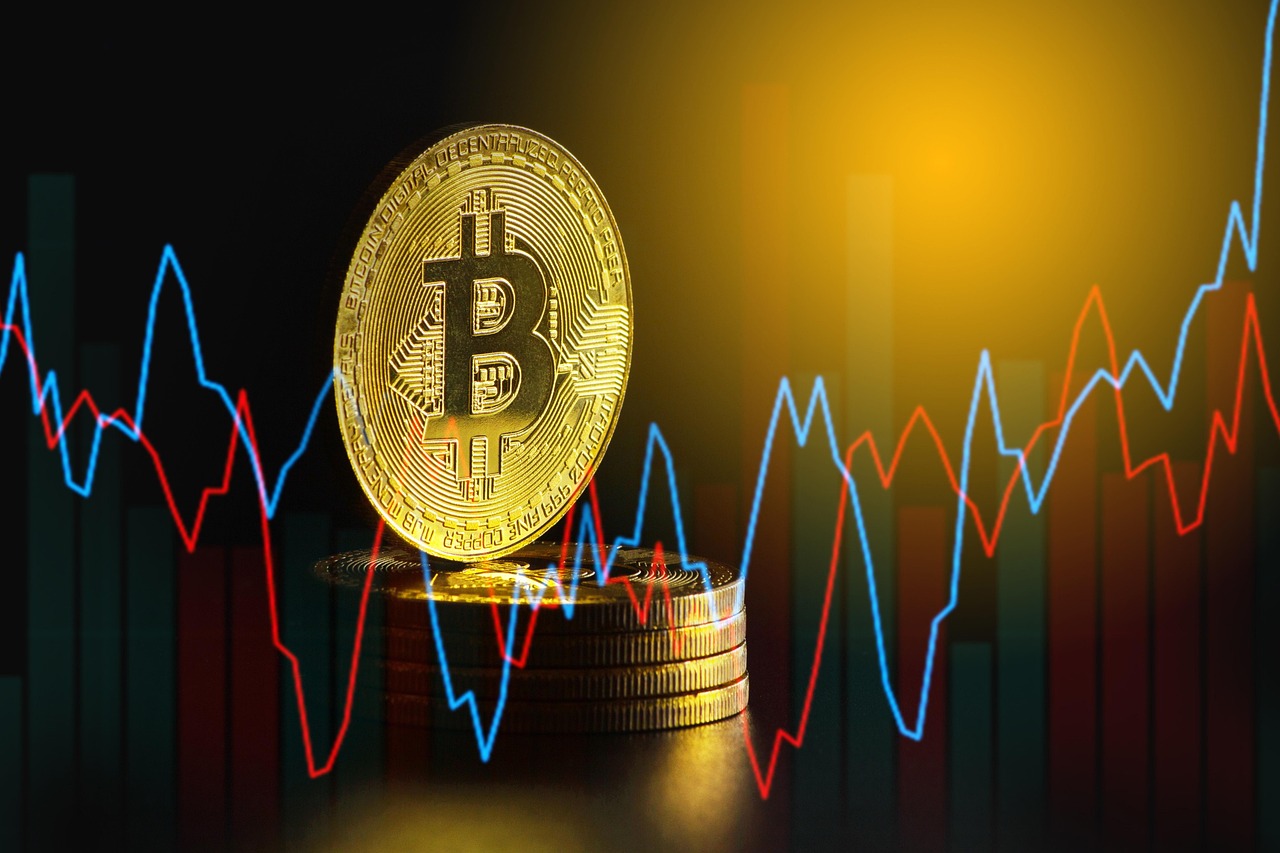
Bitcoin’s role in that paradox is central. Critics often describe BTC as just another risk asset that trades like a smaller cousin of the Nasdaq. The column concedes the resemblance: BTC is not yet a full ‘safe haven’ and tends to rise when liquidity expands and fall when markets turn defensive. But that hybrid nature is framed as precisely what makes Bitcoin important—and controversial.
Bitcoin, the author argues, speaks the language of gold while moving with the pulse of technology markets. Its supply is capped and cannot be expanded by central banks, it is not tied to the credit of any single country, and it can move across borders—traits supporting its ‘digital gold’ narrative. Yet it is also a living network with an expanding commercial stack: mining, wallets, exchanges, custody, payment rails, layer-2 scaling, institutional products, and the accounting and regulatory plumbing that increasingly surrounds it. Unlike gold, which sits silently in vaults, Bitcoin is active infrastructure as much as it is a store-of-value thesis.
That dual identity leads to a harder question than “bubble or not.” The column frames BTC as both ‘new money’ and a potential ‘new bubble’—a technology asset born outside central banking but still priced by the same global liquidity cycles that drive risk markets. Traditional finance finds that ambiguity uncomfortable; younger investors, more familiar with network effects as a source of value, often find it compelling.
The piece also turns the lens toward South Korea, arguing that the domestic debate is too narrowly centered on whether Bitcoin is speculation. In the author’s view, the more consequential decision is whether digital assets will be treated as part of the next financial and technological framework—or relegated to the margins as a perpetual casino. Korea, which grew by capturing inflection points in semiconductors, internet services, and mobile transitions, is portrayed as having been unusually defensive in crypto: active retail participation, but a comparatively weak industrial strategy and slow institutional rulemaking.
Caution, the column notes, is necessary: fraud, weak projects, and reckless leverage need to be contained. But “being careful” cannot become an excuse for inaction. A system that offers regulation without strategy risks turning into a fee-paying customer in a game built elsewhere—consuming platforms and standards created by other countries rather than shaping them.
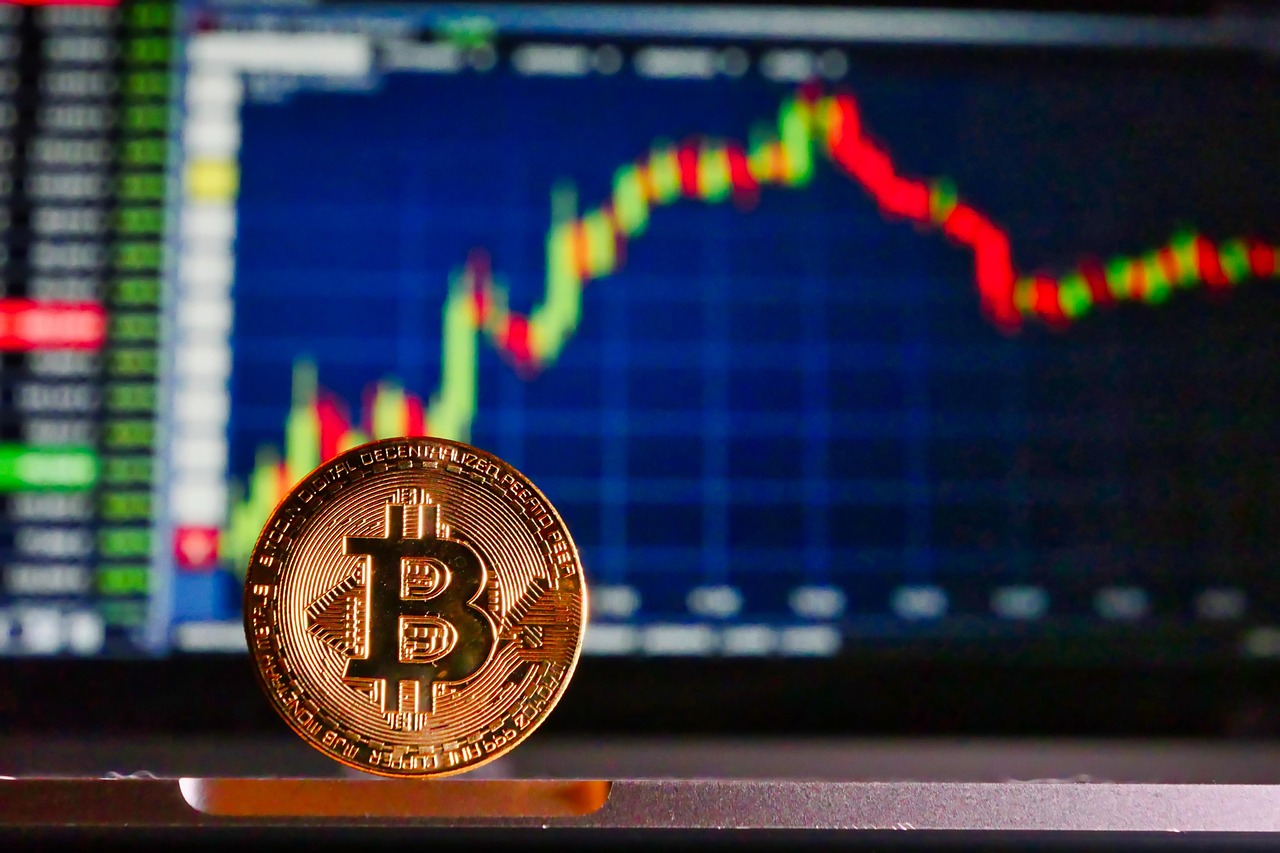
Ultimately, the author argues that Bitcoin is less a wager on a daily price chart than a probe into a shifting world order. As the U.S. and China mobilize capital, electricity, and talent for a long technology contest—and as central banks remain reluctant to let liquidity tighten enough to trigger cascading failures—BTC is being tested as both scarcity asset and network asset. The answer is not yet settled. But the question, the column insists, is clear: in an era of persistent monetary expansion and intensifying tech rivalry, which assets and industries endure—and which countries are prepared to compete rather than freeze in caution?













Comment 0