
 Add as a preferred source on Google
Japan’s Web3 Shift Toward Stablecoins, Banks Signals Institutional Pivot
WebX Tokyo highlighted Japan’s shift toward regulated stablecoins, bank-led blockchain integration, and institutional adoption as core drivers of its evolving Web3 ecosystem.

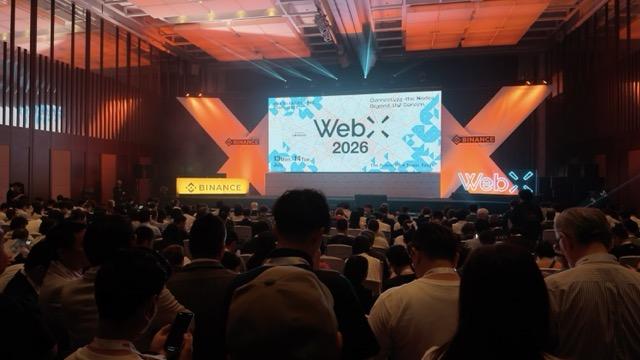
WebX Day 1 in Tokyo, held this week, looked less like a buoyant ‘crypto’ festival and more like a policy-and-finance-forward industry showcase—an indicator that Japan’s Web3 trajectory is increasingly being shaped by regulated rails, stable settlement infrastructure, and traditional financial institutions.
According to field research published by market researcher Exilist, the event highlighted a shift away from speculation-led growth toward ‘institutional integration’ and practical financial use cases. The most visible themes on the conference floor and in keynote sessions included yen-denominated stablecoins, tokenized finance, compliance-oriented exchanges, and expanding participation from legacy financial groups—signals that could foreshadow where South Korea’s Web3 market may be heading next.
The official program reinforced that message. Government representation was prominent early in the day, including remarks tied to national digital-asset policy and appearances by senior figures from relevant ministries. From there, the agenda moved into the mechanics of adoption: blockchain strategies from Japan’s mega-banks, on-chain policy discussions, tokenized securities, next-generation payments, crypto ETFs, and multiple sessions linked to SBI Holdings, a long-time advocate of regulated digital-asset infrastructure in Japan.
On the ground, Exilist described a clear split in “temperature” between the expo booths and the main sessions. The booth area felt casual and networking-driven, but notably restrained compared with the spectacle common at some Korean events—more printed materials and structured product explanations than oversized installations or expensive giveaways. The session halls, however, were intensely focused, with audiences that appeared to be working-level decision-makers staying through presentations and filling seats for policy and infrastructure content. For Exilist, that contrast underscored a market where the primary participants are not merely enthusiasts, but stakeholders assessing implementation, partnerships, and regulatory alignment.
Booth composition further illustrated what currently sits at the center of Japan’s Web3 ecosystem: regulated exchanges, stablecoin issuers, and large financial institutions. Compliance-oriented platforms such as bitFlyer and bitbank were visible, while SBI Holdings drew particular attention as a conglomerate pursuing exchange operations, stablecoin initiatives, tokenized finance, and broader digital-asset plumbing as part of an integrated portfolio approach.
Exilist noted that more ‘crypto-native’ categories—decentralized finance (DeFi), non-fungible tokens (NFTs), blockchain gaming, and memecoins—were comparatively muted in prominence. Where recognizable public chains did appear, the messaging often leaned toward institutional compatibility and regulatory cooperation, rather than cultural signaling. The practical question shaping Japan’s narrative, Exilist argued, is less “who looks the most like crypto,” and more “who can build viable products inside a regulated financial system.”
Among the clearest symbols of that direction was the visibility of yen stablecoin projects, including JPYC and JPYSC. Their presence suggested that Japan’s competition is increasingly about payments and settlement infrastructure—where stablecoins function not as speculative instruments but as ‘transactional rails’ that can be embedded into commerce, cross-border flows, and enterprise treasury operations.
For South Korea, Exilist framed this as an early look at a possible next phase. Korea has historically been strong in exchange liquidity, retail participation, and fast-moving communities, but Japan appears to be moving ahead in building regulated stablecoin frameworks and integrating banks and financial groups into Web3’s core narrative. If that gap persists, Exilist suggested it is plausible that future Korean industry events could begin featuring won-based stablecoin initiatives alongside bank- and brokerage-led payment, settlement, custody, and tokenization offerings.
The relative absence of DeFi and other crypto-native sectors was also tied to structural market conditions in Japan. Listing and service expansion thresholds are high, and brand buzz alone is less likely to translate into traction without licenses, distribution partners, and clear compliance posture. In that environment, projects must prove they can work with financial institutions and fit regulatory requirements—often prioritizing credibility in the conference hall over noise outside it.
Exilist also observed a difference in how the industry approaches mass communication. WebX incorporated influencer-driven content that focused more on experiential coverage than technical deep dives, suggesting that as Web3 moves beyond a niche user base, messaging and marketing channels may expand toward mainstream consumers, legacy media, and broader public figures. The implication for Korea is that Telegram- and X-centric promotion led by crypto-native key opinion leaders may be less sufficient as institutional participation grows and narratives shift toward regulated finance.
Overall, Exilist characterized WebX Day 1 as a snapshot of Japan’s quiet but decisive pivot: government in the foreground, financial institutions at the center, and stablecoins and exchanges positioned as realistic products rather than peripheral experiments. For neighboring markets, including South Korea, the takeaway is not that speculative crypto disappears—but that competitive advantage may increasingly hinge on ‘linkage to financial infrastructure’: custody, settlement, payments, tokenization pipelines, and the ability to explain products in the language of institutions.
Article Summary by TokenPost.ai
🔎 Market Interpretation
Japan’s Web3 is pivoting from hype to infrastructure: WebX Day 1 resembled a policy/finance forum more than a speculative crypto festival, signaling a market anchored in regulated rails and productizable financial use cases.
Institutions and regulators are setting the agenda: Government presence and major-bank participation indicate that adoption momentum is being shaped by compliance, licensing, and integration with existing financial systems.
Stablecoins and tokenized finance are the “center of gravity”: Yen-denominated stablecoins (e.g., JPYC, JPYSC), tokenized securities, and compliance-first exchanges are positioned as core settlement and distribution infrastructure.
Conference “temperature split” reflects stakeholder maturity: Expo booths were restrained and product-explanatory, while sessions were packed with working-level decision-makers focused on implementation and regulatory alignment.
Crypto-native sectors are present but de-emphasized: DeFi, NFTs, gaming, and memecoins were comparatively muted; public chain narratives leaned toward institutional compatibility rather than culture-driven messaging.
Regional implication—South Korea may follow: Korea’s strengths (retail liquidity/community) contrast with Japan’s progress in regulated stablecoin frameworks and bank-led integration; Korea could shift toward won-stablecoin and brokerage/bank Web3 offerings if the gap persists.
💡 Strategic Points
Build “regulated-first” go-to-market: Prioritize licensing, compliance posture, and bank/financial-group partnerships; in Japan, brand buzz is unlikely to convert without regulatory fit and distribution.
Position stablecoins as settlement infrastructure: Frame yen stablecoins as transactional rails for commerce, cross-border payments, and treasury operations—less as speculative assets, more as embedded financial plumbing.
Target institutional buyer needs: Product roadmaps should speak to custody, settlement finality, auditability, risk controls, and integration with existing payment/treasury workflows.
Leverage incumbents as ecosystem multipliers: Conglomerates like SBI demonstrate an integrated portfolio approach (exchange + stablecoin + tokenization). Competing strategies may require similar vertical coverage or deep alliances.
Expect higher thresholds for listings and services: Plan for longer timelines, rigorous due diligence, and structured product communication; credibility in “conference halls” matters more than spectacle.
Upgrade communications beyond crypto-native channels: As mainstream adoption expands, influencer coverage may emphasize experience over technical depth; projects should invest in institutional-grade messaging plus broader media/public-figure channels.
Korea playbook adjustment: To stay competitive, Korean players may need to accelerate won-based stablecoin narratives, bank/broker-led custody and settlement, and tokenization pipelines aligned with regulators.
📘 Glossary
Stablecoin: A digital asset designed to maintain a stable value (often pegged to a fiat currency). In this article, viewed primarily as a payments/settlement tool.
Yen-denominated stablecoin: A stablecoin pegged to the Japanese yen (JPY), aimed at domestic payments, settlement, and enterprise use.
Tokenized finance / Tokenization: Representing real-world financial assets (e.g., securities) as blockchain-based tokens to enable programmable issuance, transfer, and settlement.
Tokenized securities: Securities issued or mirrored on-chain, potentially enabling faster settlement, fractional ownership, and automated compliance controls.
Compliance-oriented exchange: A crypto exchange emphasizing licensing, regulatory adherence, and risk controls to serve regulators and institutional clients.
Institutional integration: Adoption driven by banks, brokers, and regulated entities integrating Web3 into existing financial operations rather than retail speculation.
Settlement infrastructure / “rails”: The systems that move funds and finalize transactions (payments, clearing, settlement). Stablecoins are framed as new rails.
Custody: Secure holding and administration of digital assets, often requiring institutional controls (segregation, audits, policies).
DeFi (Decentralized Finance): On-chain financial services (trading, lending, derivatives) built without traditional intermediaries; described as less prominent at the event.
NFT (Non-Fungible Token): A unique token representing ownership or provenance of a digital/real asset; also less central in Japan’s current narrative.
ETF (Exchange-Traded Fund): A traded investment fund; “crypto ETFs” are part of mainstream finance’s gateway products discussed in the program.