

 News
News  Coin Information
  About us
  Customer Service


 Add as a preferred source on Google

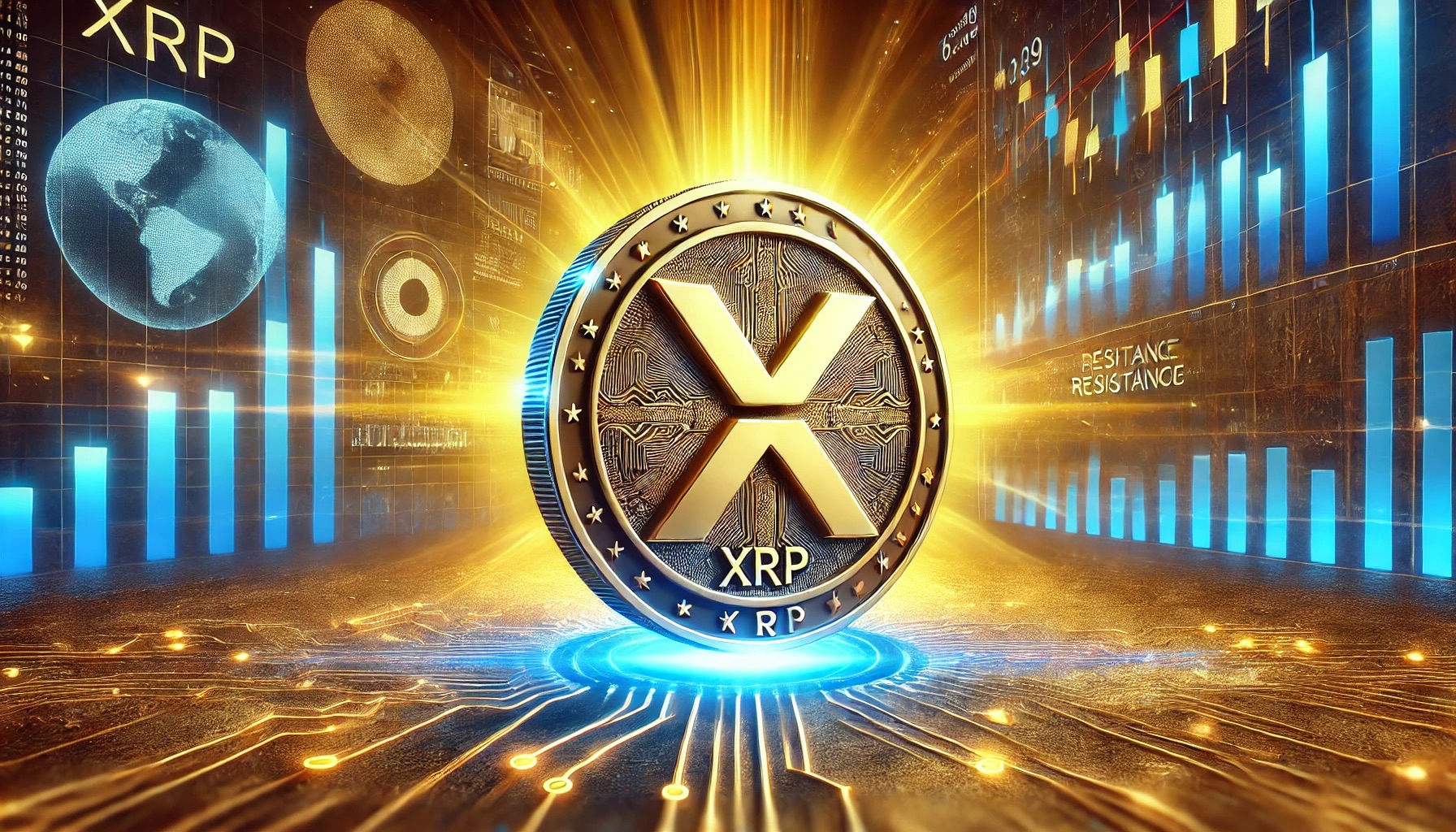
XRP (XRP) jumped on renewed optimism that Ripple could eventually secure a U.S. banking license, but the rally quickly cooled as traders ran into heavy selling near the $1.60 level and booked profits.
The token initially rose about 3.5% before reversing to as low as $1.47, underscoring how sensitive majors remain to headline-driven flows even as the market digests a major regulatory signal from U.S. agencies.
As of Thursday ET, XRP was changing hands around $1.44, giving it a market capitalization of roughly $88.6 billion. Spot trading volume over the past 24 hours stood near $2.7 billion, reflecting elevated activity during the swing.
The banking-license narrative gained traction after Teucrium CEO Sal Gilbertie argued that if XRP were to reach $6, Ripple’s implied enterprise value could approach $240 billion—roughly comparable to the scale of a ‘global top-10 bank.’ Market participants interpreted the comment as a reminder that a formal banking charter, if pursued and obtained, could accelerate Ripple’s integration with mainstream financial rails.
Price action, however, emphasized technical friction. XRP failed to break above the $1.60 resistance zone and then slid about 3.78% over 24 hours, mirroring broader risk-off sentiment as Bitcoin (BTC) fell about 4.63% and the wider crypto complex moved into a synchronized pullback.
Volatility has also persisted even after a notable regulatory development earlier in the week. On March 17, 2026 ET, the Securities and Exchange Commission and the Commodity Futures Trading Commission classified XRP alongside Bitcoin (BTC) and Ethereum (ETH) as a ‘digital commodity,’ a designation traders view as supportive for institutional market structure and derivatives use cases.
Ripple Prime’s CEO highlighted that the classification has practical implications for market plumbing, including the ability to use XRP as collateral in CME futures trading—an incremental step that could broaden the token’s utility for professional trading desks and liquidity providers.
Even with that tailwind, near-term positioning remains split between momentum buyers focused on a renewed push through $1.60 and risk managers watching the $1.40 area as a key support. A clean breakdown below that floor could invite additional deleveraging, while another failed breakout attempt may keep XRP pinned in a choppy range.
Longer-term narratives continue to circulate, including projections that XRP could trade around $2.00 sometime in 2026—implying roughly a 32% gain from current levels—on expectations that Ripple’s payment stack continues to expand globally. Still, market participants typically treat such model-based targets as scenario framing rather than forecasts, particularly in a cycle where regulatory and macro catalysts can quickly reshape liquidity conditions.
On-chain and valuation metrics highlight XRP’s scale among large-cap tokens: its fully diluted valuation was estimated around $144.7 billion, with circulating supply near 61% of the total. With market dominance near 3.7%, traders broadly see XRP as a bellwether for how quickly regulatory clarity can translate into sustained ‘institutional demand’—but the latest reversal shows that conviction remains conditional on follow-through in both price and policy.
🔎 Market Interpretation
- Headline-driven spike, then fade: XRP popped ~3.5% on renewed banking-license optimism but quickly reversed, failing at $1.60 resistance and sliding toward the mid-$1.40s—classic “buy the headline, sell the level” behavior.
- Risk-off correlation remains high: The pullback aligned with broader market weakness (BTC down ~4.63%), suggesting XRP’s near-term direction is still heavily influenced by macro/market beta despite token-specific catalysts.
- Regulatory signal supports structure, not immediate price: The SEC/CFTC ‘digital commodity’ classification is viewed as constructive for institutional market plumbing, yet the price reaction shows traders are still prioritizing technical levels and positioning over longer-horizon policy implications.
- Key levels define the trade: Bulls are focused on a decisive break above $1.60; risk managers are watching $1.40 as pivotal support. A breakdown could trigger deleveraging; repeated failures at resistance could keep XRP range-bound.
- Activity elevated during volatility: With ~$2.7B in 24h spot volume and an ~$88.6B market cap, the move reflects active participation and fast profit-taking typical of large-cap, news-sensitive tokens.
💡 Strategic Points
- Map scenarios to catalysts (not narratives):
- Base case: Range trade between $1.40–$1.60 while the market digests commodities classification and broader risk conditions.
- Bull case: Confirmed breakout and acceptance above $1.60 could attract momentum flows; watch follow-through and volume rather than the initial spike.
- Bear case: A clean break below $1.40 may lead to forced selling/deleveraging as stops trigger and leverage resets.
- Separate “charter optionality” from current fundamentals: Banking-license discussion is option value—impactful if pursued/approved, but timing and probability remain uncertain. Price can overshoot on speculation and mean-revert quickly, as seen here.
- Institutional utility angle to monitor: If XRP becomes usable as collateral in CME futures (as suggested), it can improve capital efficiency for desks/LPs—potentially supportive for liquidity and spreads, though not guaranteed to translate into sustained spot appreciation.
- Watch positioning and liquidity conditions: The article emphasizes that model-based targets (e.g., ~$2 in 2026) are scenario framing. In practice, regulatory headlines + macro liquidity can quickly dominate, so risk management around key levels matters more than long-dated projections.
- Valuation awareness: With FDV cited near $144.7B and ~61% circulating, traders may discount upside narratives by factoring in supply structure and how incremental demand must scale to move large-cap valuations.
📘 Glossary
- Resistance ($1.60): A price zone where selling pressure historically overwhelms buying, often leading to pullbacks unless broken decisively.
- Support ($1.40): A level where buying interest tends to appear; a break below can accelerate declines as stops and deleveraging kick in.
- Digital Commodity: A regulatory classification implying an asset may fall under commodity-style oversight/market structure expectations, often seen as friendlier for institutional participation than a securities designation.
- CME Futures Collateral: Using an asset (potentially XRP) to meet margin/collateral requirements for futures trading, improving capital efficiency for professional traders.
- Deleveraging: Forced or voluntary reduction of leveraged positions (e.g., margin/derivatives), which can amplify downside moves during support breaks.
- FDV (Fully Diluted Valuation): Market cap assuming the entire token supply is in circulation; helps assess supply overhang and long-term valuation sensitivity.
- Market Dominance: A token’s share of total crypto market capitalization; used as a rough gauge of relative size and influence.
- Enterprise Value (EV) analogy: A traditional finance valuation concept (company value) used here as a comparative framing tool (e.g., “top-10 bank scale”), not a direct on-chain valuation method.

















Comment 0