

 News
News  Coin Information
  About us
  Customer Service


 Add as a preferred source on Google

Woori Asset Management’s semiconductor-focused mixed-asset fund has posted outsized gains over the past year, underscoring how a hybrid approach combining Korea’s chip heavyweights with a large bond allocation can still deliver strong equity-like returns in a volatile market.
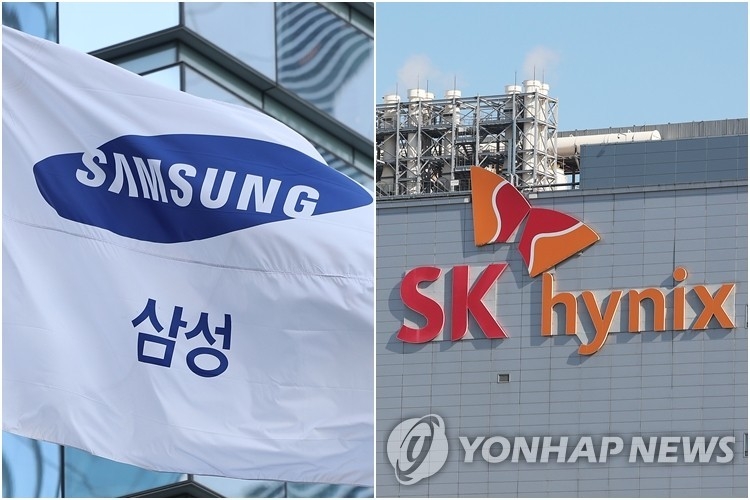
According to Woori Asset Management and fund data provider KG Zeroin, the Woori Asset Management Semiconductor Big 2 Plus Fund returned 74.4% over the one-year period through Monday ET (as of June 9). Among six domestic bond-mixed funds that hold Samsung Electronics and SK hynix, it ranked the highest by one-year performance.
The rally has not been confined to a brief rebound. The fund gained 7.9% over the past month, 25.5% over three months, and 41.5% over six months. Over three years, it delivered a cumulative return of 98.8%, suggesting continued strength across short-, mid-, and longer-term windows rather than a one-off spike tied to market rotation.
The product’s structure is relatively straightforward: it allocates roughly 15% to 30% of total assets to Samsung Electronics and SK hynix, maintaining concentrated exposure to Korea’s flagship semiconductor names. The remaining equity sleeve is used to pursue 'alpha' through selective positions in smaller and mid-cap stocks with higher growth optionality. At the same time, about 70% of assets are placed in domestic Korean bonds, a design intended to dampen drawdowns during sharp equity swings while keeping the portfolio positioned for improving semiconductor fundamentals.
Woori Asset Management attributed the performance to active weight management and stock selection. The firm said it adjusted exposure to Samsung Electronics and SK hynix depending on market conditions, while adding names viewed as potential beneficiaries of expanding artificial intelligence spending or domestic policy support for equities. Holdings cited by the manager included Samsung Electro-Mechanics, GigaVis, Hyundai Motor, HD Hyundai Heavy Industries, and Mirae Asset Securities.
The approach effectively blends several concurrent themes—expectations for a semiconductor upcycle, rising AI-related capital expenditure, and Korea’s market-support measures—into a single portfolio while relying on bonds to reduce overall volatility relative to an all-equity semiconductor fund.
Strong returns have also attracted fresh capital. The fund’s net assets have grown to 744.2 billion Korean won (about $540 million), with 629.0 billion won added year-to-date. Pension capital accounted for 171.6 billion won, or 27% of total inflows, pointing to growing demand for what investors appear to view as a 'retirement-friendly' exposure to the semiconductor cycle—seeking upside participation while using bonds as a partial risk buffer.
Market watchers say the sustainability of these inflows will likely hinge on whether expectations for improving chip demand remain intact and whether retirement investors continue to favor products that aim to balance stability with participation in equity-driven themes such as AI-led hardware spending.
🔎 Market Interpretation
- Hybrid funds can still produce equity-like upside: A bond-mixed structure with meaningful semiconductor exposure delivered a 74.4% 1-year return, showing that risk-buffered portfolios can capture strong rallies when a dominant theme (chips/AI) leads the market.
- Performance breadth suggests more than a short-term bounce: Returns were strong across 1M (+7.9%), 3M (+25.5%), 6M (+41.5%), and 3Y (+98.8%), indicating sustained tailwinds rather than a single rotation-driven spike.
- Semiconductor upcycle + AI capex are central drivers: The fund’s results reflect market expectations for improving chip demand and continued AI-related hardware investment, amplified by concentrated exposure to Korea’s top chip names.
- Risk appetite remains selective: Large inflows—especially from pensions—suggest investors want growth participation but are still prioritizing drawdown control, using bonds as a stabilizer amid volatility.
- Sustainability depends on theme durability: Future inflows and performance are likely to hinge on whether chip demand expectations hold and whether retirement-oriented investors maintain interest in balanced products tied to AI-driven cycles.
💡 Strategic Points
- Core positioning: Allocate roughly 15%–30% to Samsung Electronics and SK hynix to anchor exposure to Korea’s semiconductor bellwethers.
- Stability sleeve: Maintain about 70% in domestic Korean bonds to cushion volatility and reduce drawdowns versus pure equity semiconductor funds.
- Alpha overlay: Use the remaining equity allocation for selective mid/small-cap or thematic positions aimed at outperforming (examples cited: Samsung Electro-Mechanics, GigaVis, Hyundai Motor, HD Hyundai Heavy Industries, Mirae Asset Securities).
- Active risk management: Performance attribution emphasizes dynamic weighting in Samsung Electronics/SK hynix based on market conditions, plus opportunistic additions tied to AI spending and policy support.
- Investor fit: Inflows (AUM ₩744.2B; ₩629.0B added YTD; pensions 27% of inflows) imply positioning as a retirement-friendly way to access semiconductor upside with partial downside protection.
- Key monitoring checklist:
- Chip cycle indicators: memory pricing, server/AI demand signals, inventory normalization.
- AI capex trend: hyperscaler and enterprise spending guidance impacting hardware supply chains.
- Rate/bond environment: domestic yield moves affecting bond sleeve returns and overall fund stability.
- Concentration risk: performance sensitivity to Samsung Electronics/SK hynix due to sizeable core weights.
📘 Glossary
- Bond-mixed fund (mixed-asset): A fund that combines bonds and equities to balance return potential and risk.
- Semiconductor upcycle: A period of strengthening chip demand and pricing that typically lifts sector earnings and stock prices.
- Alpha: Excess return versus a benchmark generated through security selection, timing, or portfolio construction.
- Drawdown: The peak-to-trough decline in a portfolio’s value during a downturn.
- Capex (capital expenditure): Long-term investment spending by companies (e.g., AI data centers and hardware).
- Bellwether: A leading company whose performance is viewed as representative of an industry or market trend.
- AUM (net assets): Total market value of assets managed by a fund.
- Pension inflows: Capital allocations from retirement-related institutions seeking longer-horizon, risk-managed exposure.


















Comment 0