

 News
News  Coin Information
  About us
  Customer Service


 Add as a preferred source on Google

XRP is trading in a tight range even as Ripple strengthens its regulatory footing in Europe and the XRP Ledger pushes deeper into cross-chain infrastructure—two developments that could shape longer-term demand despite near-term macro and U.S. policy headwinds.
As of Wednesday, Aug. 6 at 09:18 UTC, XRP was changing hands at $1.0483, according to CoinMarketCap. The token has largely oscillated between roughly $1.04 and $1.10, with 24-hour volume jumping 39.27% to about $1.36 billion. Circulating supply stood near 62.53 billion XRP, giving the asset a market capitalization of approximately $65.56 billion.
Price action, however, has leaned soft across multiple timeframes. XRP posted a marginal hourly uptick of 0.02%, but remained down 1.57% over 24 hours, 2.88% over the past week, and 24.53% over 90 days. The relative weakness stood out on a day when Bitcoin (BTC) and Ethereum (ETH) were modestly higher, underscoring how XRP has lagged some large-cap peers amid a cautious risk backdrop.
On-chain and fund-flow indicators are sending mixed signals. CryptoQuant research suggested large holders have continued accumulating XRP alongside BTC and ETH, a pattern often associated with late-cycle bear-market positioning. Analysts cautioned that while such accumulation can hint at a maturing downturn, it does not necessarily confirm a durable bottom.
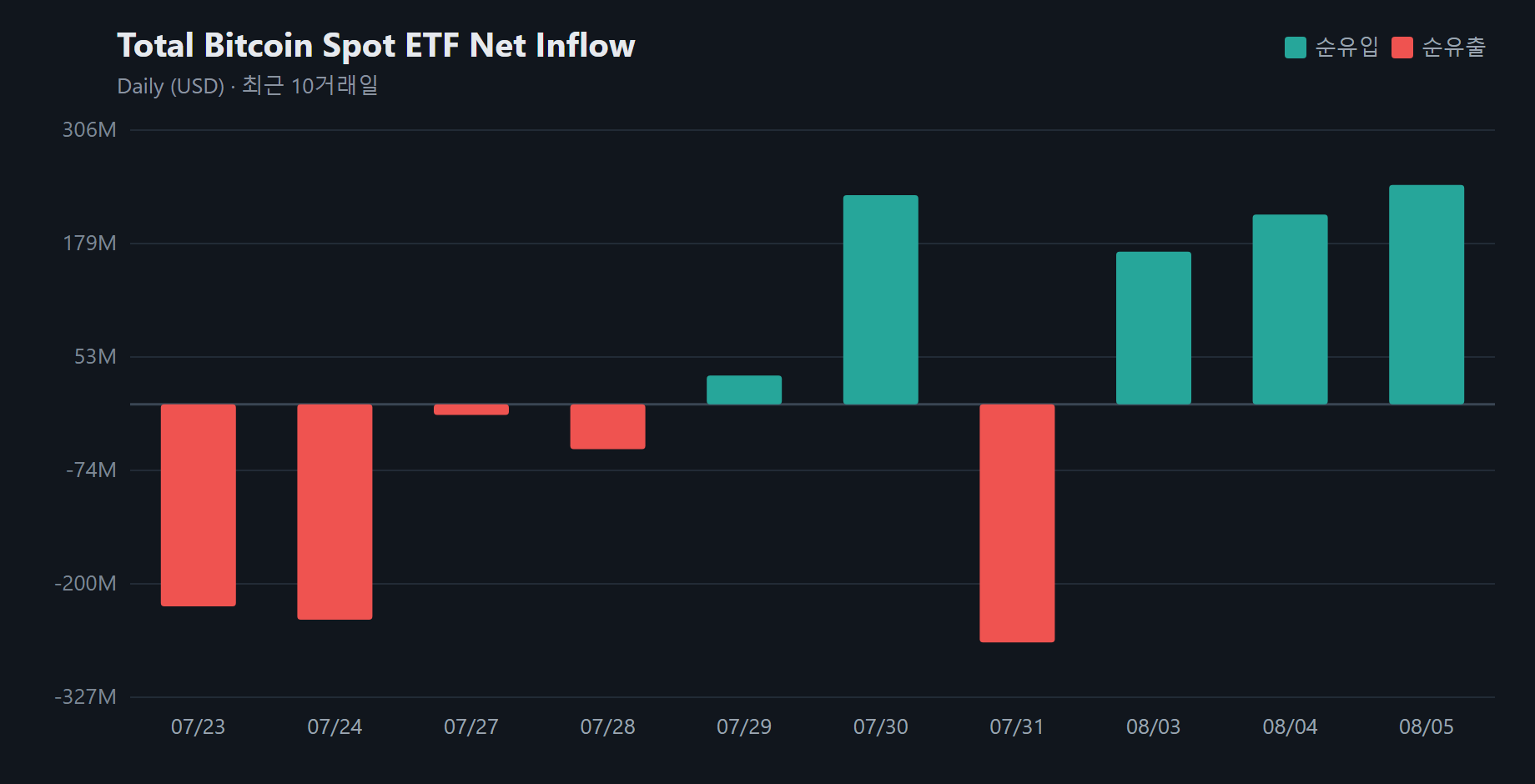
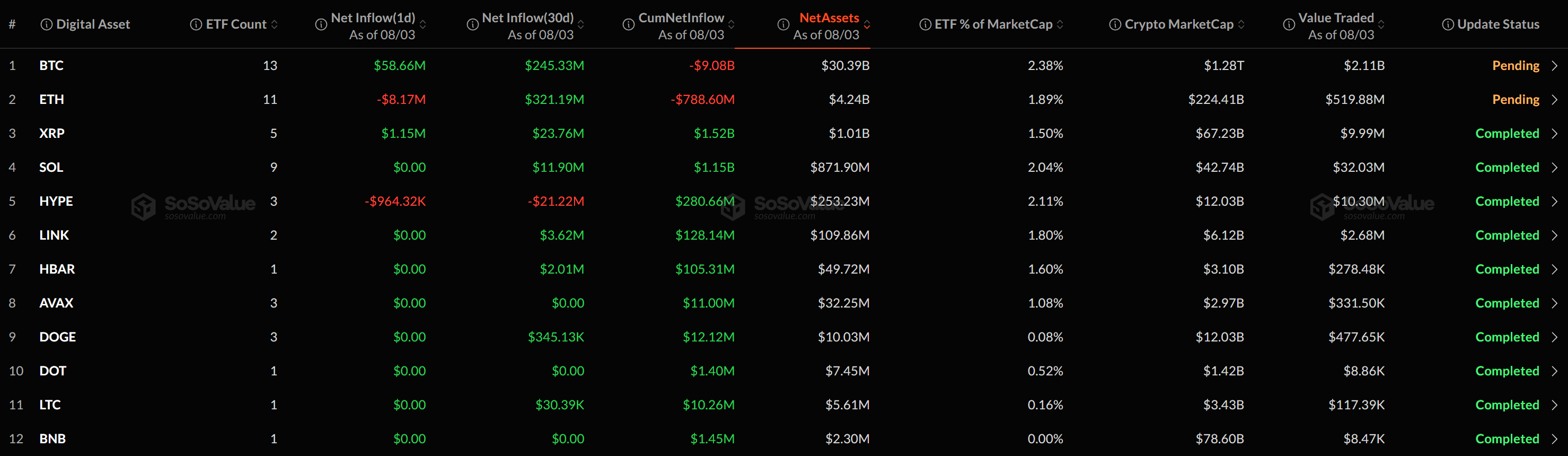
ETF flows, by contrast, showed near-term pressure. U.S.-listed spot XRP ETFs recorded a one-day net outflow of $3.58 million on Aug. 5 ET, with the entirety attributed to the Bitwise spot XRP product. Even so, the same ETF has amassed roughly $507 million in cumulative net inflows, while total spot XRP ETF assets under management remained near $993 million. Month-to-date, the category has posted a net outflow of about $2.44 million, highlighting the tug-of-war between longer-term allocation and shorter-term risk reduction.
Against that market backdrop, Ripple Labs is notching regulatory milestones in Europe. The company said it has secured a Markets in Crypto-Assets Regulation (MiCA)-aligned Crypto-Asset Service Provider (CASP) license from Luxembourg’s Commission de Surveillance du Secteur Financier (CSSF). Coupled with Ripple’s existing Electronic Money Institution (EMI) license, the approvals provide a single compliance framework to offer institutional-grade services—such as fund collection, conversion, and payments—across 30 countries in the European Economic Area.
For Ripple Payments, the licensing stack could translate into more consistent enterprise sales execution in Europe at a time when U.S. regulatory clarity remains contested. Market participants increasingly view Europe as a potential growth hub for Ripple’s commercial business, with the policy environment now offering clearer operating boundaries for regulated crypto service providers.
On the infrastructure side, the XRP Ledger (XRPL) has expanded its interoperability footprint through an official integration with cross-chain network Axelar. The linkage is designed to allow XRP and supported assets to move across more than 80 blockchains without relying on bespoke, chain-specific bridge deployments. Supporters argue the approach improves security and user experience by reducing dependence on fragmented bridge architectures—an area historically associated with operational risk across the broader crypto market.
Still, the next major catalyst for U.S.-facing sentiment may be legislative rather than technical. Traders are monitoring the Digital Asset Market Clarity Act (the ‘CLARITY Act’), which could reshape how U.S. regulators divide oversight of digital assets. Industry policy outlets have reported that the Senate has not yet finalized a review schedule, raising questions about whether the bill can clear procedural hurdles within the current session.
The uncertainty has weighed on several tokens sensitive to U.S. regulatory interpretation, with XRP and Cardano (ADA) both slipping modestly on the day. One market commentary noted that XRP has fallen about 42% from roughly $1.85 in early 2026 to around $1.07 recently, implying that a return to early-year levels would require a rebound of about 73%. The same commentary outlined a conditional scenario in which a September passage of the ‘CLARITY Act’ combined with Federal Reserve rate cuts could help XRP recover into the $1.20–$1.50 range by year-end—while emphasizing that any stronger move would likely depend on a broader crypto rally.
Ripple CEO Brad Garlinghouse is expected to participate in a public session discussing the ‘CLARITY Act’ and Ripple’s strategic posture, as the industry gauges whether the bill could become a turning point in defining the respective roles of the SEC and CFTC in crypto markets.
For now, XRP sits at the intersection of competing forces: ‘regulatory clarity’ and operational reach expanding across Europe, ‘cross-chain connectivity’ improving through new integrations, and near-term pressures from U.S. legislative uncertainty and episodic ETF outflows. Investors are likely to treat Senate scheduling signals and the Fed’s policy trajectory as key inputs for whether XRP’s next move becomes a trend shift—or another range-bound chapter.
















Comment 0