
 Add as a preferred source on Google
Hormuz Crude Flows Slow to 7.3 Million Bpd Late in October
October crude exports averaged nearly 11.1 million barrels per day. A Gulf of Oman-to-Asia supertanker charter topped $900,000 a day in early October.

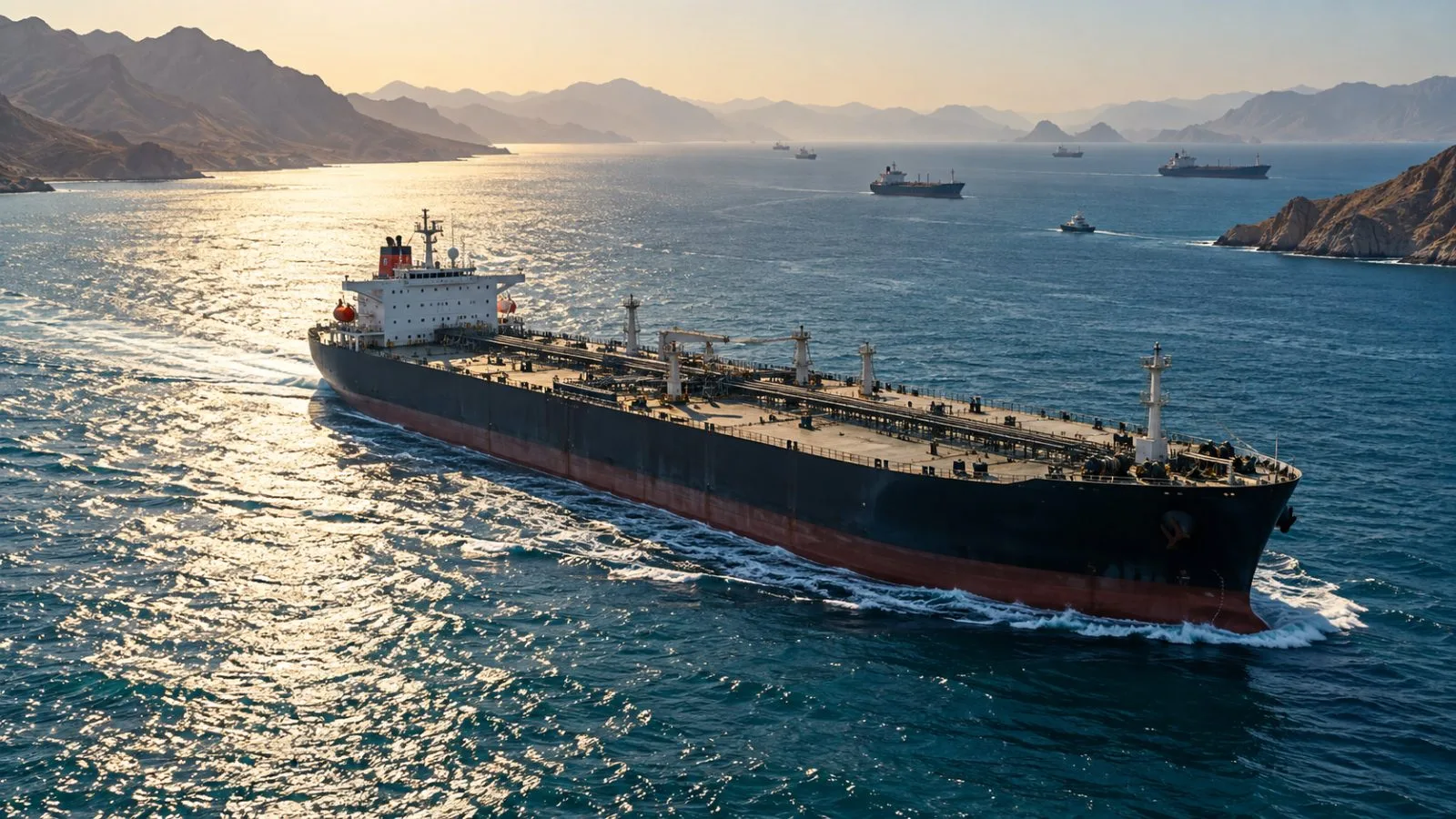
Crude exports through the Strait of Hormuz averaged nearly 11.1 million barrels per day in October, but the week ending Oct. 28 saw a 7.3 million bpd pace, more than 40% below the prewar baseline.
The October average was about 2% below September. The monthly and seven-day figures cover different periods, so the latest weekly reading shows a weaker pace toward the end of the month without serving as a like-for-like comparison with the monthly average.
Tankers carry Gulf crude through Hormuz and transfer it to other vessels waiting in the Gulf of Oman for onward delivery. About 20% of the global supertanker fleet is tied up in this shuttle system.
Hiring a supertanker for a Gulf of Oman-to-Asia voyage cost $249,000 a day in early September and more than $900,000 a day in the first week of October. Transport costs reached about $21 per barrel, up from $6.50 in September. The higher freight rates give some operators a financial reason to keep making the voyages while raising delivered-crude costs for Asian refiners.
“On balance in terms of oil coming out, there hasn’t been a massive impact,” said Mary Melton, senior tanker analyst at Braemar.
The confirmed-incident tally for the Strait and the wider Middle East reached 122 as of Oct. 30, with 24 seafarer fatalities. The October log displayed through Oct. 23 lists 16 injuries; repeated vessel names mean its entries do not show how many distinct ships were involved.
During the first six months of 2025, oil flows through the Strait averaged 20.9 million bpd, roughly one-fifth of global petroleum-liquids use. The 2025 total also covers petroleum products beyond crude, so it cannot be directly compared with October’s crude-only estimates. In the first half of 2025, 89% of crude oil and condensate passing through the Strait went to Asian markets.
The late-month decline follows earlier coverage of Gulf export recovery and tanker routing.
Enna Lee
ReporterEnna Lee reports on investing and digital-asset markets for TokenPost. Send corrections or tips to info@tokenpost.com.