
 Add as a preferred source on Google
Ripple CEO Says Crypto Can Solve Gold’s Settlement Problem
Ripple CEO Brad Garlinghouse has used the Dutch central bank’s recent gold transfer to highlight what he sees as a major advantage of cryptocurrency: the ability to move value globally without physically relocating th…


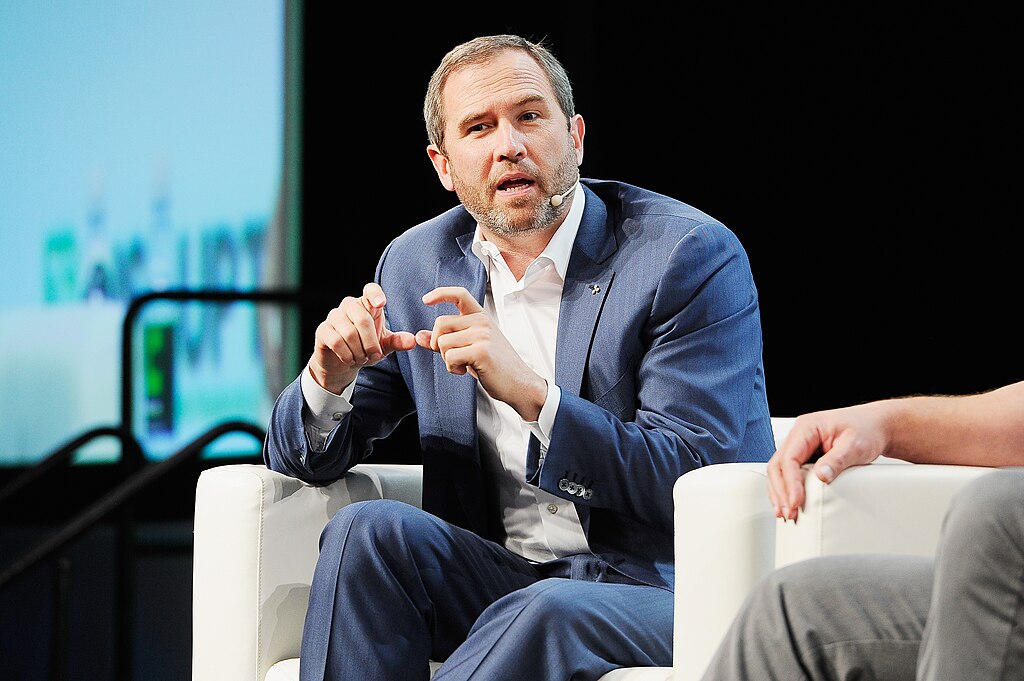
Ripple CEO Brad Garlinghouse has used the Dutch central bank’s recent gold transfer to highlight what he sees as a major advantage of cryptocurrency: the ability to move value globally without physically relocating the underlying asset.
Garlinghouse pointed to De Nederlandsche Bank (DNB), which transferred roughly 86 tonnes of gold between March and August 2026 as part of a reserve-management strategy. About 59 tonnes of gold held in New York were sold and replaced with bullion purchased in London, while another 27 tonnes were physically moved.
According to Garlinghouse, the operation illustrates how traditional reserve systems remain heavily dependent on custody and geographic location. Although most of the economic value shifted between New York and London without the same gold bars crossing the Atlantic, the process still relied on established bullion markets and storage infrastructure.
In a post on X, the Ripple CEO argued that cryptocurrency represents an “ideal use case” for transferring value quickly, securely and cheaply across borders. He questioned why financial value continues to depend on location-centric processes when blockchain networks can facilitate digital transfers worldwide.
Garlinghouse also cited Germany’s repatriation of 674 tonnes of gold from Paris and New York to Frankfurt between 2013 and 2017. The Bundesbank operation took four years, underscoring the logistical challenges associated with physically moving large national reserves.
DNB said its latest restructuring was designed to improve the tradability of its gold and strengthen crisis preparedness. The Bank of England now holds 32.1% of Dutch gold reserves, while 30.8% is stored at DNB’s cash center in Zeist. New York and Ottawa each account for 18.5%. London offers greater liquidity for international gold trading, particularly during periods of market volatility.
Garlinghouse’s remarks come as crypto industry leaders increasingly compare Bitcoin and other digital assets with gold. Binance co-founder Changpeng Zhao recently suggested Bitcoin could eventually become more important than gold, particularly if governments adopt BTC as a strategic reserve asset.
However, Zhao acknowledged that gold benefits from decades of established custody, valuation and reserve infrastructure, meaning any large-scale transition toward digital assets could take considerable time.
Riza Dagoc
Riza Dagoc reports on regulation, investing and the digital-asset business for TokenPost. Send corrections or tips to info@tokenpost.com.